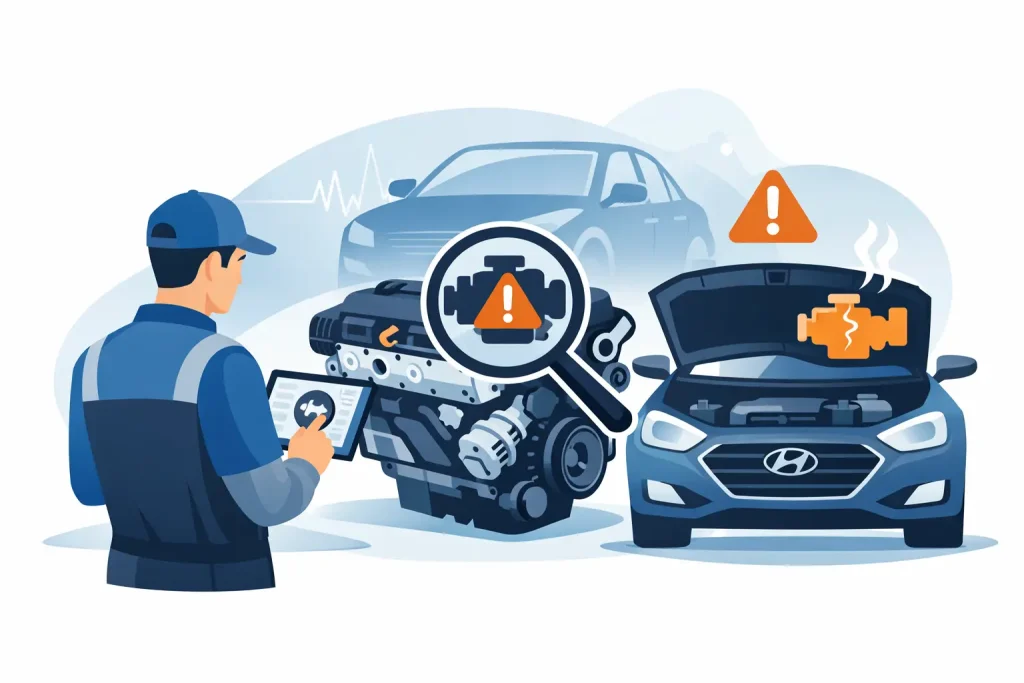
That faint rattle on cold start is easy to ignore – right up until the engine light comes on, the motor loses power, or the vehicle stops altogether. If you are asking can timing chain damage engine components, the short answer is yes. In the wrong conditions, a worn or failed timing chain can lead to anything from poor running and fault codes to bent valves, piston contact and complete engine failure.
For Hyundai and Kia owners, this is not a minor maintenance issue. The timing chain keeps the crankshaft and camshaft working in sync. When that timing shifts, even slightly, the engine can start running badly. When it shifts too far, internal parts can collide. That is where repair costs move quickly from manageable to serious.
Can timing chain damage engine internals?
Yes – and the level of damage depends on how far the problem has progressed.
A timing chain is built to last longer than a timing belt, which is why many drivers assume it does not need attention. But chains still wear. The chain itself can stretch over time, the guides can wear through, and the tensioner can lose its ability to keep the chain tight. Once slack develops, the chain may jump timing or, in severe cases, break.
If the engine is an interference design, which many modern Hyundai and Kia engines are, the pistons and valves occupy the same space at different times. They only avoid contact because the timing is precise. If the chain slips, that precision is gone. Valves can remain open when pistons come up, and that can bend valves, damage pistons, mark the cylinder head and sometimes affect the camshaft or bottom end as well.
On a non-interference engine, the outcome can be less destructive, but those engines are less common in newer vehicles. Even then, a failed chain can still leave you with a non-start condition, misfiring, poor performance and expensive repair work.
What actually goes wrong when a timing chain fails?
Timing chain problems rarely appear out of nowhere. In most cases, there is a wear pattern building over time.
The first issue is often chain stretch. That does not mean the metal literally stretches like rubber. It means wear develops across the chain links and pins, creating enough extra movement to throw timing off. The engine control system may try to compensate, but only to a point.
The next common problem is tensioner failure. Many timing chain tensioners rely on oil pressure as well as mechanical spring force. If oil changes have been missed, sludge builds up, oil passages restrict, and the tensioner may not hold proper pressure. That allows chain slack, especially on cold start.
Then there are chain guides. These guides are often plastic-faced, and once they wear or crack, the chain can slap against them or against the timing cover. That is where rattling noises often begin. If guide material breaks up, debris can circulate through the engine, creating another layer of risk.
Once any of those faults gets bad enough, valve timing moves out of spec. At that point you may notice rough idle, hesitation, loss of power, poor fuel economy or a check engine light. If the chain jumps a tooth or more, the engine may stop running altogether. If it jumps far enough at speed, internal engine damage becomes a real possibility.
Common warning signs you should not ignore
A timing chain problem usually gives some warning, but not always a lot of it.
The classic sign is a rattling noise from the front of the engine, especially during cold start. Some drivers describe it as a brief metallic chatter that disappears after a few seconds. That can happen when the tensioner is struggling to build pressure. Just because the noise goes away does not mean the problem has.
You might also notice the engine cranking longer than usual before starting, or idling unevenly once it fires. Some vehicles bring up fault codes linked to camshaft timing correlation. Others lose power under load, particularly when overtaking or climbing hills.
In more advanced cases, the engine may misfire, stall, or refuse to start. If that happens after a long period of chain noise, there is a strong chance the timing has already moved too far.
For Hyundai and Kia owners, especially with vehicles that have known timing-related wear patterns or higher kilometres, these signs are worth checking early. Waiting for a complete failure nearly always costs more than diagnosing the noise when it first appears.
Why oil servicing matters more than many drivers realise
Timing chains rely heavily on clean oil. That point gets missed all the time.
Unlike some external components, the timing chain system lives inside the engine and depends on proper lubrication. Dirty oil accelerates wear on chain links, guides and tensioners. Sludge can block tensioner oil feed and reduce its ability to take up slack. Low oil level can make the problem worse again.
This is one reason some timing chain failures appear earlier than expected. The chain itself may be strong, but the system around it suffers when service intervals are stretched too far or the wrong grade of oil is used. A vehicle with patchy oil service history is often a higher risk than one with higher kilometres but excellent maintenance.
That does not mean every well-serviced engine is immune. Parts still wear with age and use. But regular servicing gives the timing assembly its best chance of lasting properly.
Can you keep driving with a noisy timing chain?
Sometimes drivers can, but that does not mean they should.
If the noise is mild and caught early, the engine may still be repairable without major internal damage. That could involve replacing the timing chain kit, guides, tensioner and related seals before the chain jumps. In that situation, acting quickly can save the engine.
If you continue driving and the chain slips, the repair picture changes. Instead of a timing job, you may be looking at cylinder head repairs, valve replacement, piston damage or a full engine rebuild. In some cases, fitting a tested replacement engine becomes the more practical option.
The hard part is that no one can promise how long a noisy chain will last. Some vehicles run badly for weeks before failing. Others let go suddenly. If there is chain noise, timing fault codes or obvious running issues, the safest move is to stop driving it unnecessarily and get it assessed.
Repair or replace the engine – what makes sense?
It depends on when the fault is found and how much damage has already been done.
If the timing chain issue is diagnosed before internal contact happens, replacing the chain components is usually the sensible path. That repair is still significant, but it is far cheaper than rebuilding or replacing an engine.
If the chain has jumped and compression is lost, the cylinder head may need to come off for inspection. Bent valves, damaged lifters or marked pistons can push costs up quickly. At that point the right answer depends on the vehicle value, the condition of the rest of the engine and how severe the damage is.
For some Hyundai and Kia vehicles, especially those with known engine wear or high kilometres, an engine replacement can be the better long-term fix. For others, a rebuild makes more sense. Clear diagnosis matters here. Guesswork gets expensive.
That is where a specialist workshop helps. A team that works on Korean engines every day can usually identify whether the issue is limited to the timing assembly or whether the damage runs deeper.
How timing chain issues are diagnosed properly
A proper diagnosis is more than listening for a rattle.
The process usually starts with checking engine noise, fault codes, oil condition and running behaviour. From there, camshaft and crankshaft correlation data may be checked to see whether timing is out. In some cases, the rocker cover or timing cover needs to come off for visual inspection. If there is concern about internal damage, compression testing or further tear-down may be needed.
This matters because not every top-end noise is a timing chain, and not every timing fault means the engine is finished. Some vehicles arrive with a clear chain and tensioner problem that can be repaired in time. Others show signs that the chain has already moved far enough to damage valves.
The sooner that diagnosis happens, the more options you usually have.
The bottom line for Hyundai and Kia owners
If you are wondering can timing chain damage engine parts, treat that as a yes until proven otherwise. A worn timing chain can start as a noise issue, but if ignored it can become a full engine problem. The difference between an early repair and a major failure often comes down to how quickly the vehicle is checked.
For Melbourne drivers dealing with rattles, timing faults or hard starting in a Hyundai or Kia, straightforward advice matters. Hyun Engines sees these problems for what they are – not just a warning light, but a risk to the whole engine if left too long.
If your engine is making noise at start-up or not running the way it should, do not wait for certainty. Timing issues rarely fix themselves, and acting early gives you the best chance of keeping the repair simpler, cheaper and far less stressful.
Frequently Asked Questions
Can a worn timing chain damage other engine parts?
Yes. A stretched or failed timing chain can throw valve timing out, and in interference engines it can cause pistons to strike valves, leading to bent valves and serious internal damage.
What are the signs of a failing timing chain?
A rattle on start-up, a check-engine light for camshaft or crankshaft correlation, rough running, or a metallic chain noise from the front of the engine.
Is it worth replacing the engine if the timing chain caused damage?
If valves or pistons are damaged, a reconditioned replacement is often more economical and reliable than extensive internal repairs, and it includes a 12-month warranty.
Do you supply engines if mine is beyond repair?
Yes, we supply tested reconditioned Hyundai and Kia engines Australia-wide with free shipping, and can fit them at our Dandenong workshop.