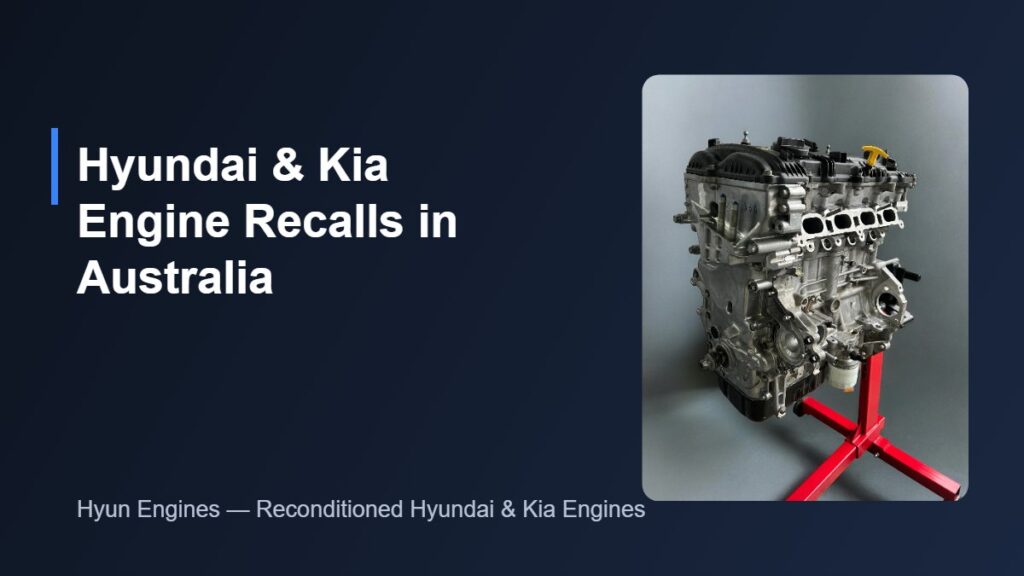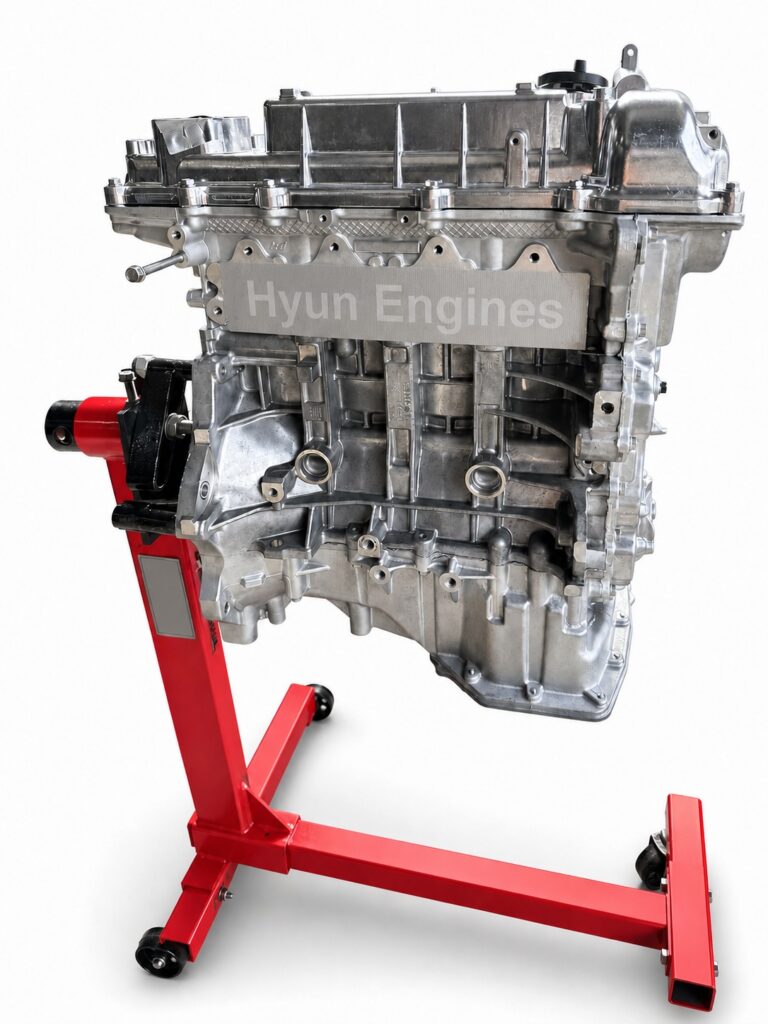
The 1.6-litre turbo in your Veloster, i30 SR, Tucson or Kona has a strong following in Australia — it’s the engine that made small Hyundais genuinely quick. But when owners start searching “Hyundai 1.6 turbo problems”, it’s usually because something has gone wrong: oil disappearing between services, a rattle on cold start, or a check-engine light that keeps coming back. This guide covers what actually fails on the G4FJ, what the warning signs mean, and what your options are if the engine is beyond economical repair.
The short answer: The Hyundai G4FJ 1.6 T-GDi is a fundamentally solid engine whose problems are mostly maintenance-related: carbon buildup on the intake valves, rising oil consumption at higher kilometres, and turbocharger wear accelerated by stretched oil-change intervals. Caught early, most issues are repairable; a neglected example can need a full replacement.
Which cars in Australia use the G4FJ 1.6 turbo?
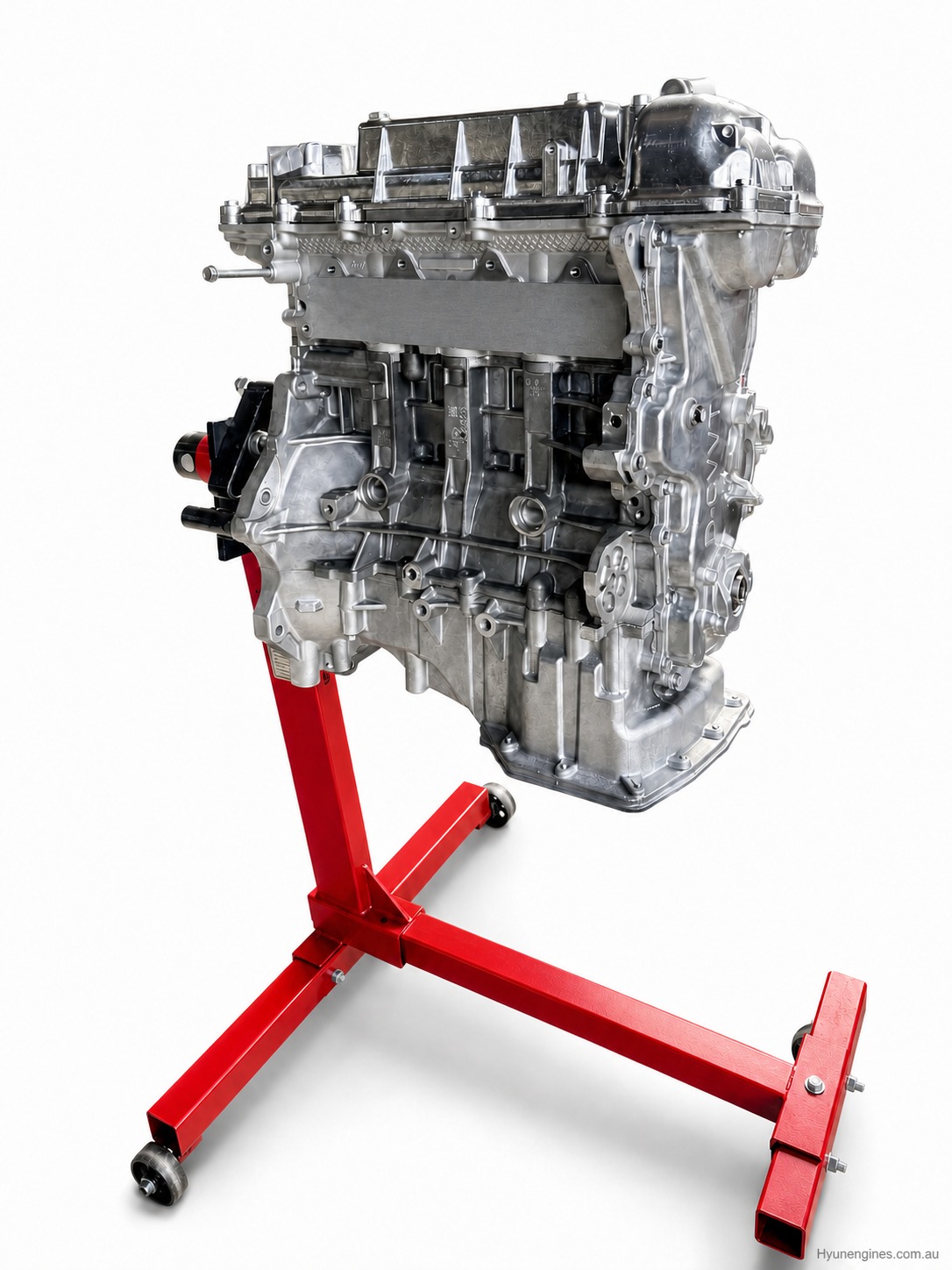
The G4FJ is Hyundai and Kia’s 1.6-litre Gamma T-GDi four-cylinder — direct injection, single twin-scroll turbo, timing chain. In Australia it appeared in performance and warm-hatch versions of mainstream models:
| Model | Common variants with the G4FJ |
|---|---|
| Hyundai Veloster | SR Turbo and Turbo models |
| Hyundai i30 | SR and N-Line 1.6 turbo |
| Hyundai Tucson | 1.6 T-GDi (usually with the 7-speed DCT) |
| Hyundai Kona | 1.6 turbo AWD variants |
| Hyundai Elantra | SR Turbo |
| Kia Cerato | GT 1.6 turbo |
Exact fitment depends on year and variant, so always confirm against your VIN rather than the badge — send us your VIN and we’ll check it for you.
What are the most common G4FJ engine problems?
Carbon buildup on the intake valves
Because the G4FJ injects fuel directly into the cylinder, no petrol washes over the backs of the intake valves — so oil vapour from the PCV system slowly bakes onto them as hard carbon. Over tens of thousands of kilometres this shows up as rough cold idle, hesitation and gradual power loss. It’s not a defect so much as a characteristic of most direct-injection engines, and it responds well to walnut blasting of the intake ports.
Oil consumption at higher kilometres
Higher-kilometre G4FJs can start using noticeable oil between services, typically from worn oil-control rings and a tired PCV system. The danger is that a turbocharged engine run low on oil damages the turbo and bottom end quickly — check the dipstick monthly once consumption starts.
Turbocharger wear and oil coking
The turbo shares the engine’s oil. Long oil-change intervals and hard hot shutdowns cook the oil in the turbo’s centre housing (“coking”), which wears the bearing and eventually produces whining, smoke or boost loss. Most G4FJ turbo failures we see trace back to oil neglect rather than the turbo itself.
Spark plugs and coils
Boost pressure works ignition components harder than in a non-turbo engine. Misfires under load on a G4FJ are often just plugs overdue for replacement — cheap to fix, but ignored misfires wash fuel into the catalytic converter and cause expensive damage.
Oil leaks
Valve-cover gaskets and the turbo oil feed/return lines are the usual leak points. A leak dripping onto the hot turbo or exhaust smells like burning oil and deserves prompt attention.
Warning signs and what they usually mean
| Symptom | Likely cause on a G4FJ | What it usually means |
|---|---|---|
| Rough cold idle, hesitation | Intake-valve carbon buildup | Walnut blast of the intake ports |
| Oil level dropping between services | Worn oil-control rings / PCV | Monitor closely; budget for rings or replacement if severe |
| Whine or whistle that rises with revs | Turbo bearing wear | Turbo inspection before it fails completely |
| Blue-grey smoke on startup | Turbo seals or valve stem seals | Diagnosis needed — don’t keep driving |
| Misfire under acceleration | Worn spark plugs or coils | Plugs/coils first; injectors if it persists |
| Knocking from the bottom end | Bearing damage from oil starvation | Stop driving — usually replacement territory |
Is the Hyundai 1.6 turbo reliable, and how long does it last?
Maintained properly, yes — the G4FJ has no systemic defect on the scale of the problems that affected some larger Theta II engines. The single biggest factor in how long one lasts is oil discipline: full-synthetic oil changed well inside the handbook interval keeps the turbo, chain and bottom end alive. Well-serviced examples routinely pass 200,000 km; neglected ones can need major work before half that. If you’re buying used, service history matters more than the odometer reading.
Repair, rebuild or replace?
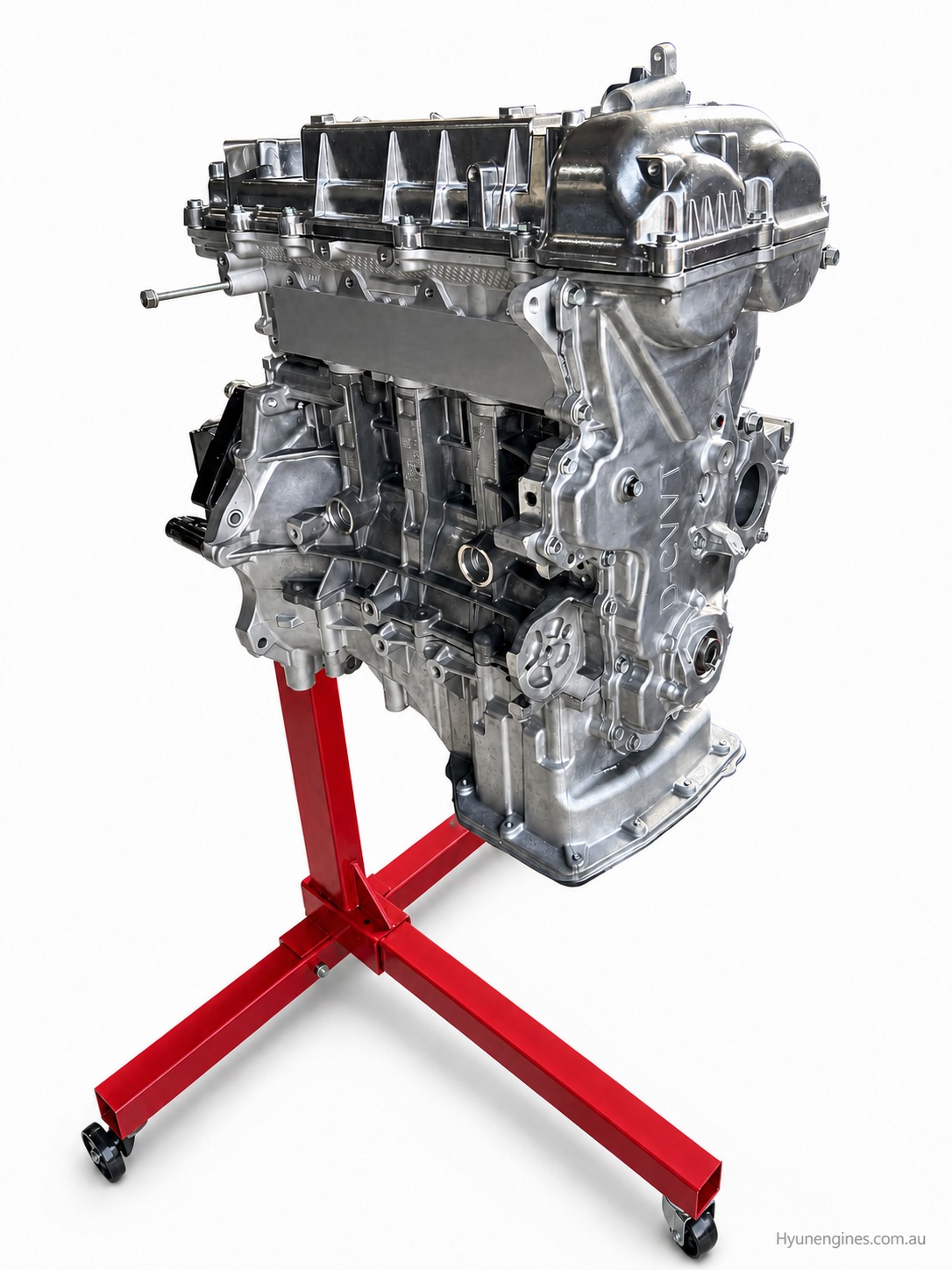
Carbon cleaning, plugs, gaskets and even a turbo are all worthwhile repairs on an otherwise healthy engine. The maths changes when the bottom end is damaged — a spun bearing or scored bores mean machining, parts and labour that together approach the cost of a complete engine. At that point a reconditioned engine is usually the fastest and most predictable fix, and a full rebuild makes sense when you want to keep your original numbers-matching block.
We keep reconditioned G4FJ engines in stock for the Hyundai i30 turbo, Tucson 1.6 turbo and Veloster turbo — every engine is supplied with a 12-month warranty, and we can supply and fit at our Dandenong workshop (typical turnaround 2–3 business days) or freight Australia-wide to your mechanic. Call (03) 9630 0960, visit us at 8 Hammond Rd, Dandenong VIC 3175, Monday to Friday 9am–5pm, or get in touch online with your VIN for a quote.
Frequently Asked Questions
How long does the Hyundai 1.6 turbo engine last?
With full-synthetic oil changed on time and sensible warm-up and cool-down habits, a G4FJ commonly exceeds 200,000 km. Stretched oil intervals are the main reason some fail much earlier, because the turbo and bottom-end bearings are the first things oil neglect destroys.
Can carbon buildup on the G4FJ be fixed?
Yes. Walnut blasting the intake ports physically removes the baked-on carbon and restores smooth idle and throttle response. Because the G4FJ is direct-injection only, fuel additives can’t reach the intake valves — mechanical cleaning is the effective method.
Is it worth replacing a blown 1.6 turbo engine with a reconditioned one?
Usually, yes. Veloster, i30 SR, Tucson and Kona turbos are worth good money in the used market, and a reconditioned G4FJ with a 12-month warranty typically costs far less than the car’s value — and far less workshop time than machining and rebuilding your damaged block.
What oil does the G4FJ need?
A quality full-synthetic in the grade specified in your handbook for your climate. On any turbocharged direct-injection engine we recommend changing it well inside the maximum interval — many specialists work to 7,500–10,000 km — and checking the level monthly.