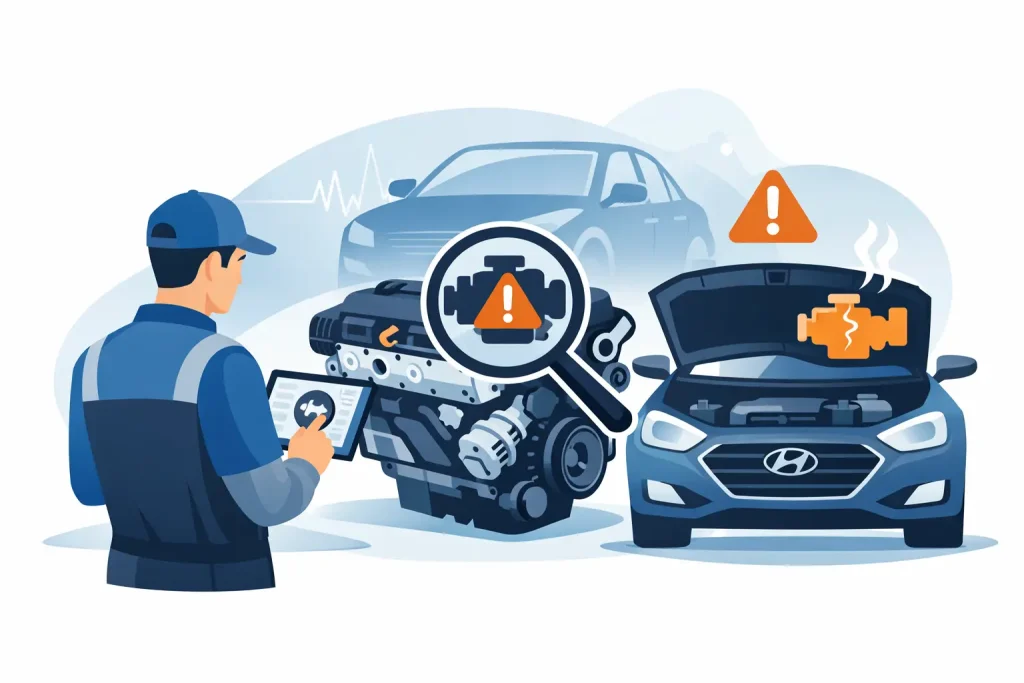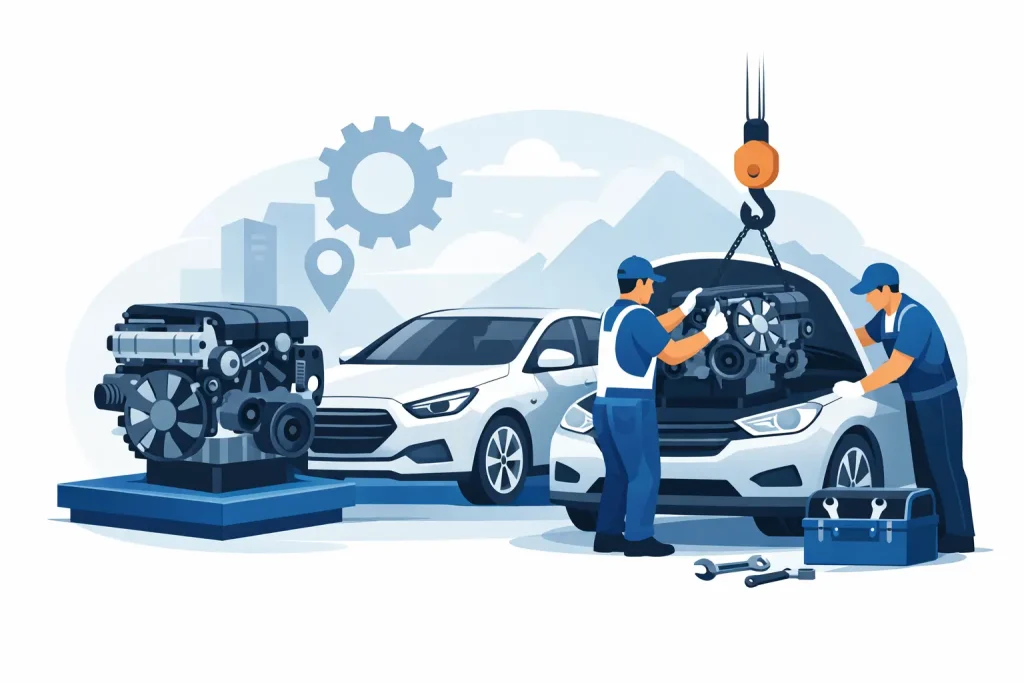
When your motor starts knocking, burning oil, or drops compression, the question usually arrives fast – repair it, rebuild it, or replace it. For many owners, engine supply and fit Hyundai service is the most practical path because it combines diagnosis, sourcing, installation, and testing in one job rather than spreading risk across multiple workshops and suppliers.
That matters more than most people realise. A Hyundai engine replacement is not just about getting another motor into the bay. It is about making sure the engine is the right code, the condition is known, the ancillaries are checked, and the fitment is done by technicians who know the common faults and model differences across Hyundai and Kia platforms.
What engine supply and fit Hyundai actually includes
People often hear the phrase and assume it simply means buying an engine and paying someone to bolt it in. In a proper workshop setting, it should mean much more than that.
A genuine supply-and-fit job usually starts with confirming the failure. That may sound obvious, but it is common for owners to be told they need a full replacement when the issue is actually timing-related, turbo-related, or limited to the cylinder head. Good diagnosis comes first because there is no value in replacing an engine if the root cause sits elsewhere.
Once replacement is confirmed, the next step is matching the correct engine for the vehicle. That includes engine code, year range, fuel type, emission setup, and in some cases ECU and sensor compatibility. On Hyundai models such as the i30, Tucson, Santa Fe or iLoad, close is not always close enough. Small differences can create expensive headaches once the job is underway.
Then comes the engine itself. Depending on the car, the budget, and the fault, that could be a tested used engine, a reconditioned unit, a rebuilt original engine, or a new replacement motor. Each option suits a different situation, which is why straightforward advice matters.
After sourcing, the fitment side covers removal of the failed engine, inspection of supporting components, installation, fluid replacement, startup procedure, road testing, and final checks. A proper workshop will also look at the parts that often contribute to repeat failures, such as cooling system issues, blocked oil pickups, timing components, injectors, or turbo feed problems.
When engine replacement makes more sense than repair
Not every bad engine needs replacing. But not every damaged engine is worth rebuilding either. The right answer depends on the level of damage, the age of the vehicle, how quickly you need it back, and how long you plan to keep it.
If the engine has thrown a rod, suffered severe bearing damage, overheated badly, or has metal contamination throughout the system, replacement is often the cleaner option. It can reduce labour, shorten downtime, and provide a more predictable result.
On the other hand, if the issue is localised and the base engine remains sound, a rebuild may be the better investment. That is especially true when the original engine is known, the rest of the vehicle is in good order, and quality internal work can restore reliability.
This is where specialist workshops stand apart from general repairers. A workshop that deals with Hyundai and Kia engines every day is more likely to recognise whether a GDi petrol issue, timing chain fault, diesel noise, or oil consumption problem points to a rebuildable engine or a replacement candidate.
Engine supply and fit Hyundai for common models
Some Hyundai models appear again and again for engine-related work, but the reason is not always the same.
The Hyundai iLoad is a good example. For commercial owners and tradies, downtime costs money. If the van is used daily, a supply-and-fit solution can be the fastest way to get back on the road, especially when the existing engine has suffered major diesel damage or ongoing oiling issues.
The Hyundai i30 and Tucson often bring a different decision. These vehicles are common family cars, so owners usually want a balanced outcome – reliable enough to keep, sensible enough not to overspend. In that case, the workshop needs to weigh the cost of repair against the value of a tested replacement or reconditioned engine.
For older vehicles, budget becomes even more important. A used engine can make sense if it has been checked properly and installed by a team that knows what should be replaced at the same time. For newer or higher-value vehicles, a reconditioned or rebuilt engine may offer better long-term confidence.
Choosing between used, reconditioned and rebuilt engines
This is the part many owners want simplified, and fairly so.
A used engine is generally the most affordable option upfront. It can be the right choice when the vehicle value is modest and the engine has been tested, inspected, and matched correctly. The trade-off is that a used engine still has a previous life, so quality control depends heavily on the supplier and the workshop fitting it.
A reconditioned engine sits in the middle for many jobs. It usually involves replacing worn components, machining where needed, and bringing the engine back to a serviceable standard. This can offer a strong balance of cost and reliability, especially for owners planning to keep the vehicle.
A rebuilt engine often means your original motor is stripped, inspected, machined, and rebuilt with new internal components as required. That can be an excellent solution when done properly, but it is not always the quickest route. It also depends on the condition of the block, head, crank, and other major parts.
The best option is not the cheapest one on paper. It is the one that fits the vehicle, the budget, and the expected use after the job is done.
What to ask before booking a supply-and-fit job
If you are comparing workshops, ask clear questions and expect clear answers.
Start with diagnosis. Has the workshop confirmed the engine itself is the issue? Then ask what type of replacement engine is being quoted and whether it is used, reconditioned, rebuilt, or new. Ask how compatibility is checked, what parts are included in the fitment, and whether the engine has been tested before installation.
You should also ask about warranty, labour coverage, and what is excluded. For example, some jobs cover the long motor only, while others include transfer components, fluids, filters, and related repairs that are necessary to complete the installation properly.
Turnaround time matters too, especially for vans, fleet vehicles, and family cars that cannot sit in the driveway for weeks. A workshop that handles both supply and installation under one roof can often manage the process more efficiently because there is less back-and-forth between parties.
Why specialist fitment matters on Hyundai engines
Anyone can advertise engine replacement. The difference is in the detail.
Hyundai and Kia engines have their own patterns of failure, setup differences, and service requirements. Timing components, oiling systems, diesel injection issues, and cooling-related damage all need to be understood in context. If those details are missed, a replacement engine can inherit the same problem that killed the old one.
That is why specialist fitment is valuable. A workshop focused on Korean engines is more likely to know which checks need to happen before startup, which components should not be reused blindly, and what post-installation testing should be done before handing the vehicle back.
For Melbourne owners, that local specialist support also makes follow-up easier. If there is a question after the job, you are not chasing a distant supplier and a separate installer who each point at the other.
At Hyun Engines, that complete workshop approach is a big part of the value. Customers are not left trying to source a mystery engine themselves and hope another mechanic can make it work.
The real value of supply and fit
The cheapest engine you can find online is rarely the cheapest engine job once towing, labour, missing parts, compatibility issues, and repeat faults enter the picture. Supply and fit works best when it removes uncertainty, not when it simply combines two invoices.
A proper engine replacement should leave you with a vehicle that starts cleanly, runs as it should, and gives you confidence to use it normally again – whether that is school drop-off, site work, deliveries, or the weekly commute across Melbourne.
If your Hyundai is showing signs of major engine trouble, the smartest next step is not guessing. It is getting the fault assessed properly, understanding your options clearly, and choosing the repair path that suits the car you have and the way you need to use it.
Frequently Asked Questions
Do you supply and fit Hyundai engines?
Yes. We supply reconditioned Hyundai engines and fit them at our Dandenong workshop, typically within 2-3 days.
What is included with a supply-and-fit service?
A tested reconditioned long engine, professional fitting at our workshop, and a 12-month warranty. Your old engine is taken as a core once the job is finished.
Can you supply only, without fitting?
Yes, we ship Australia-wide within 1-2 business days with free shipping if you prefer to fit it yourself or use your own mechanic.
How much does a supplied Hyundai engine cost?
Most reconditioned Hyundai engines start from around $4,200, with fitting quoted separately.