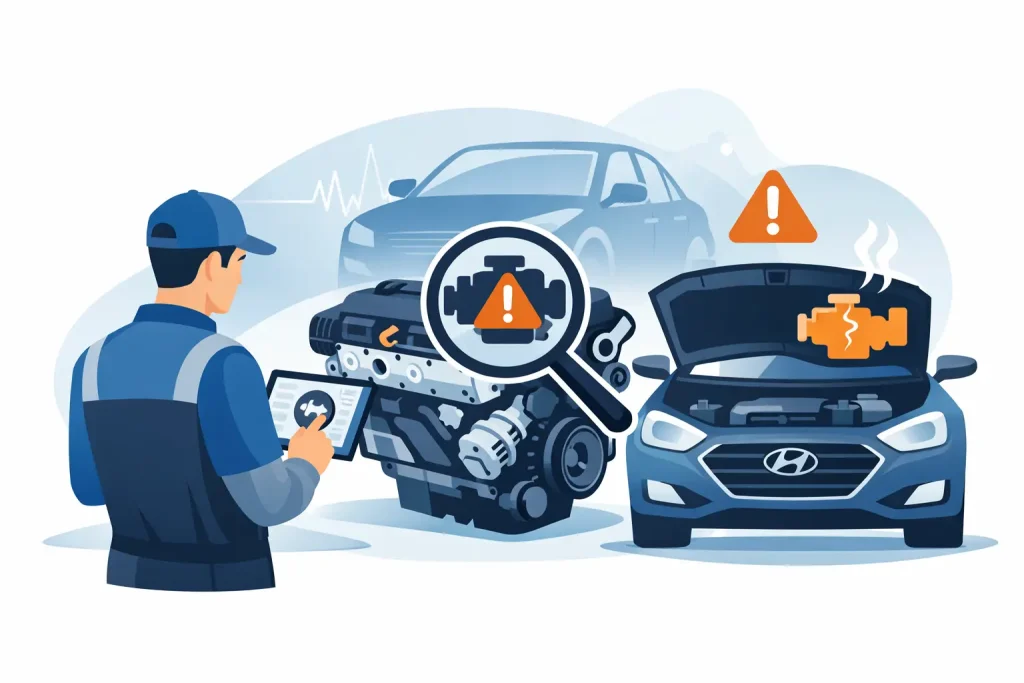
A cold-start rattle that disappears after a few seconds is easy to brush off – until it turns into poor running, warning lights, or an engine that will not start at all. That is often how kia timing chain repair begins. For many Kia owners, the hard part is not just the fault itself. It is knowing whether the problem is minor, whether the engine has already been damaged, and whether repair is still worth doing.
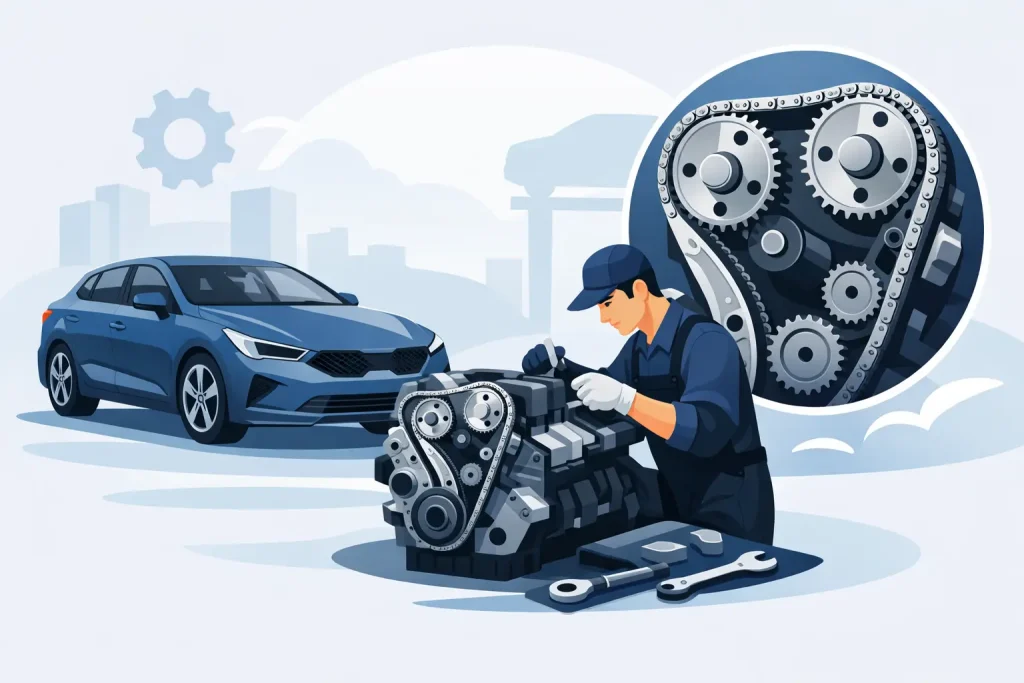
A timing chain sits deep inside the engine and keeps the crankshaft and camshaft in sync. When that timing is right, the valves open and close exactly when they should. When the chain stretches, the guides wear, or the tensioner stops holding proper pressure, valve timing can drift. On some engines, that can quickly move from noise to serious internal damage.
What a timing chain actually does
Unlike a timing belt, a timing chain is metal and runs in oil. It is designed to last longer, but it is not immune to wear. In real workshop conditions, chain life depends heavily on oil quality, service history, sludge build-up, and how the vehicle has been driven.
That matters on Kia engines because many owners assume a chain is a lifetime part. Sometimes it lasts a very long time. Sometimes it does not. If oil changes have been stretched out, the chain, guides and tensioner can wear earlier than expected. Once wear starts, the chain can develop slack, timing can shift, and the engine management system may begin to detect cam and crank correlation faults.
Common signs you may need kia timing chain repair
The earliest sign is often a metallic rattle on start-up, especially first thing in the morning. That noise can come from a worn chain or a tensioner that is no longer holding pressure properly. If left alone, the symptoms usually become more obvious.
You might notice rough idling, reduced power, hesitation under load, or a check engine light. In some cases the vehicle may crank longer before starting. In more advanced failures, it may not start at all. If the chain jumps timing, the engine can run badly enough to trigger misfires, or stop suddenly.
The tricky part is that these symptoms can overlap with other faults. Variable valve timing issues, ignition faults, oil pressure problems and worn engine internals can point in a similar direction. That is why timing chain diagnosis should not be based on noise alone.
Why Kia timing chains fail earlier than owners expect
Most timing chain problems are not random. They usually come back to wear in the full timing assembly rather than the chain by itself. The chain, guides, tensioner and sprockets all work together. If one part starts to fail, the rest often follow.
Oil condition plays a big role. Dirty oil, low oil level, incorrect oil grade or long service intervals can accelerate wear. The tensioner relies on proper oil pressure and clean lubrication. If that system is compromised, slack can develop and the chain can start whipping against the guides.
There is also the simple reality of kilometres and heat cycles. Family SUVs, people movers, vans and fleet vehicles spend years in stop-start traffic, school runs, job sites and long freeway drives. Over time, components wear. Some engines are more forgiving than others, and some are known to be less tolerant once timing starts to drift.
What happens during diagnosis
A proper inspection starts with symptom checking, scan tool data and engine noise assessment. Fault codes for camshaft timing, crankshaft correlation or variable valve timing performance can point the technician in the right direction, but they are only one piece of the puzzle.
From there, the workshop may check oil condition, service history and live timing data. In some cases, physical inspection is needed to confirm chain slack, guide wear or tensioner failure. If the engine is already running poorly, compression testing or cylinder leakage testing may also be recommended to see whether valve damage has occurred.
This is where honest advice matters. Not every noisy engine needs a full rebuild, and not every chain fault can be fixed cheaply. It depends on whether the issue has been caught early and whether the engine has stayed mechanically safe.
Repair, replace, or rebuild – it depends on the damage
If the timing chain problem is caught before it jumps or causes valve contact, repair may be straightforward. That usually means replacing the timing chain kit, which can include the chain, guides, tensioner, seals and associated hardware. On some engines it also makes sense to address related oiling or variable timing components while access is available.
If the chain has already jumped timing, the decision gets harder. Some Kia engines are interference engines, which means pistons and valves can collide when timing slips far enough. At that point, a timing job alone may not solve it. The cylinder head may need repair, or the engine may need a rebuild or replacement depending on the extent of internal damage.
That is why the cheapest quote is not always the cheapest outcome. If a workshop replaces the chain without properly checking for bent valves or piston damage, the engine can still fail afterwards. Good diagnosis saves money, even when the news is not what you wanted to hear.
What affects Kia timing chain repair cost
There is no single price that suits every Kia model. Engine layout, parts access, labour time and the amount of damage all affect the final figure. A chain replacement on an engine caught early will usually cost far less than a job involving head removal, valve repairs or full engine replacement.
Parts quality matters too. A proper repair should use quality timing components rather than mixing old worn parts with a new chain. Replacing only the bare minimum can look cheaper upfront, but it increases the risk of repeat failure. For owners planning to keep the car, doing the job properly is usually the better value.
If the engine has serious internal damage, replacement can sometimes make more financial sense than rebuilding. That is especially true when a tested reconditioned or good used engine is available and the original motor has multiple issues beyond timing wear.
Why specialist experience matters
Timing work is not just parts swapping. Correct locking procedures, timing alignment, torque settings and post-repair checks all matter. Small mistakes can cause poor running, warning lights, oil leaks or outright engine failure.
For Kia owners, there is a real advantage in using a workshop that deals with Hyundai and Kia engines every day. Brand-specific experience helps with pattern failures, known weak points, and the repair-versus-replacement call. It also helps avoid wasted money on guesswork.
At Hyun Engines, this is where specialist diagnosis makes a difference. When a Kia comes in with chain noise or timing faults, the focus is not just on replacing parts. It is on understanding the condition of the whole engine and giving the owner a clear path forward.
When not to keep driving
If the engine is rattling heavily, running rough, or showing timing-related fault codes, continuing to drive it is a gamble. A worn chain does not usually fix itself, and once timing slips further, damage can happen quickly.
Some owners try to nurse the car along because it still starts and drives. That can work for a short time, but it can also turn a repairable problem into a major engine job. If the noise has changed suddenly, the check engine light has come on, or the vehicle has stalled, it is better to stop driving and have it assessed.
Can timing chain problems be prevented?
Prevention is not complicated, but it does require consistency. Regular oil changes with the correct oil grade are the biggest factor. A clean, well-lubricated engine gives the chain and tensioner the best chance of lasting properly.
It also helps to act early when symptoms appear. Start-up rattles, sluggish performance and warning lights are all worth checking before they turn into something bigger. Waiting rarely makes timing repairs cheaper.
For Kia owners, the practical approach is simple. If the engine sounds different, do not ignore it. Get the fault diagnosed properly, ask whether the issue is limited to the timing assembly or affecting the wider engine, and make the repair decision based on facts rather than hope. A well-timed repair can save the engine. A delayed one can change the whole job.
Frequently Asked Questions
What does a Kia timing chain repair involve?
It involves replacing the chain, guides, tensioner and often related seals, then setting the timing correctly. Catching it early avoids valve or piston damage.
What are the signs of a worn Kia timing chain?
A rattle on cold start, a camshaft or crankshaft correlation fault code, rough idle, or a metallic noise from the front of the engine.
What if the timing chain has already damaged the engine?
If valves or pistons are damaged, a reconditioned replacement engine is often more economical and reliable, and it comes with a 12-month warranty.
Do you supply Kia engines if mine is damaged?
Yes, tested reconditioned Kia engines supplied Australia-wide with free shipping, with fitting available in Dandenong.