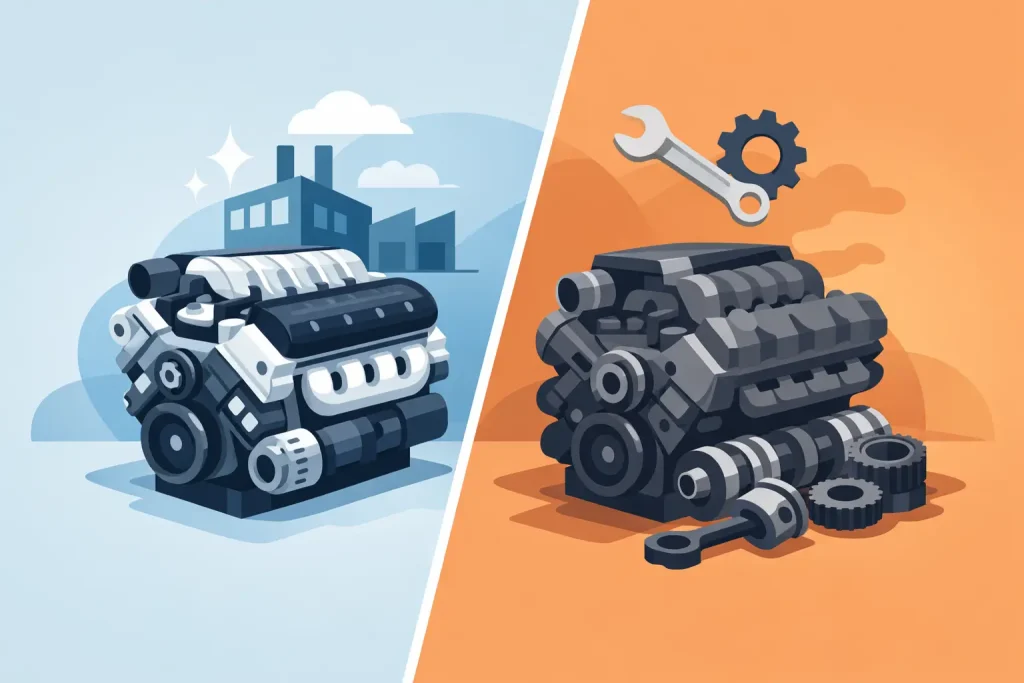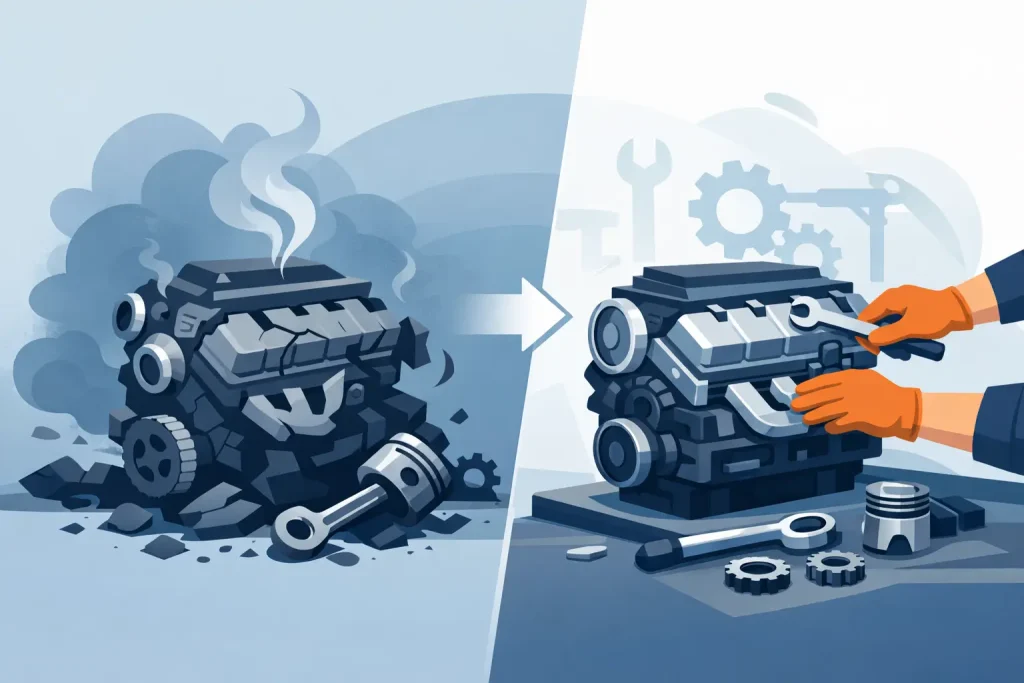
A seized engine on the Monash, a loud knock at idle, smoke out the exhaust, or a timing failure that stops the motor without warning – when it happens, the first question is usually the same: can a blown engine be rebuilt? The short answer is yes, sometimes. The better answer is that it depends on what failed, how far the damage spread, and whether rebuilding the engine makes financial sense compared with replacing it.
For Hyundai and Kia owners, this question matters because not every engine failure means the whole vehicle is finished. In plenty of cases, a proper inspection shows the engine can be stripped, machined, rebuilt and put back into service reliably. In other cases, the damage is too severe, the cost climbs quickly, and a tested replacement engine is the smarter option.
What a “blown engine” usually means
“Blown engine” is a broad term, not a precise diagnosis. People use it to describe everything from a spun bearing to a snapped timing chain, overheating damage, cracked pistons, dropped valves or complete loss of compression. That is why straight answers only come after the engine is inspected properly.
Some failures are localised. A damaged head gasket, scored cylinder, bent valves or worn bearings may still leave enough of the engine block and rotating assembly in rebuildable condition. Other failures are far more destructive. If a conrod has exited the block, the crankshaft is badly damaged, or overheating has cracked the head and block, rebuilding may no longer be the sensible path.
Can a blown engine be rebuilt if the damage is severe?
Yes, but severe damage changes the economics. Almost any engine can be rebuilt if enough parts are replaced and enough machine work is done. The real question is whether it should be rebuilt.
A rebuild generally works best when the core engine is still usable. That means the block can be machined, the crank can be reground or replaced without creating excessive cost, and the cylinder head is salvageable. If too many major components are beyond repair, the job can end up costing more than fitting a quality reconditioned or tested replacement engine.
This is where a workshop with Hyundai and Kia experience matters. Korean engines have common failure patterns, and knowing those patterns speeds up diagnosis. It also helps avoid spending money rebuilding an engine that is not the best candidate for the job.
When an engine rebuild makes sense
A rebuild is often the right option when the vehicle is otherwise in good condition and the failure has not destroyed the main engine castings. If the car has been well looked after, the body and transmission are sound, and you want to keep it long term, rebuilding can be a solid investment.
It also makes sense when the original engine is worth preserving. Some owners prefer keeping the matching engine in the vehicle, especially if the rest of the car has a known service history. Others choose a rebuild because they want control over what gets replaced rather than taking a chance on an unknown second-hand unit.
For Hyundai and Kia vehicles, a rebuild can be particularly worthwhile when the issue is caught early. Bearing noise, oil pressure problems, timing noise, overheating or misfire under load should never be ignored. The earlier the engine is assessed, the better the chance of saving more of the original components.
When replacement is usually the better call
There are times when rebuilding is technically possible but still not practical. A hole in the block is the obvious example, but it is not the only one. Multiple internal failures, heavy metal contamination through the oil system, severe overheating, or a badly damaged head and block together can make replacement the cleaner and more cost-effective job.
Turnaround matters too. Some rebuilds need machining, parts sourcing and careful reassembly, which takes time. If the vehicle is essential for work, family transport or fleet use, fitting a tested replacement engine may get it back on the road sooner.
That is often the crossroads owners face: rebuild the existing engine for a tailored repair, or replace it for speed and predictability. Neither option is automatically right. It depends on condition, budget and how you use the vehicle.
What happens during a proper rebuild assessment
Before anyone can answer whether can a blown engine be rebuilt in your case, the engine needs to come apart to some degree. External symptoms tell part of the story, but not all of it. A knocking noise might be worn bearings, but it might also involve crank damage. Coolant loss might be a simple gasket issue, or it might point to head or block cracking.
A proper assessment usually starts with fault history, oil and coolant checks, and compression or leak-down testing where possible. From there, the engine may need to be removed and stripped for inspection. The workshop then checks the condition of the block, head, pistons, crankshaft, bearings, bores, timing components and oiling system.
Machine work is often part of the rebuild process. That can include head pressure testing, resurfacing, cylinder honing or boring, crankshaft machining, and checking tolerances throughout the rotating assembly. A rebuild is not just a matter of replacing a few gaskets and hoping for the best.
Parts quality matters more than the label
A rebuilt engine is only as good as the quality of the parts and the standard of assembly. This is where cheap quotes can become expensive later. If worn or marginal components are reused without good reason, or lower-grade parts are fitted to keep the price down, the engine may not last as expected.
For Hyundai and Kia engines, rebuild quality also depends on addressing the root cause of failure. If the original problem was oil starvation, sludge build-up, timing system wear or overheating, those issues need to be corrected during the job. Otherwise the rebuilt engine can end up back where it started.
That is why experienced workshops do more than swap damaged parts. They look at why the failure happened, what supporting components need attention, and what should be replaced while access is available.
Cost comes down to damage, not just engine size
People often ask for a rebuild price before the engine is inspected, but the truth is there is no honest one-size-fits-all figure. Two identical models can have completely different repair paths. One may need bearings, machining and a head rebuild. The other may need a block, crank, turbo-related repairs and major oil system clean-out.
In general, rebuild costs rise when internal damage has circulated metal through the engine, when machining is extensive, or when hard parts such as the crankshaft, cylinder head or block need replacing. Labour also varies depending on how much has to come apart and whether there are related issues to fix at the same time.
That is why the best advice is usually simple: inspect first, quote second. It is the only way to compare rebuild versus replacement properly.
Why specialist experience matters for Hyundai and Kia owners
Not every workshop sees the same Hyundai and Kia engine issues week in, week out. Brand-specific knowledge helps with diagnosis, parts selection and knowing which failures tend to snowball. It also helps with practical decisions such as whether a rebuild is worth doing on a particular engine family, or whether a reconditioned replacement will give better value.
For Melbourne drivers, local support matters after the job as well. If you are fitting a rebuilt or replacement engine, you want clear communication, proper installation and someone accountable if questions come up later. That matters just as much as the engine itself.
At Hyun Engines, that specialist focus is a big part of the value. Hyundai and Kia owners are not looking for guesswork. They want clear advice, realistic options and work backed by people who deal with these engines every day.
So, can a blown engine be rebuilt?
Often, yes. But the right answer is not based on hope or a rough guess over the phone. It comes from a proper inspection of the damage, a realistic look at costs, and an honest comparison with replacement options.
If the core engine is sound, a rebuild can return the vehicle to reliable service and make good financial sense. If the damage is widespread or the timeline is tight, replacement may be the better path. Either way, the goal is the same: get you back on the road with an engine solution that is dependable, not just the cheapest number on paper.
If your Hyundai or Kia has suffered major engine trouble, act early and get it assessed properly. The sooner the damage is understood, the more options you usually have.
Frequently Asked Questions
Can a blown engine be rebuilt?
Often yes, if the block and crankshaft are serviceable. If there is a cracked block, bore damage or a rod through the block, a reconditioned replacement is usually more economical.
What does a blown engine mean?
It generally describes major internal failure, such as a thrown rod, seized pistons, a blown head gasket with overheating damage, or catastrophic bearing failure.
Is it better to rebuild or replace a blown engine?
If damage is extensive, a tested reconditioned replacement is typically faster and more reliable than an open-ended rebuild, and it comes with a 12-month warranty.
Do you supply replacement engines for blown units?
Yes, tested reconditioned Hyundai and Kia engines supplied Australia-wide with free shipping, with fitting available in Dandenong.