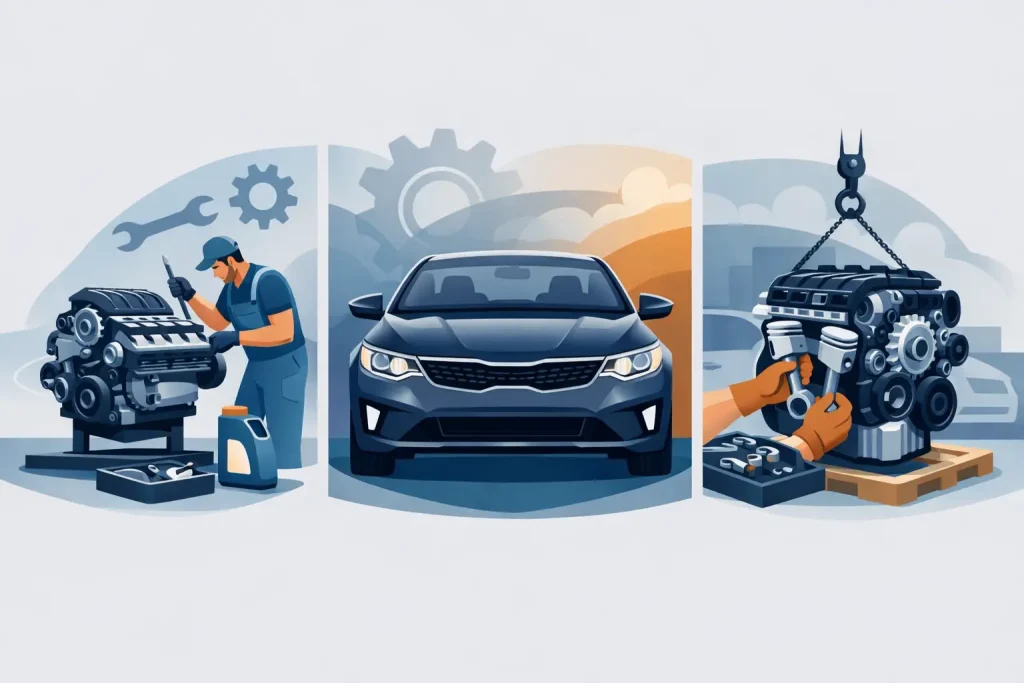
When an engine lets go, the real stress usually starts after the diagnosis. You are suddenly weighing up a new vs rebuilt engine decision, and neither option is cheap enough to treat lightly. For Hyundai and Kia owners, the right answer depends on the condition of the vehicle, how long you plan to keep it, and whether you want the lowest upfront cost or the strongest long-term reset.
A lot of workshops will give you a quick answer based on what they have available. That is not the same as the right answer for your car. A new engine can be the better move in some cases, but a properly rebuilt engine often gives better value, especially when the vehicle itself is still worth keeping on the road.
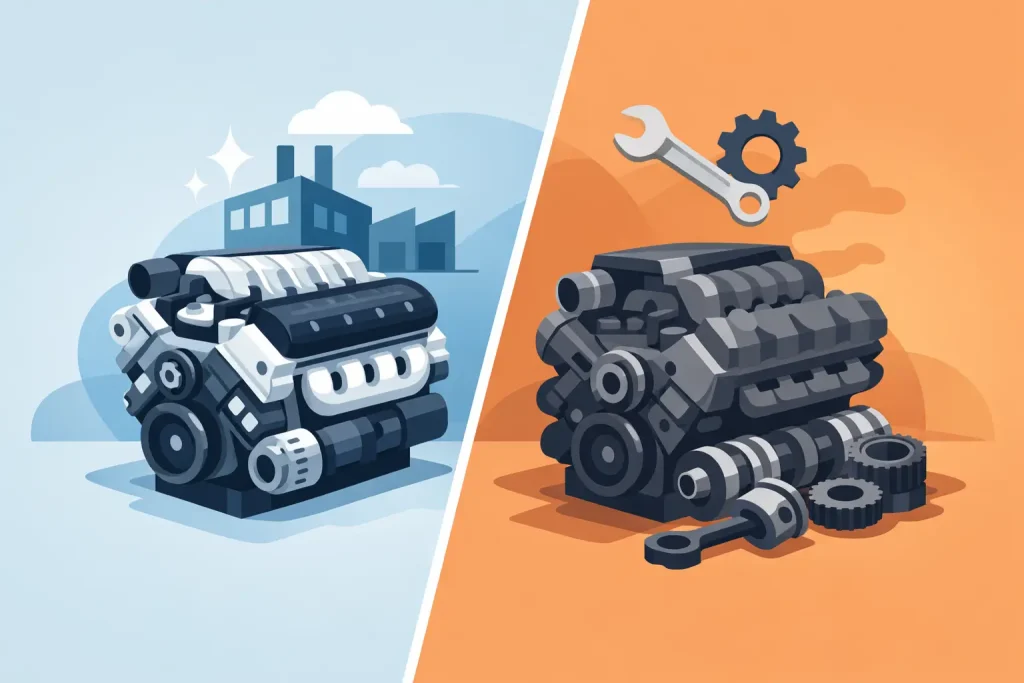
New vs rebuilt engine: what is the actual difference?
A new engine is typically a brand-new unit supplied by the manufacturer or an approved source. It has not been run in another vehicle, and its major internal components are new from top to bottom. In simple terms, you are buying the closest thing possible to starting again.
A rebuilt engine, sometimes called a reconditioned engine depending on the workshop and the scope of work, starts with an existing engine core. It is stripped down, measured, machined where needed, and rebuilt using new replacement parts for worn or failed items. That may include pistons, rings, bearings, gaskets, timing components, oil pump parts and cylinder head work, depending on the engine and the failure.
That distinction matters. A rebuilt engine is not just a used engine with a quick clean-up. If the job is done properly, it is a controlled process that brings the engine back to a dependable standard. The quality comes down to the parts used, the machining, the measurements and the experience of the people doing the work.
Cost is usually the first driver
For most owners, price is where the conversation starts. A new engine is usually the most expensive option by a clear margin. The engine itself costs more, and depending on the model, supply can be limited. That can also mean longer wait times, which is a problem if the car is your daily transport, work van or family vehicle.
A rebuilt engine generally costs less than new while still offering a stronger result than taking a chance on an unknown used engine. That makes it an attractive middle ground. You are not paying brand-new money, but you are also not gambling on an engine with a mystery history.
That said, rebuild cost can vary a lot. If an engine has thrown a rod through the block or suffered severe overheating damage, the rebuild may no longer be economical. In that situation, another engine core or a replacement unit may make more sense.
Reliability depends on the quality of the job
This is where many people get tripped up. They assume new automatically means reliable and rebuilt automatically means risky. It is not that simple.
A new engine does remove a lot of unknowns. Every internal component starts with zero wear, which gives owners peace of mind. If you are planning to keep the car for many years and the rest of the vehicle is in very good condition, that peace of mind may justify the extra spend.
But a rebuilt engine can also be a very reliable option when it is done by a workshop that knows the platform well. That matters with Hyundai and Kia engines, because certain failures are common enough that a specialist already knows what needs close attention. Timing chain wear, oil consumption issues, head gasket failure, bearing damage and overheating-related problems all need more than a parts swap. They need proper inspection and correction of the cause.
A rebuild that addresses the failure properly can be more dependable than fitting a second-hand engine with no clear service history. Reliability is not just about whether parts are new. It is about whether the engine has been measured, machined, assembled correctly and tested with known weak points in mind.
The vehicle itself should guide the decision
The engine does not exist in isolation. A new vs rebuilt engine decision should always be tied to the condition and value of the whole vehicle.
If you have a late-model Hyundai Tucson, Kia Carnival or iLoad in tidy condition, with a solid transmission, good body, decent service history and plenty of life left in it, spending more on the right engine solution can be justified. You are protecting a vehicle that is still worth owning.
If the car already has high kilometres, suspension wear, transmission concerns, electrical faults or body damage, a brand-new engine may be hard to justify financially. In those cases, a rebuilt engine often lands in the sweet spot. It restores the drivetrain without pushing the repair bill too close to the replacement value of the vehicle.
This is especially relevant for work vehicles and family cars. Many owners do not need the most expensive option on paper. They need a sound engine, fitted properly, with realistic warranty support and a fast return to service.
Warranty matters, but read what it actually covers
One of the strongest arguments for a new engine is warranty. In many cases, the manufacturer-backed cover is broader or easier to understand than a workshop rebuild warranty. That can be a genuine advantage.
Still, not all warranties are equal, and the headline length does not tell the whole story. A rebuilt engine with a clear, workshop-backed warranty from a specialist can be a very solid choice, particularly if the business also handles diagnosis, installation and follow-up support. That gives you one point of contact if something is not right.
The key question is not just, how long is the warranty? It is, what is covered, what conditions apply, and who is responsible if there is a problem? A cheap engine with a vague warranty often turns expensive later.
Availability and downtime can tip the scales
For some owners, workshop time matters as much as price. If your van is off the road, you are losing income. If your family car is down, life gets awkward quickly.
A new engine may take time to source, especially for specific Hyundai and Kia variants. A rebuilt engine can sometimes be turned around faster if the workshop has the right parts supply, machining process and stock of suitable cores. In other situations, a tested replacement engine may be the quickest path.
This is why blanket advice does not work. The best option is sometimes the one that gets you back on the road sooner without cutting corners.
When a new engine makes the most sense
A new engine is usually the stronger option when the vehicle is relatively new, the owner plans to keep it long term, and the budget allows for it. It also suits buyers who want maximum confidence in component freshness and the least amount of ambiguity about internal wear.
It can also be the right move where the original engine has suffered catastrophic damage and rebuilding it is not practical. If the block, head or rotating assembly is too badly damaged, starting with a new unit may be cleaner and more predictable.
When a rebuilt engine makes the most sense
A rebuilt engine is often the better value option when the vehicle is worth saving but a brand-new unit stretches the budget too far. It suits owners who want a dependable result without paying top dollar, provided the rebuild is done properly and the cause of failure is dealt with.
For Hyundai and Kia owners in particular, brand-specialist experience matters here. A workshop that sees the same engine families every week is in a better position to rebuild them properly, replace the right supporting parts and avoid repeat failures. That practical knowledge often counts for more than fancy language.
The wrong comparison is new vs rebuilt alone
In real workshop terms, the comparison is often new vs rebuilt vs used. And in many cases, rebuilt wins because it balances cost, reliability and traceability better than an unknown used engine.
That is why the right advice starts with inspection, not sales talk. You need to know what failed, why it failed, whether the engine core is rebuildable, and whether the rest of the vehicle justifies the spend. At Hyun Engines, that kind of straight answer is what owners usually need most when the numbers start getting serious.
If you are facing this choice now, do not rush into the cheapest quote or assume the most expensive option is automatically the smartest. The better decision is the one that fits your vehicle, your budget and how you actually use the car. A good engine solution should give you confidence every time you turn the key, not doubts a month later.
Frequently Asked Questions
What is the difference between a new, rebuilt and reconditioned engine?
A new engine is factory-fresh; a rebuilt engine has worn parts replaced to specification; a reconditioned engine is an inspected, machined-where-needed and tested used engine restored to reliable running condition. Reconditioned offers the best balance of cost and reliability for most owners.
Is a reconditioned engine reliable?
Yes. A properly reconditioned and tested engine restores near-original performance at a fraction of new-engine cost, and ours come with a 12-month warranty.
How much can I save compared with a new engine?
A reconditioned engine typically costs a fraction of a brand-new replacement, which is why it is the most popular choice for out-of-warranty vehicles.
Do reconditioned engines come with a warranty?
Yes. Every reconditioned Hyundai and Kia engine we supply includes a 12-month warranty and free Australia-wide shipping.