A Kia with a tired or failing engine rarely gives you one neat, obvious warning. More often, it starts with a rattle on cold start, a knock under load, rising oil use, overheating, or a check engine light that keeps coming back. That is where proper Kia engine repair matters – not guesswork, not parts swapping, and not vague advice that leaves you spending money twice.
For many owners, the hardest part is not the fault itself. It is working out whether the engine can be repaired, whether a rebuild makes more sense, or whether replacement is the smarter long-term option. The answer depends on the exact Kia model, the engine type, the cause of the damage, and how far the problem has progressed.
What Kia engine repair really involves
Engine repair can mean something relatively contained, or it can point to major internal work. On some Kia vehicles, the issue may be timing-related, such as chain noise, stretched components, or timing wear causing poor running. In other cases, the problem is internal engine damage – worn bearings, piston issues, sludge-related wear, overheating damage, or loss of compression.
That is why a proper diagnosis matters before anyone talks numbers. A noise from the top end does not always mean the same thing as a bottom-end knock. Misfiring could be ignition-related, fuel-related, or the first sign of deeper mechanical trouble. Oil in coolant, coolant loss, or persistent overheating can indicate head gasket trouble, but it may also point to head or block damage if the engine has been run too hot for too long.
A specialist approach saves time here. Workshops that regularly work on Hyundai and Kia engines tend to know the recurring faults, the weak points on certain engine families, and the signs that separate a repairable problem from an engine that is better replaced.
Common signs your Kia engine needs attention
Most serious engine failures do not start as catastrophic failures. They usually build over time. If your Kia is showing any of the following, it is worth getting it checked before the damage spreads further.
Knocking, ticking or rattling noises
Not every engine noise means the engine is finished, but some noises should not be ignored. Timing chain rattle on start-up, persistent ticking, and deeper knocking sounds can all point to wear that gets more expensive the longer it is left.
High oil consumption or smoke
If you are topping up oil too often, seeing blue smoke, or noticing oil residue where it should not be, the engine may be burning oil internally. That can come from worn rings, valve stem seals, turbo-related issues on some diesel engines, or broader wear inside the motor.
Overheating
One overheating event can be enough to create bigger trouble. Warped heads, damaged gaskets and internal cooling system issues often follow if the vehicle is driven too long while hot.
Loss of power or rough running
Poor compression, timing issues, injector trouble, and internal wear can all cause hesitation, rough idle, and reduced performance. Sometimes the repair is straightforward. Sometimes it is the early stage of a much larger engine problem.
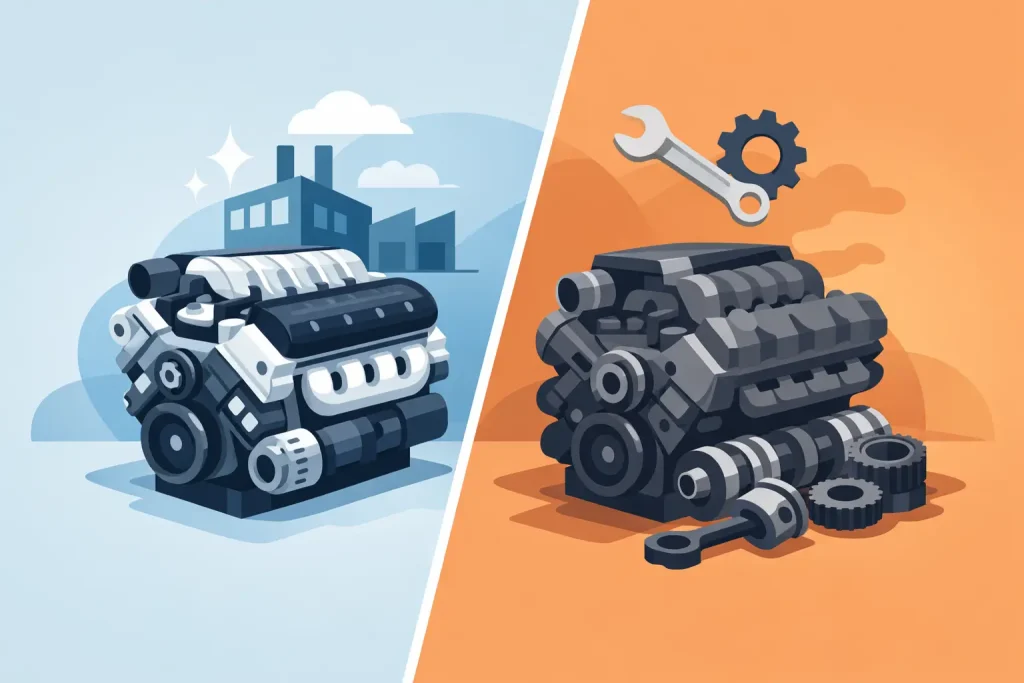
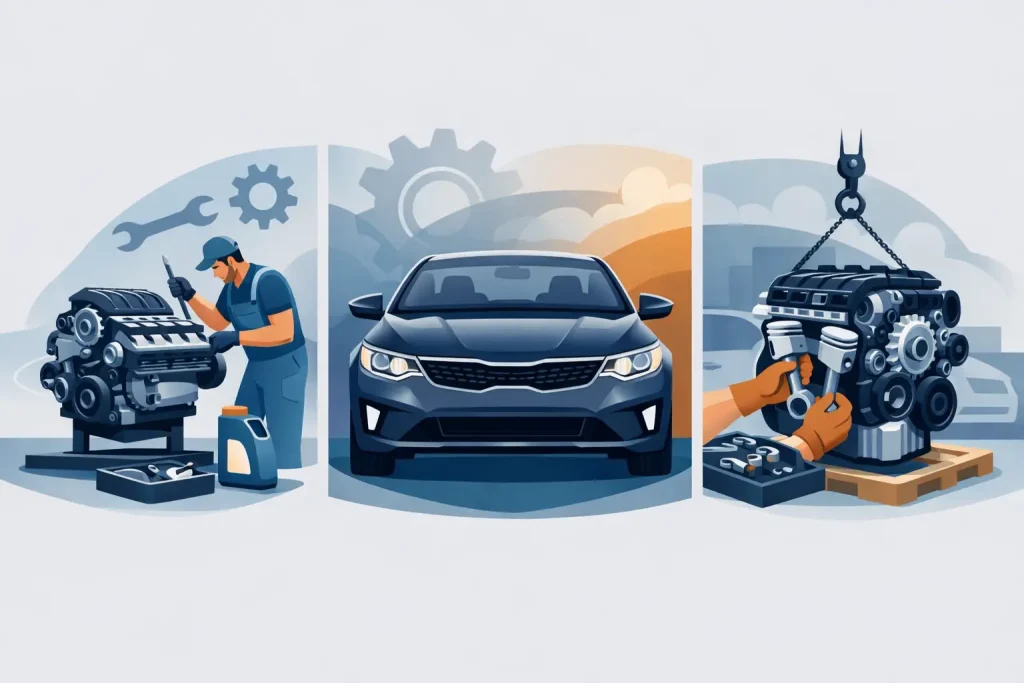
Repair, rebuild or replace – what is the best option?
This is where honest advice matters most. The cheapest option up front is not always the cheapest option overall.
When a repair makes sense
If the fault is isolated and the rest of the engine is healthy, repair is often the right path. That might include timing system repairs, gasket replacement, top-end work, or fixing a specific component failure before it damages the rest of the engine.
This option makes sense when the bottom end is sound, compression is acceptable, and there is no widespread internal wear. It can also be the best value if you have caught the problem early.
When a rebuild is worth considering
A rebuild suits engines with internal wear or damage where the base engine is still rebuildable. That can involve stripping the engine, inspecting components, machining where needed, and replacing worn internals so the engine can return to reliable service.
The benefit of a rebuild is control. You know what has been inspected, what has been replaced, and how the engine has been put back together. For owners planning to keep the vehicle, that can be a better long-term result than patch repairs.
The trade-off is time and cost. Rebuilds are more involved, and the final figure depends on what is found once the engine is apart. If major hard parts are damaged beyond repair, replacement may become the more practical option.
When replacement is the smarter move
If the engine has thrown a rod, seized, suffered severe bearing damage, or has extensive internal contamination, replacement can be the quickest and most sensible path. The same applies where the cost of rebuilding pushes too close to the cost of a tested reconditioned or replacement engine.
For many Kia owners, replacement reduces downtime and removes uncertainty. A properly sourced and tested engine, supplied and fitted by a workshop that knows the platform, can be the cleanest solution when the original engine is beyond economical repair.
Why model-specific knowledge matters in Kia engine repair
Not every workshop sees Korean engines often enough to spot patterns quickly. That matters more than many owners realise.
Kia engines can present faults that look similar on the surface but require different repair decisions underneath. A chain noise might be limited to timing components, or it might be linked to oil supply and broader wear. A misfire may be a simple ignition issue, or it may trace back to compression loss. A diesel complaint might involve turbocharger problems, injector faults, or internal engine wear.
Working on these engines every day changes the speed and accuracy of diagnosis. It also helps with parts selection, known updates, and deciding whether a repair is likely to hold up or simply delay a bigger failure.
That is where a specialist workshop has an edge. At Hyun Engines, the focus stays on Hyundai and Kia platforms, which means the advice is based on what actually happens in these engines in local conditions – not general theory.
What affects the cost of Kia engine repair?
There is no honest flat answer without inspection. Cost depends on the fault, labour involved, parts required, and whether damage has spread beyond the original issue.
A timing-related repair is very different from a full engine strip-down. An overheating issue caught early may stay relatively contained, while the same issue left for weeks can end in head work, machining, or complete engine replacement. Petrol and diesel repairs also vary, especially where turbo systems, injectors, or fuel system components are involved.
The important part is transparency. You want to know what has actually failed, what else needs checking, and whether the recommended work is likely to give you reliable service or just a temporary fix. Clear quoting matters, but clear reasoning matters just as much.
How to avoid paying twice for the same problem
Engine work becomes expensive when the root cause is missed. Replacing a noisy component without checking oil pressure, ignoring signs of overheating damage, or fitting parts to an engine with underlying internal wear can leave you back at square one.
A proper process usually starts with testing and inspection. That may include fault code checks, compression or leak-down testing, cooling system checks, oil condition review, and inspection for timing or valvetrain issues. Once the workshop understands the engine’s condition, the repair path becomes much clearer.
That also gives you a better basis for deciding whether the vehicle is worth repairing. For family cars, work vans, fleet vehicles and daily drivers, reliability matters more than a short-term patch job. If the vehicle needs to be back on the road and stay there, the right answer is the one that solves the problem properly.
Choosing the right workshop for Kia engine repair
If your Kia has a serious engine issue, ask direct questions. Has the workshop handled this engine type before? Can they diagnose, source, rebuild and fit in-house, or are they sending parts of the job elsewhere? Are the replacement engines or parts tested? Is there warranty support? Will they explain why they recommend repair, rebuild or replacement?
Those questions cut through the sales talk quickly. You are not just buying labour. You are buying judgement, experience, and the ability to stand behind the work.
A good workshop will not push one answer for every vehicle. Sometimes the sensible choice is a targeted repair. Sometimes a rebuild is justified. Sometimes replacement is the only path that makes financial and mechanical sense. The right advice is the advice that matches the condition of your engine, your budget, and how long you plan to keep the vehicle.
If your Kia is making noise, overheating, using oil, or losing power, leave the guesswork out of it. Get it assessed properly, ask for straight answers, and make the decision based on evidence rather than hope. That usually saves the most money – and the most stress – in the long run.
Frequently Asked Questions
Should I repair, rebuild or replace my Kia engine?
Minor faults can be repaired; widespread internal wear suits a rebuild or, more often, a tested reconditioned replacement that is faster and warranted.
How do I know if my Kia engine is beyond repair?
Spun bearings, bore damage, a cracked block or a seized engine usually mean repair is uneconomical and replacement is the better option.
What does a reconditioned Kia engine cost?
From around $4,200 for most models, including a 12-month warranty and free Australia-wide shipping.
Can you fit the Kia engine for me?
Yes, at our Dandenong workshop, usually within 2-3 days, and your old engine is taken as a core once the job is finished.