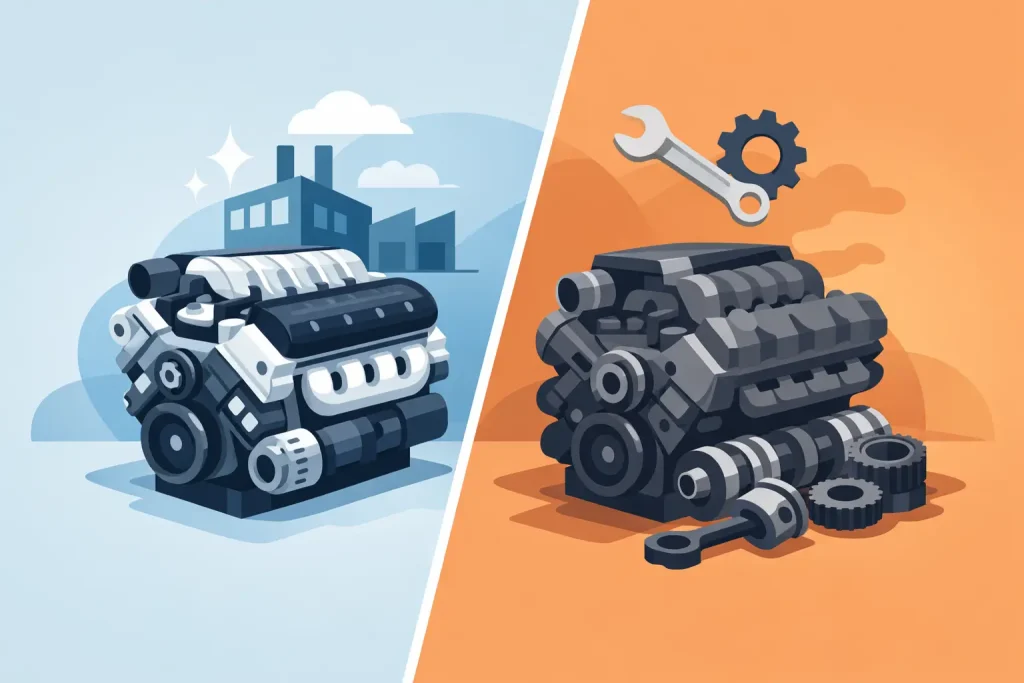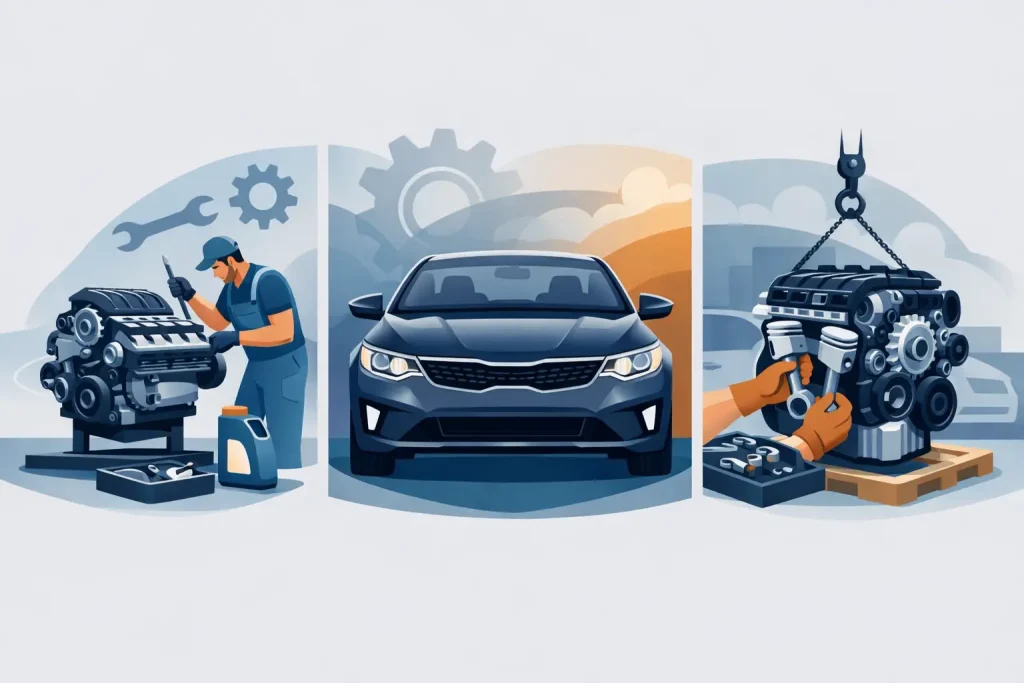
When a Hyundai or Kia starts knocking, burning oil or drops compression, the question usually gets urgent fast: engine rebuild vs replacement. For most owners, it is not really about theory. It is about cost, downtime, reliability, and whether the car will be worth keeping once the work is done.
There is no one-size-fits-all answer. A rebuild can be the right move in one vehicle and the wrong one in the next, even if the symptoms look similar. The best choice depends on what failed, how far the damage has spread, the value of the vehicle, and how quickly you need it back on the road.
Engine rebuild vs replacement: the core difference
An engine rebuild means your existing engine is removed, stripped down, inspected, machined as needed, and rebuilt using a mix of new and reconditioned components. Depending on the condition of the engine, that may include pistons, rings, bearings, gaskets, timing components, seals, valves, and machining work to the head or block.
An engine replacement means taking out the damaged engine and fitting another unit in its place. That replacement engine might be used, reconditioned, or brand new. In practical terms, most owners looking for value are comparing a rebuild with a quality reconditioned or tested replacement engine.
That distinction matters because you are not just choosing between two repair methods. You are choosing between two different paths for labour, parts, turnaround time and risk.
When a rebuild makes sense
A rebuild is often the better option when the engine is fundamentally saveable and the damage is limited to known wear areas. If the block is sound, the head can be repaired, and the internals have not suffered catastrophic failure, rebuilding can give you a strong result.
This is especially true when you want to keep the original engine, or when a replacement engine with the right history and condition is hard to source. Some owners also prefer a rebuild because they know exactly what has been replaced and machined rather than relying on the unknown life of a second-hand unit.
Rebuilds can also make sense where the fault has been caught early. Excessive oil consumption, bearing wear, timing-related damage, overheating issues and compression loss do not always mean the whole engine is beyond repair. If the problem is diagnosed before a conrod exits the block or metal contamination goes everywhere, a rebuild may still be commercially sensible.
The catch is that rebuilding only works well when the workshop diagnosis is thorough. If damage is worse than first expected, costs can climb once the engine is opened up.
The upside of rebuilding
The biggest advantage of a rebuild is control. The engine is inspected in detail, damaged parts are identified, and worn components can be renewed properly. You are not guessing what is inside the motor because the engine has been apart.
For owners planning to keep the vehicle for years, that can be a strong argument. A properly rebuilt engine, done with the right machining and assembly standards, can restore reliability and give you confidence in the vehicle again.
The downside of rebuilding
Rebuilds take time. Machining, measuring, parts supply and assembly all add labour and workshop time. They can also become more expensive if hidden damage is found after teardown.
That is why a rebuild is not automatically the cheaper option. Many people assume rebuilding always saves money. In reality, once you add machining, internal parts, labour and associated repairs, the total can exceed the cost of fitting a good replacement engine.
When replacement makes more sense
Replacement is often the better path when the original engine has suffered major internal damage. If the block is cracked, the crank is badly damaged, the head is beyond repair, or the engine has failed in a way that spreads debris through the entire unit, rebuilding may stop being cost-effective very quickly.
A replacement engine also makes sense when downtime matters. For tradies, delivery drivers, family vans and fleet vehicles, time off the road costs money and creates headaches. A ready-to-fit engine can often get the job done faster than waiting on a full rebuild.
In some Hyundai and Kia applications, replacement is simply the more practical option because tested reconditioned engines are available and known common issues can be addressed before installation. That can make the repair more predictable in both price and timing.
The upside of replacing
The biggest benefit is speed and certainty. If a suitable engine is available, the workshop can move straight from diagnosis to removal, fitment and testing. That reduces delays and makes quoting more straightforward.
Replacement can also be the smarter financial option where the labour involved in rebuilding the original engine is too high for the value of the car. If your vehicle is older and the rest of it is still in good order, fitting a quality replacement engine can extend its life without overcapitalising.
The downside of replacing
Not all replacement engines are equal. A cheap used engine with unknown history can turn one major problem into two. This is where buyers often get caught out. The headline price looks attractive, but if the engine has poor compression, sludge build-up, timing issues or hidden wear, the savings disappear fast.
That is why the quality of the supplied engine matters just as much as the installation. Testing, inspection and warranty support are not extras. They are part of what makes replacement worth doing properly.
Cost is not just the invoice total
Most owners start with price, and that is fair enough. Engine work is a major expense. But the real comparison should include more than the first number on the quote.
With a rebuild, the risk is variable cost. Until the engine is stripped and measured, there can be uncertainty. You might start with a reasonable plan and end up needing extra machining, a replacement head, injectors, a turbo inspection or more extensive timing work.
With a replacement, the risk is quality. If the engine source is poor, you may save on the initial job only to face more labour and repairs later. A tested, warranty-backed engine usually costs more than a random used unit, but it is often the cheaper decision over the life of the vehicle.
There is also the value of downtime. If your van or family car is off the road for weeks, that has a cost as well. For some owners, faster turnaround is worth paying for.
What Hyundai and Kia owners should pay attention to
Brand-specific experience matters here. Hyundai and Kia engines have known patterns of failure depending on model, fuel type and engine family. Timing chain issues, bearing damage, oil starvation, overheating and diesel-related problems do not all lead to the same repair choice.
A general workshop may tell you the engine is “gone” without properly separating top-end damage from bottom-end failure, or rebuildable wear from complete write-off. A specialist workshop is more likely to know what commonly fails, what can be saved, what should be replaced as a matter of course, and which engine options are worth fitting.
That can change the outcome significantly. A replacement may be the right answer in an iLoad with severe bottom-end damage, while a rebuild may stack up in another vehicle where the underlying structure is still sound. The point is not to push one answer. It is to diagnose the actual engine properly.
How to decide without wasting money
The best decision usually comes after three things are clear: the cause of failure, the extent of damage, and the realistic total cost of each path. If you do not have those three pieces, you are still guessing.
Ask whether the existing engine is rebuildable without major unknowns. Ask what is included in the rebuild and what could change after teardown. If you are considering replacement, ask whether the engine is used, reconditioned or new, what testing has been done, and what warranty support comes with it.
Most importantly, think about your plan for the vehicle. If you want another few dependable years from it, quality matters more than choosing the cheapest quote. If the car is near the end of its useful life, a large spend may not stack up no matter which option you choose.
At Hyun Engines, this is where straightforward advice matters most. Some vehicles are better candidates for rebuilding. Others are clearly better off with a replacement engine supplied and fitted by people who work on Hyundai and Kia motors every day.
The right answer is usually the one that gives you a reliable vehicle at a sensible cost, not the option that sounds cheaper before the bonnet is even up. If your engine has reached that decision point, get the facts first and make the call based on condition, not guesswork.
Frequently Asked Questions
What is the difference between an engine rebuild and a replacement?
A rebuild strips and repairs your existing engine, replacing worn parts; a replacement swaps in a different reconditioned or new engine. A reconditioned replacement is often faster and comes with its own warranty.
Is it cheaper to rebuild or replace an engine?
It depends on the damage. A full rebuild can cost as much as a reconditioned replacement once labour is included, so a tested reconditioned engine is frequently better value.
How long does an engine replacement take?
Fitting at our Dandenong workshop typically takes 2-3 days once the engine is on hand, and we dispatch engines within 1-2 business days.
Do your replacement engines come with a warranty?
Yes, every reconditioned Hyundai and Kia engine includes a 12-month warranty and free Australia-wide shipping.