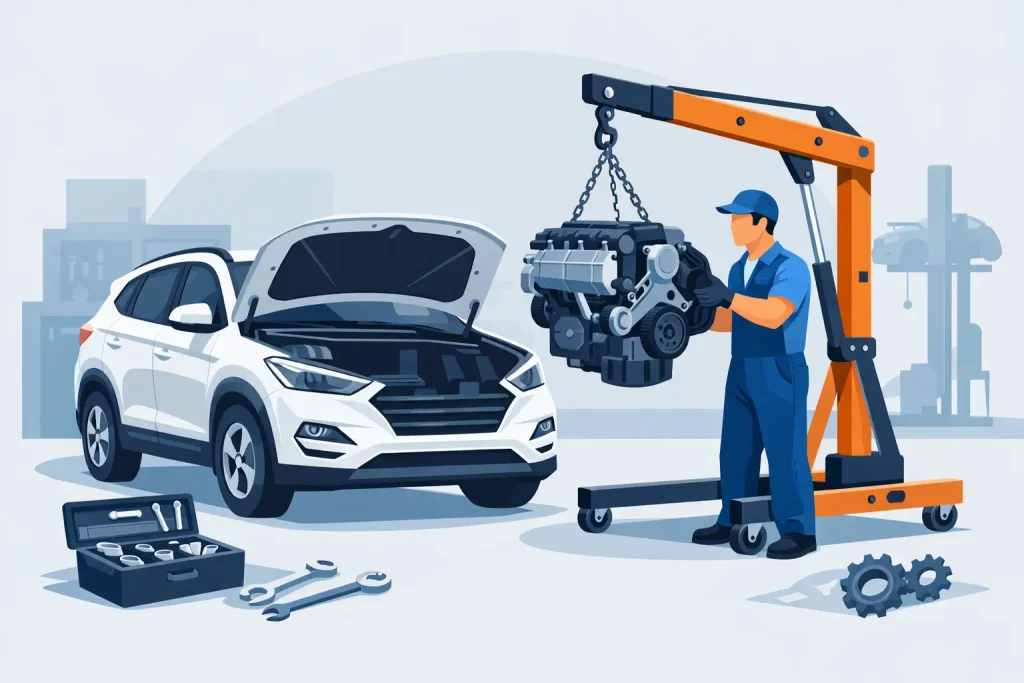
A rattly start-up on an i30 is easy to ignore the first few times. Then the noise hangs around longer, the engine light comes on, or the car starts running rough, and suddenly you are looking into Hyundai i30 timing chain replacement instead of a simple service.
On these engines, timing matters more than most owners realise. The chain keeps the crankshaft and camshafts working in sync. When it stretches, the tensioner weakens, or the guides wear out, the engine can lose timing. Best case, you get noise, fault codes and poor drivability. Worst case, the chain jumps teeth and you are dealing with internal engine damage.
When a Hyundai i30 timing chain replacement is needed
A timing chain is designed to last longer than a timing belt, but it is not a forever part. In the real world, oil quality, service history, driving conditions and engine design all affect how long it lasts. Some i30s will go a long way without chain trouble. Others start showing symptoms much earlier, especially if oil changes have been delayed or the engine has been run low on oil.
The common warning signs are usually there before complete failure. You might hear a metallic rattle on cold start, especially for a second or two before oil pressure builds. You may notice rough idle, hesitation, loss of power or an engine light with camshaft and crankshaft correlation faults. In some cases, the car still drives, but not properly. In others, it can suddenly become a no-start.
That does not automatically mean the chain itself is the only problem. A worn tensioner, damaged guide rails, oil pressure issue or existing engine wear can all contribute. That is why proper diagnosis matters. Replacing parts based on guesswork can turn an expensive job into an even more expensive one.
Why timing chain issues happen on Hyundai i30 engines
Most timing chain failures do not come out of nowhere. They build over time.
Oil condition is a major factor. Timing chains and tensioners rely on clean oil and correct pressure. If the engine has missed services, used the wrong grade of oil, or developed sludge, the chain system wears faster. The tensioner may not hold pressure as it should, which can allow chain slack and start-up rattle.
High kilometres also play a part, but kilometres alone do not tell the whole story. An i30 with consistent servicing can be in better shape than one with half the distance and a patchy history. Short trips, stop-start driving and overheating can also add stress.
Then there is the bigger issue owners sometimes miss – chain noise can be a symptom, not just the fault. If an engine has worn internals, low oil pressure or damage from previous timing issues, fitting a new chain kit may not solve the root cause.
What is involved in the repair
A proper timing chain replacement is more than swapping one chain for another. The front of the engine needs to come apart, timing marks must be set precisely, and worn related parts should be replaced at the same time. That usually means the chain, guides, tensioner and associated seals. Depending on engine condition, cam phasers or sprockets may also need attention.
This is not a job where shortcuts pay off. Reusing suspect components to save money can lead to repeat failure and another teardown. On interference engines, incorrect timing can also cause valve and piston contact. That is why specialist experience matters, particularly with Hyundai engines that have known timing-related issues across certain variants.
After fitting, the engine should be checked for correct timing, oil pressure, fault codes and cold start behaviour. If there has already been chain slip, further inspection may be needed to confirm whether valves or other internal parts have been affected.
Repair, rebuild or replace – what makes sense?
This is where the answer depends on the condition of the engine, not just the noise coming from the timing cover.
If the problem has been picked up early and the rest of the engine is healthy, a timing chain replacement can be the right fix. That is often the most cost-effective option when compression is good, oil pressure is stable, and there is no sign of internal damage.
If the chain has jumped timing, the calculation changes. Bent valves, damaged pistons or debris through the engine can push the repair cost much higher. At that point, an engine rebuild or replacement engine may make more sense than repairing a badly damaged original motor.
There are also middle-ground cases. Some engines present with chain noise, but inspection reveals broader wear such as sludge, bearing issues or oil starvation. In those situations, replacing the chain alone is rarely the smart move. It may quieten the symptom for a while, but it does not restore engine health.
For owners planning to keep the car, it usually pays to look at the full picture rather than chasing the cheapest immediate repair. A proper diagnosis gives you clear options – repair the timing system, rebuild the engine, or replace it with a tested unit if that stacks up better.
How much does Hyundai i30 timing chain replacement cost?
There is no honest one-price-fits-all answer, because labour time, engine variant and the extent of wear all affect the job. A straightforward timing chain replacement is very different from a chain job that uncovers damaged valves, worn cam components or poor oil pressure.
Parts quality matters too. Cheap kits can look attractive upfront, but they are not always worth fitting. On a major engine job, labour is a big part of the cost, so using reliable components is usually the better long-term decision.
If you are comparing quotes, check what is actually included. One workshop may quote only the chain. Another may include guides, tensioner, seals, oil, coolant and diagnostic checks. Those are not the same job, even if the heading on the quote looks similar.
For that reason, the best quote is not always the lowest. It is the one that clearly explains what has failed, what is being replaced, and what happens if further damage is found once the engine is opened up.
Signs you should not keep driving it
Some timing chain issues give you a bit of warning. Others do not. If your i30 is rattling on start-up, running poorly, showing timing-related fault codes or has suddenly lost power, it is worth getting it checked sooner rather than later.
Driving on with a stretched chain can turn a manageable repair into a major engine failure. Once the chain jumps, the valves and pistons can collide. That is the point where a repair bill often becomes an engine replacement conversation.
A no-start after a period of chain noise is another red flag. So is metal in the oil, persistent engine light faults after other repairs, or a rough idle that keeps getting worse. Those are all signs the problem may have moved beyond a simple maintenance issue.
Why specialist diagnosis matters on Hyundai engines
General mechanical knowledge is useful, but Hyundai and Kia engine work often benefits from brand-specific experience. The difference is not just knowing how to fit a chain. It is recognising the patterns – what usually fails, what else should be inspected, and when a chain problem is covering up a bigger engine issue.
That matters for owners who want straight answers. If the engine is worth repairing, you want to know. If it is more sensible to rebuild or replace, you want that said clearly before more money is spent. At Hyun Engines, that practical approach is what many Melbourne Hyundai owners are looking for when timing problems start showing up.
What to do if your i30 has timing chain noise
Do not wait for the noise to become constant. Book a proper inspection, especially if the sound is getting worse or the vehicle has developed drivability issues. A technician should confirm whether the problem is chain stretch, tensioner wear, oil pressure related, or something else altogether.
If you have a service history, bring it with you. It helps paint the picture. So does noting when the noise happens – cold start, hot idle, under load, or all the time. Those details can speed up diagnosis and help avoid unnecessary parts replacement.
The main thing is to act early. Timing chain faults are often far cheaper to deal with before they become internal engine damage. A good workshop will tell you where you stand, what the risks are, and whether a chain repair is enough or if a bigger engine solution will save you money and grief in the long run.
If your Hyundai i30 has started rattling, misfiring or throwing timing-related faults, getting it checked now usually gives you more options than waiting for it to stop on the side of the road.
Frequently Asked Questions
When does a Hyundai i30 timing chain need replacing?
When it stretches or the tensioner wears, signalled by a start-up rattle or a timing correlation fault. Left too long it can cause valve or piston damage.
What does an i30 timing chain replacement involve?
Replacing the chain, guides and tensioner, refreshing seals as needed, and re-setting the valve timing accurately.
What if my i30 engine is already damaged?
If the chain has caused internal damage, a reconditioned i30 engine (1.8L G4NB or 2.0L G4NC) is often the better fix, with a 12-month warranty.
Do you supply reconditioned i30 engines?
Yes, supplied Australia-wide with free shipping, with fitting available at our Dandenong workshop.