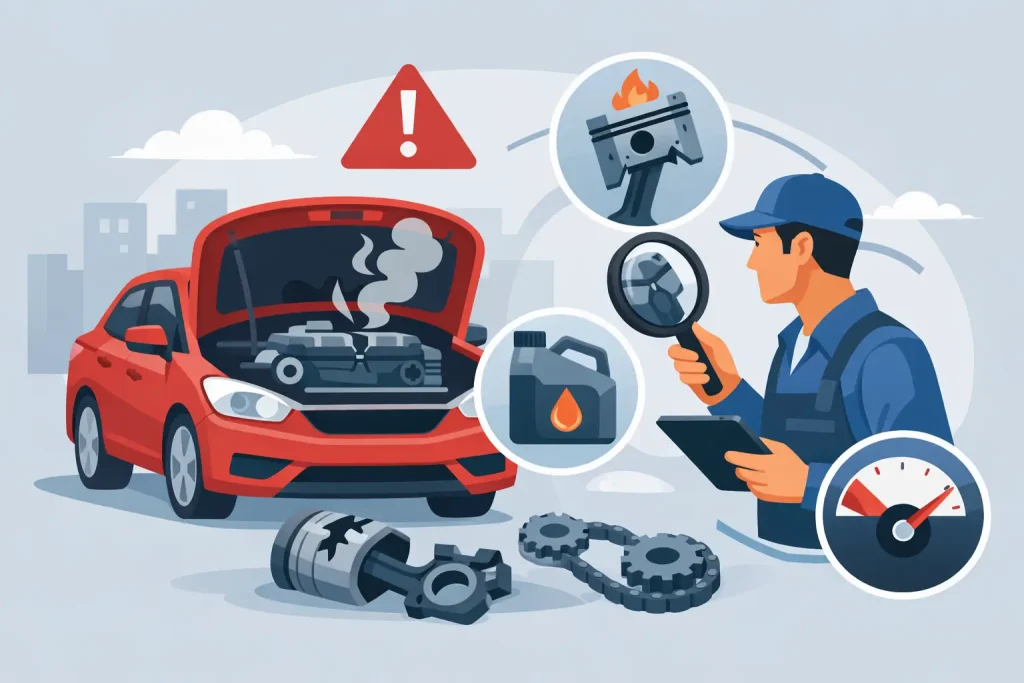
When a Tucson starts knocking on cold start, blowing smoke, or chewing through oil, the question gets serious fast – repair it, rebuild it, or replace the engine entirely. This Hyundai Tucson motor replacement guide is written for owners who want straight answers before spending real money. If your vehicle is off the road, carrying the family, or part of a work fleet, getting the decision right matters just as much as getting it done quickly.
When a Hyundai Tucson engine replacement makes sense
Not every engine problem means the motor is finished. A noisy timing chain, failed turbo, blocked DPF on diesel models, or overheating issue can sometimes be repaired without replacing the full engine. But once internal damage is confirmed, the numbers can change quickly.
A replacement usually makes sense when the engine has suffered bearing failure, piston damage, thrown a rod, severe overheating, or low compression across multiple cylinders. It can also be the better path when the labour needed to strip and rebuild your existing engine pushes the total close to the cost of fitting a tested replacement unit.
For many Tucson owners, the real issue is reliability. If the vehicle is your daily transport, family SUV, or business car, patching up a tired engine can become more expensive than doing the job properly once. That is especially true if the motor has already had previous repairs or has been run low on oil.
Common reasons Tucson engines fail
The Tucson range has been offered with several petrol and diesel engines, and the fault pattern depends on the model and series. Some fail because of maintenance neglect. Others develop known issues around timing components, oil supply, overheating, or carbon-related wear.
Diesel engines can suffer from turbo-related problems, oil contamination, injector issues, and long-term stress from short-trip driving. Petrol engines may present with timing noise, excessive oil use, misfires, and overheating damage. In some cases, what starts as a small issue becomes a full engine replacement because the warning signs were ignored for too long.
That is why proper diagnosis matters before anyone talks about engines for sale or installation dates. A good workshop should confirm the cause of failure, not just the symptom. There is no point fitting another engine if a cooling system fault, blocked oil pickup, or failed ancillary part is going to damage the replacement motor too.
Hyundai Tucson motor replacement guide: your main options
Once replacement is on the table, there are usually three realistic paths. The first is a used engine. This can be the cheapest up-front option, but quality varies a lot. The right used engine can work well if it has been compression tested, inspected properly, and matched to the correct vehicle code. The wrong one can turn into the same headache all over again.
The second option is a reconditioned engine. This is often the sweet spot for owners who want a stronger balance of value and reliability. A properly reconditioned unit should have worn components addressed, critical tolerances checked, and testing completed before fitment. It costs more than a bare used motor, but it can reduce the risk that comes with unknown engine history.
The third option is a full rebuild of your original engine. This can be the right choice when the existing block and head are worth saving, parts availability is good, and the damage is rebuildable. It also suits owners who want to retain the original engine number. The trade-off is time. Rebuilds can take longer, and costs depend heavily on what is found once the engine is stripped.
There is no universal best option. It depends on budget, turnaround time, engine availability, and the condition of the rest of the vehicle.
What should be replaced during engine installation?
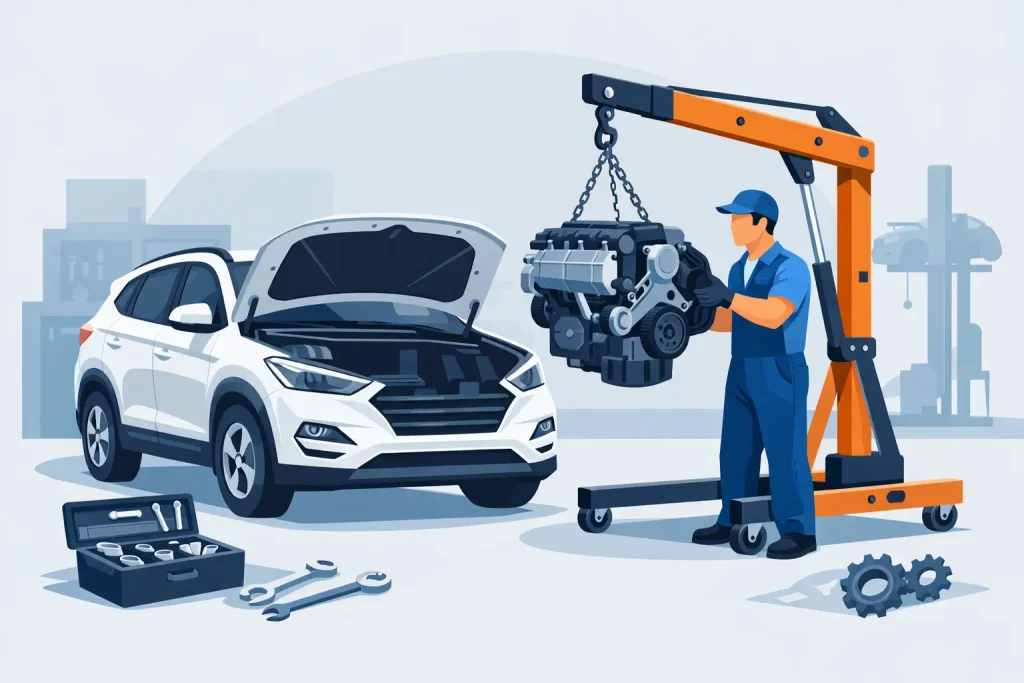
A motor swap is not just about lifting one engine out and dropping another in. The quality of the overall job depends on what gets checked and replaced around it. If supporting parts are tired, leaking, or close to failure, now is the time to deal with them.
In many cases, that includes timing components, seals, gaskets, water pump, thermostat, engine mounts, spark plugs or glow plugs, filters, and fresh fluids. On diesel models, the turbo and related oil feed lines may need close inspection. The radiator and cooling system should also be checked carefully if overheating contributed to the original failure.
This is one area where cheap quotes can be misleading. A low figure may only cover the base engine and labour, with important extras left out until the job is underway. Clear advice up front saves arguments later.
How long does a Tucson motor replacement take?
If the correct engine is in stock and there are no major surprises, replacement can often be completed far faster than a full rebuild. That said, timing depends on the exact Tucson model, the condition of existing components, workshop schedule, and whether any additional faults show up during removal.
For example, seized fasteners, damaged wiring, contaminated intake components, turbo faults, or cooling system issues can all add time. Delays also happen when the wrong engine variant is sourced first or when a workshop is not familiar with Hyundai systems and spends extra hours sorting out compatibility.
That is why specialist experience matters. A workshop that deals with Hyundai and Kia engines every day is more likely to identify the correct engine code, know common failure points, and avoid unnecessary downtime.
Cost expectations for a Hyundai Tucson engine replacement
Engine replacement cost is one of the first questions owners ask, and fairly so. It is also the hardest to answer without diagnosis. Tucson engine replacement pricing can vary based on petrol or diesel, engine series, whether you choose used or reconditioned, and how much extra work is needed during installation.
If the old engine failed catastrophically, there may be contamination through intake or exhaust components that needs to be addressed. If the vehicle has high kilometres, items like hoses, mounts, cooling components, and service parts can sensibly be replaced at the same time. Those are not always optional if you want dependable results.
The honest answer is that the cheapest path is not always the lowest total cost. A better-tested engine with warranty-backed supply and proper fitting often saves money compared with a bargain motor that fails early or needs rework.
What to check before approving the job
Before you commit, ask what engine is being supplied and how it has been assessed. You want to know whether it is used, reconditioned, or rebuilt, what testing has been done, and what warranty applies. You should also ask what ancillary parts are included, what fluids and service items are being replaced, and whether the quote covers installation only or a complete running solution.
It is also worth asking whether the workshop has checked the likely root cause of the original failure. If the old engine died because of overheating, oil starvation, or a failed turbo, that cause needs to be addressed. Otherwise, the replacement engine is being asked to survive the same problem.
For Melbourne and Victorian drivers, local after-sales support matters as well. If anything needs checking after installation, dealing with a specialist workshop nearby is a lot easier than chasing an engine supplied with minimal support.
Is replacement worth it, or is it time to move the car on?
That depends on the vehicle’s overall condition. If the body, transmission, suspension, and interior are all in decent shape, replacing the engine can be the more practical option compared with buying another used car with its own unknown history. This is often the case when used vehicle prices remain high and the rest of the Tucson still suits your needs.
On the other hand, if the car has multiple major issues beyond the engine, replacement may not stack up. A straight answer from a specialist workshop is worth more than false reassurance. At Hyun Engines, that is the approach – clear advice, proper diagnosis, and options that make sense for the vehicle in front of us.
Choosing the right workshop for the job
Engine replacement is not routine servicing. It needs accurate diagnosis, correct engine matching, proper installation procedures, and thorough final checks. Hyundai Tucson owners are usually better served by a workshop that understands common Hyundai engine faults, parts interchange issues, and the practical differences between engine options.
A general workshop may still be able to fit an engine, but specialist knowledge often makes the job smoother and more reliable. That can mean fewer delays, fewer compatibility problems, and a better result once the vehicle is back on the road.
If your Tucson is showing signs of serious engine trouble, the best next step is not guessing. Get it inspected properly, confirm the cause, and compare repair, rebuild, and replacement on actual facts. A good engine job should give you confidence every time you turn the key, not another round of questions a few weeks later.
Frequently Asked Questions
When does a Hyundai Tucson need an engine replacement?
Common triggers include severe oil consumption, knocking or rod-bearing noise, overheating damage, or a seized engine. If repair costs approach the value of a replacement, a reconditioned engine is usually the smarter choice.
Which engines do Hyundai Tucsons use?
Depending on model and year, Tucsons use 2.0L and 2.4L petrol engines (such as the G4KD, G4NA and G4KJ) and the 1.6L turbo GDI G4FJ. We can match a reconditioned engine to your exact build.
How much is a reconditioned Tucson engine?
Reconditioned Tucson engines start from around $4,200 depending on the variant, including a 12-month warranty and free Australia-wide shipping.
Can you fit the Tucson engine for me?
Yes, fitting is available at our Dandenong workshop, usually within 2-3 days, and your old engine is taken as a core once the job is finished.