You check the dipstick, top the oil up, and a week or two later it is low again. If you are asking why is my Hyundai losing oil, the short answer is that the engine is either leaking it, burning it, or pushing it somewhere it should not go. The harder part is working out which one applies, because the right fix depends on the actual fault, not guesswork.
With Hyundai engines, oil loss can range from a simple rocker cover gasket leak through to serious internal wear. Some problems are relatively affordable to sort out early. Others become expensive when the vehicle keeps being driven low on oil. That is why it pays to take the pattern seriously, especially if you own a high-kilometre i30, Tucson, iLoad, Santa Fe, ix35 or a diesel work vehicle that is on the road every day.
Why is my Hyundai losing oil without a puddle underneath?
A lot of owners assume that if there is no obvious oil stain on the driveway, there cannot be much wrong. That is not always true. Many Hyundai engines lose oil by burning it during normal operation, or by leaking onto hot engine components where it burns off before it ever reaches the ground.
That means you might notice the oil level dropping without seeing much evidence under the car. In some cases there is a faint burnt oil smell. In others, there is blue-grey smoke on start-up or under acceleration. Sometimes there are no clear symptoms at all until the low oil warning comes on or the engine starts rattling.
The most common reasons a Hyundai loses oil
External oil leaks
This is the first place to look. Hyundai engines can leak from rocker cover gaskets, sump gaskets, oil filter housings, drain plugs, front and rear main seals, turbo oil lines on diesel models, and timing cover sealing points. These leaks can start small and become worse over time.
A rocker cover leak is common because the gasket hardens with age and heat. Oil then seeps down the side of the engine and can collect dirt, making the area look greasy rather than obviously wet. A sump leak can be just as subtle, especially if road grime masks it.
If the leak is near the exhaust side of the engine, the oil may burn off as you drive. That often creates a smell before it creates a puddle.
Oil consumption through burning
If there is no visible leak, the engine may be consuming oil internally. This can happen when piston rings are worn, oil control rings are sticking, valve stem seals are tired, or the PCV system is not regulating crankcase pressure properly.
Some Hyundai petrol engines have been known to develop oil consumption issues as kilometres climb, particularly if servicing has been stretched or the engine has spent long periods running on old oil. Once oil control rings gum up, the engine can start burning oil without a dramatic cloud of smoke every time.
This is one of the more frustrating faults because the car may still seem to drive fairly normally. The owner simply finds themselves topping it up more often than they should.
PCV valve and crankcase pressure problems
The positive crankcase ventilation system helps manage pressure inside the engine. If the PCV valve sticks or there is excessive blow-by from internal wear, oil can be drawn into the intake and burned.
This issue is often overlooked because the part itself is not especially complex, but the symptoms can mimic larger engine problems. In some cases, a faulty PCV setup is a relatively straightforward fix. In others, it is only exposing wear that is already present in the engine.
Turbocharger issues on diesel models
On Hyundai diesel engines, including some iLoad and Santa Fe applications, oil loss can come from the turbocharger. Turbos rely on engine oil for lubrication. If the seals begin to fail, oil can leak into the intake or exhaust side and burn off.
When that happens, you may notice smoke, sluggish performance, oil in the intake plumbing, or rising oil consumption without a major external leak. The risk here is that people keep topping up the oil without recognising the turbo is the source.
Head gasket or internal engine faults
A head gasket issue is not the most common cause of oil loss, but it does happen. Oil can mix with coolant, coolant can enter the combustion chamber, or pressure can force oil where it should not be. If you see milky residue under the oil cap, unexplained coolant loss, overheating, or persistent smoke, the engine needs proper inspection.
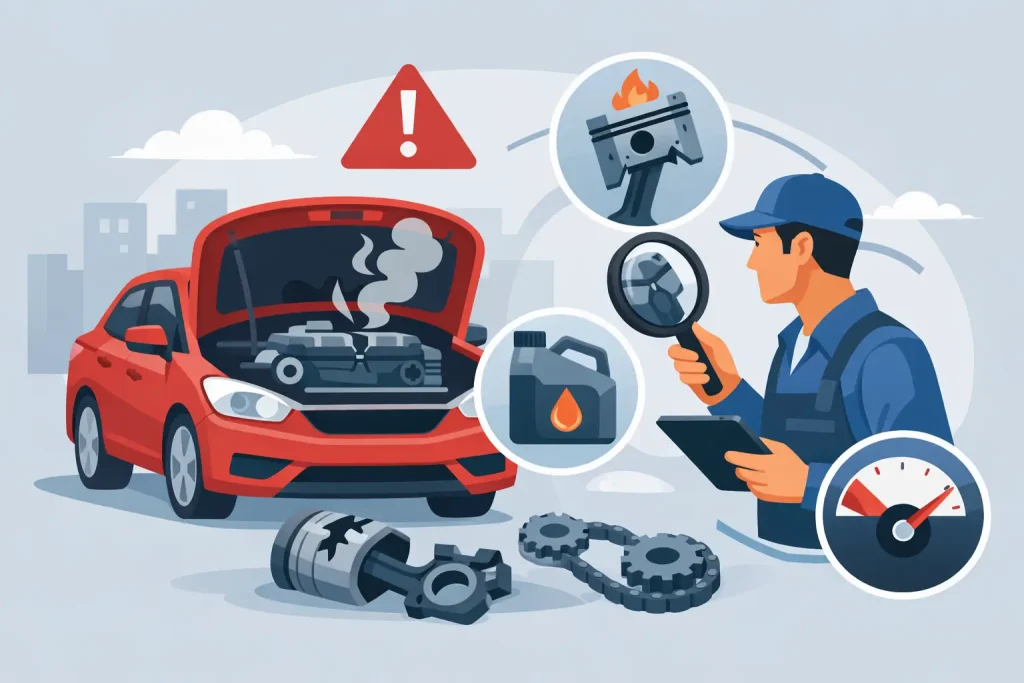
More serious internal faults include worn bores, damaged pistons, ring failure or bearing damage after repeated low-oil running. At that point, the question is no longer just why the oil is disappearing. It becomes whether the engine can be repaired economically or whether replacement is the smarter option.
Signs your Hyundai is losing oil faster than it should
A small amount of oil use between services can be normal, depending on the engine, age, and how the car is driven. Constant top-ups are not. If your Hyundai is losing oil, watch for the signs that usually appear before a bigger failure.
The obvious one is a falling dipstick level. You might also notice oil spots where you park, a burnt smell after driving, smoke from the exhaust, engine ticking on start-up, poor acceleration, or the oil pressure light. On some vehicles, chain or valvetrain noise starts showing up when the oil level gets too low.
That last point matters. Timing components and bearings do not get much mercy when oil supply drops. Even a car that still starts and drives can be heading towards major damage.
Why some Hyundai engines get into trouble quickly
Hyundai engines generally do well when they are serviced correctly and faults are dealt with early. The problems tend to become severe when oil loss is ignored, or when the owner keeps driving because the vehicle still feels usable.
That is where timing chain wear, bearing noise, overheating and complete engine failure can follow. A leaking gasket is one thing. Driving for months with low oil because the car is “only using a bit” is another.
For work vans, family SUVs and daily commuters, this often starts as a convenience problem. People are busy, so they top it up and plan to look at it later. Then later turns into a rebuild or replacement discussion.
How a proper diagnosis should be done
Start with the basics
The oil level needs to be checked properly on level ground, with the correct grade of oil confirmed. Overfilled or underfilled engines can both create misleading symptoms. The service history matters too, because long intervals and poor-quality oil can contribute to ring and sludge issues.
Check for external leaks first
A specialist should inspect the engine from above and below, looking at the rocker cover, timing cover, sump, filter housing, seals and oil cooler areas where fitted. Sometimes dye testing or a proper clean-down is needed to pinpoint a slow leak.
Rule out oil burning
If no leak is found, attention turns to oil consumption. That may include checking spark plugs on petrol models, inspecting intake piping, testing the PCV system, assessing exhaust smoke patterns and carrying out compression or leak-down testing if internal wear is suspected.
Consider the bigger picture
A high-kilometre engine with heavy oil use, smoke and knocking may not be a candidate for a minor fix. On the other hand, a clean-running engine with one leaking gasket may be a straightforward repair. This is where experience with Hyundai and Kia engines makes a difference. The same symptom can point to very different outcomes.
When to repair it and when to think bigger
If the problem is an external leak, a blocked PCV valve, or a seal issue caught early, repair is usually the sensible path. If the engine is burning oil because of worn rings, bore wear or damage from low oil operation, the cost equation changes.
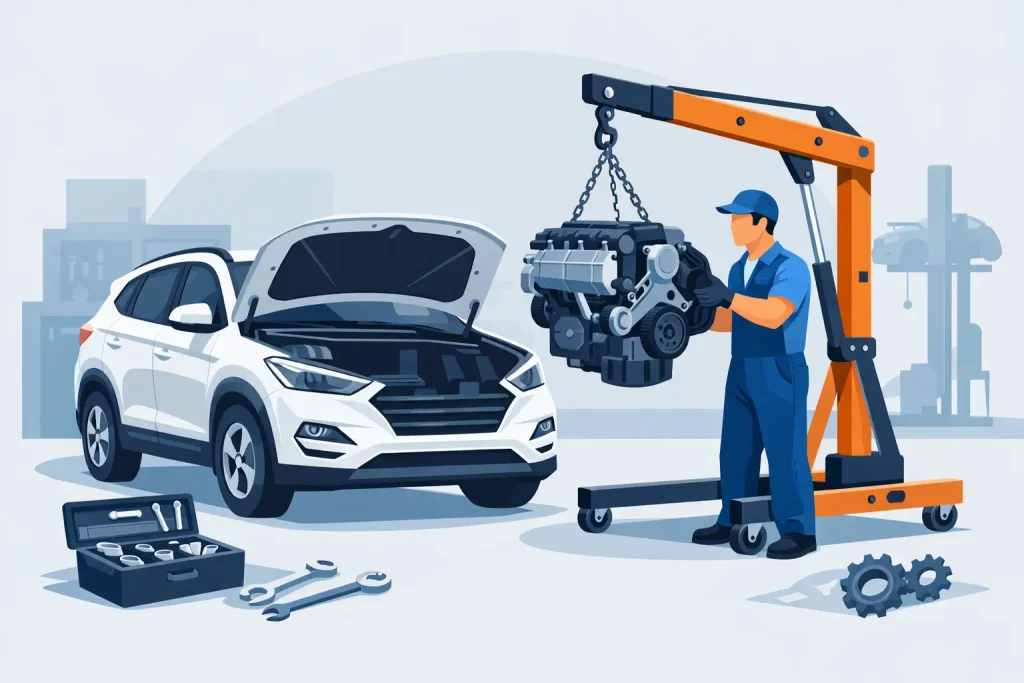
Some owners are better off with an engine rebuild. Others make more sense with a tested replacement engine, particularly when downtime matters and the rest of the vehicle is in good condition. There is no one-size-fits-all answer. It depends on the model, kilometres, condition of the engine, and how long you plan to keep the car.
At Hyun Engines, this is often where owners need clear advice more than anything else. Not every oil-loss issue means a full engine replacement, but not every engine is worth patching either.
What to do if your Hyundai is losing oil now
Do not wait for the warning light. Check the level, top up with the correct oil if needed, and book a proper inspection. If the engine is rattling, smoking heavily, overheating, or the oil light has come on while driving, stop using it until it is assessed.
Continuing to drive low on oil is how a manageable fault turns into crankshaft, bearing or timing damage. That is especially true for vehicles that tow, carry loads, or spend a lot of time in stop-start traffic around Melbourne.
Oil loss is not always dramatic at first. Sometimes it is just a dipstick that keeps dropping and a feeling that something is not right. Trust that instinct. A Hyundai that is losing oil is telling you there is a fault somewhere, and the earlier you identify it, the better your options usually are.
If your car is chewing through oil, the goal is not just to keep topping it up. The goal is to find the reason, fix the cause, and protect the engine before the repair bill gets a lot bigger.
Frequently Asked Questions
Why is my Hyundai burning or losing oil?
Common causes include worn piston rings, valve-stem seals, a failing PCV valve, or bore wear on some engines. Rapid loss with no visible leak usually points to internal wear.
Which Hyundai engines are most affected by oil consumption?
The 2.0L and 2.4L Theta II GDI family (G4KD, G4KE, G4KJ) are the most commonly reported.
Can oil loss damage my engine?
Yes. Running low on oil starves bearings and bores of lubrication and can lead to failure, so it is best addressed early.
What are my options if the engine is worn out?
Options range from repair to a reconditioned replacement engine. We supply tested reconditioned Hyundai engines with a 12-month warranty and free Australia-wide shipping.