A Kia that suddenly starts knocking, burning oil or cutting out under load usually does not fail without warning. When people ask what causes Kia engine failure, the answer is rarely just one thing. In the workshop, it is more often a chain of problems – oil starvation, overheating, timing issues, neglected servicing or a known weakness that has been left too long.
For owners, that matters because the cause changes the fix. Some engines can be repaired before major internal damage sets in. Others are better rebuilt or replaced once the crank, bearings or pistons have been damaged. Getting the diagnosis right early can save a lot of money and a lot of downtime.
What causes Kia engine failure most often?
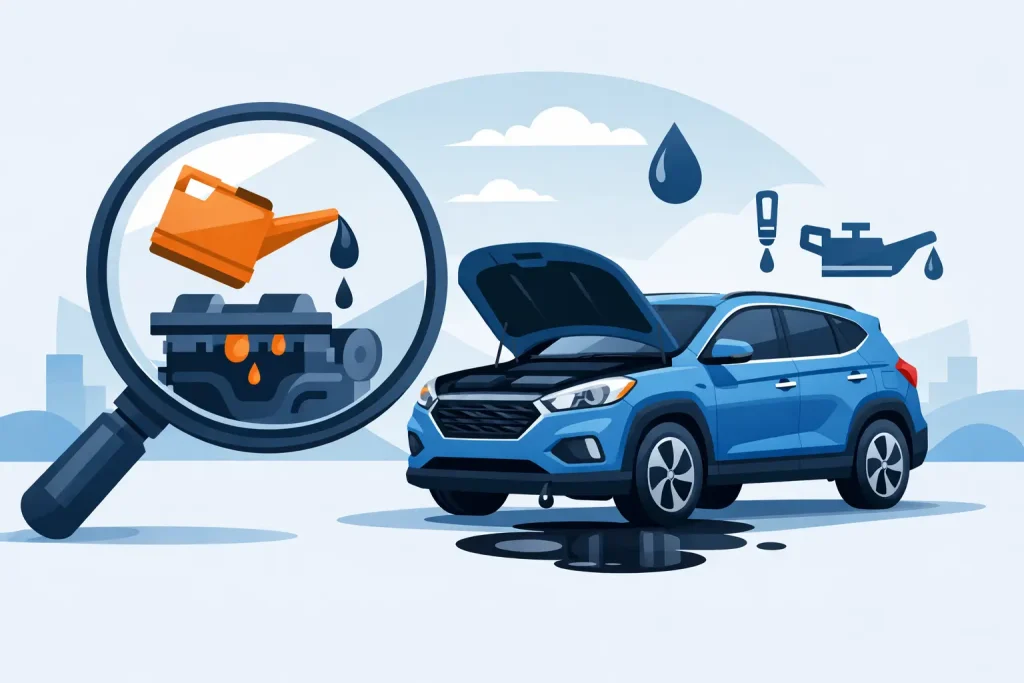
The most common cause is poor lubrication. An engine depends on a constant supply of clean oil at the right pressure. If oil level drops, oil breaks down, sludge builds up, or a pickup screen becomes restricted, the internal parts stop getting proper protection. Bearings wear, heat rises fast, and the engine can start knocking or seize.
Overheating is another major cause. A small coolant leak, a weak water pump, a thermostat sticking shut or a radiator that is partially blocked can all push temperatures beyond safe limits. Once that happens, cylinder heads can warp, head gaskets can fail, and piston or bore damage can follow.
Timing-related faults are also high on the list, especially in engines where chain wear, tensioner issues or poor maintenance have already started to show up. If valve timing moves out of spec, the engine may run rough, lose compression, or in severe cases suffer internal contact between valves and pistons.
Then there is simple wear combined with delayed action. Many Kia engines give signs before full failure – increased oil use, rattles on startup, smoke, low power or warning lights. The longer those signs are ignored, the more likely a repair turns into a full engine replacement.
Oil starvation and low oil pressure
If there is one issue that destroys engines quickly, it is lack of oil where it is needed most. Drivers often assume that if the oil light is not on, everything is fine. That is not always the case. An engine can already be wearing internally before the warning light appears.
Low oil pressure can be caused by overdue servicing, sludge buildup, worn oil pumps, blocked oil galleries or excessive oil consumption that goes unnoticed between services. Some engines also develop leaks that are slow enough to escape attention until the level is dangerously low.
Once lubrication drops off, bearings are usually first to suffer. You may hear a bottom-end knock, especially under acceleration. At that stage, the damage is often already serious. Continuing to drive it can turn a rebuildable engine into one that needs a replacement short motor or complete engine.
Overheating and cooling system faults
A cooling system problem can look minor at first. A driver tops up coolant once or twice and keeps going. The trouble is that modern engines do not tolerate heat well. Even one overheating event can do lasting damage.
Common causes include coolant leaks, radiator failure, a faulty thermostat, fan issues and water pump wear. In some cases, the root problem is external, such as a split hose. In others, the overheating is a symptom of an internal issue like a failing head gasket.
When a Kia engine overheats, aluminium components can distort. That may lead to compression loss, coolant mixing with oil, white exhaust smoke or repeated overheating even after the original leak is repaired. The fix depends on how far the damage has gone. Sometimes a top-end repair is enough. Sometimes the bottom end has also suffered and a complete engine solution makes more sense.
Timing chain and valvetrain problems
Timing systems do a critical job, and when they go wrong the consequences can be expensive. A stretched timing chain, worn guides or a weak tensioner can cause rattling noises, poor running and fault codes. If ignored, the engine can jump timing.
That does not always mean instant catastrophic failure, but it can. On interference engines, even a small timing event can bend valves or damage pistons. In other cases, poor timing slowly contributes to rough operation, misfires and long-term wear that eventually leads to failure.
This is one of those areas where early intervention matters. Replacing timing components at the first sign of trouble is far cheaper than replacing an engine after major internal damage.
Poor maintenance and the wrong service habits
Not every failed engine has a manufacturing defect behind it. A large number fail because service intervals have stretched too far, the wrong oil has been used, or warning signs have been ignored.
Short-trip driving can make this worse. Vehicles that do lots of stop-start suburban running often build sludge faster than those doing regular freeway kilometres. Fleet vehicles and people movers also tend to work hard, especially when loaded, which increases heat and oil stress.
That does not mean every Kia with patchy service history is doomed. It does mean risk goes up. An engine with clean internals and a documented service record is always in a better position than one that has missed years of proper care.
Manufacturing issues and known engine weaknesses
Some Kia engines have developed reputations for specific problems, including bearing wear, oil consumption and internal component failure. That does not mean every engine from a certain model range will fail, but it does mean some engines are less forgiving when maintenance slips or early symptoms are missed.
This is where brand-specific experience matters. A general workshop may hear a knock and only confirm that the engine is noisy. A specialist who works on Hyundai and Kia engines every day is more likely to identify whether the problem is a known bottom-end issue, a timing-related fault, or a repair that has already gone beyond the point of being economical.
For owners, the key point is practical rather than theoretical. If your engine belongs to a model or series known for a certain weakness, acting early gives you more options.
The warning signs before failure
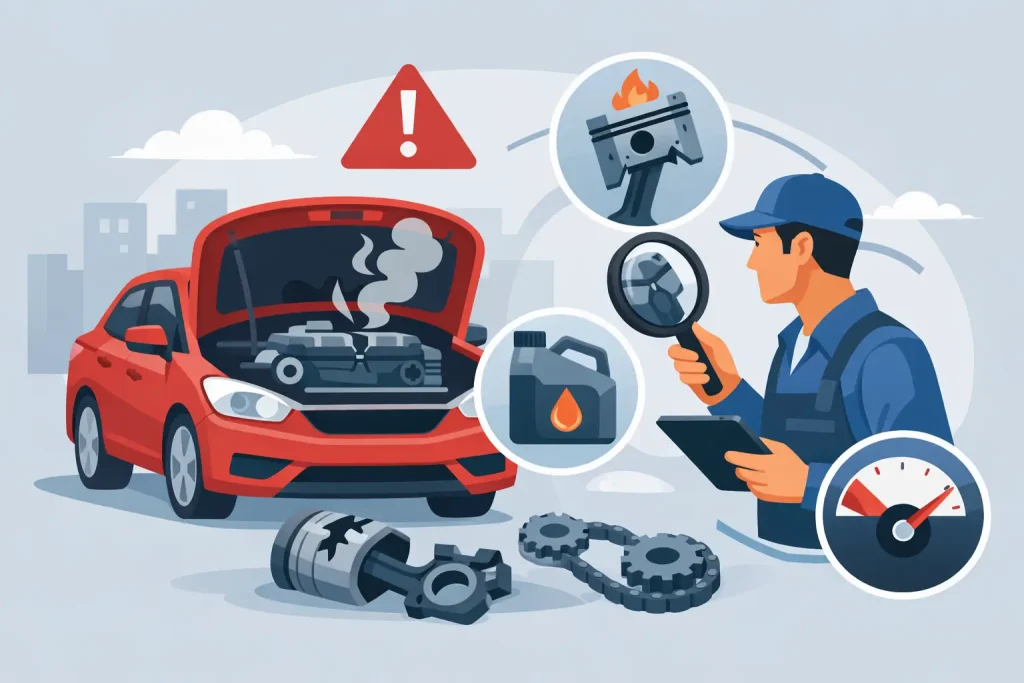
Most major engine failures are preceded by symptoms. The common ones include knocking noises, timing chain rattle, low oil pressure warnings, overheating, heavy oil use, blue or white exhaust smoke, rough idle and loss of power.
Not every symptom means the engine is finished. A coolant leak can still be a hose. A rattle may still be contained to the timing assembly. But these signs should never be treated as normal. The longer the engine runs in that condition, the greater the chance that metal contamination, bearing damage or heat stress will spread through the entire unit.
A proper inspection usually includes fault code checks, oil and coolant condition assessment, compression or leak-down testing where needed, and listening for top-end versus bottom-end noise. That process matters because guessing wastes money.
Repair, rebuild or replace?
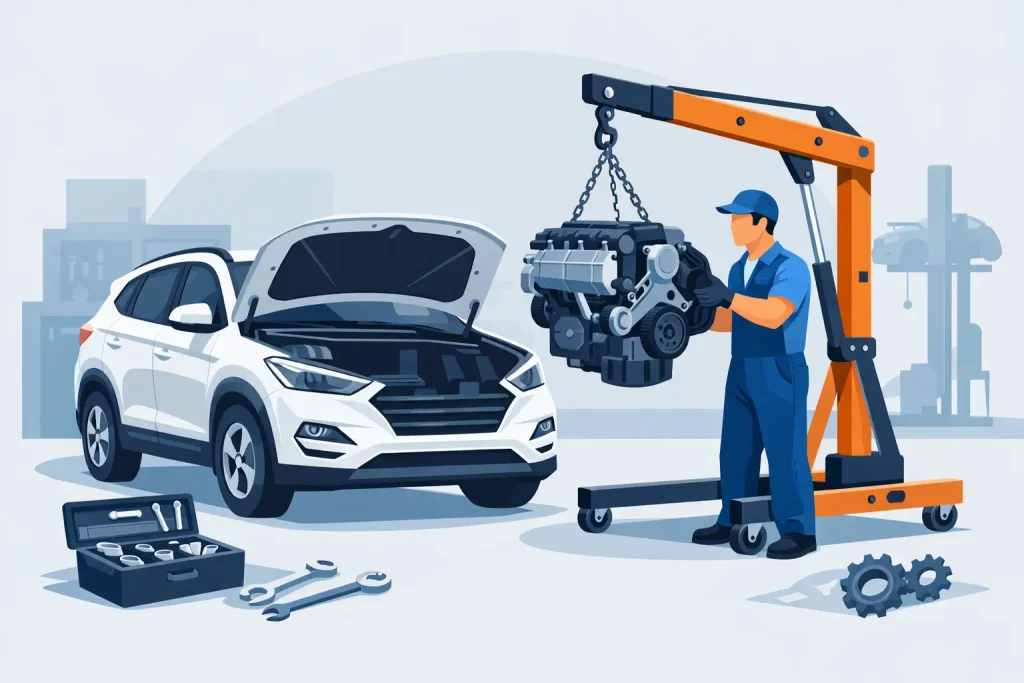
This is usually the question owners want answered straight away, and the honest answer is that it depends on the damage. If the problem has been caught early, a timing repair, head gasket repair or top-end rebuild may be enough. If the crankshaft, bearings, pistons or block are damaged, replacement is often the smarter path.
Rebuilding makes sense when the engine is fundamentally salvageable and the cost stacks up against the vehicle’s value. Replacement can be the better option when the original engine has failed badly, when turnaround time matters, or when a tested reconditioned engine gives a more reliable outcome.
For many Melbourne owners, especially families, tradies and fleet operators, time off the road is a major factor. That is why specialist workshops such as Hyun Engines focus not only on diagnosis, but also on practical supply-and-fit solutions when repair is no longer the best value.
How to reduce the risk of Kia engine failure
The basics still matter most. Check oil level between services, not just at service time. Do not ignore coolant loss. Investigate rattles, warning lights and smoke early. Use the correct oil grade and filters. If the vehicle has any history of timing noise, overheating or oil consumption, have it checked before it turns into a major internal problem.
It also helps to be realistic. If an engine is already knocking, repeatedly overheating or consuming large amounts of oil, hoping it will last a few more months often ends badly. Spending a little on diagnosis early is usually cheaper than waiting for a complete failure on the side of the road.
A failed engine is stressful, but the cause is usually traceable and the next step is usually clearer than owners expect once the right workshop has inspected it. The sooner you get straight answers, the sooner you can make a sensible call and get the vehicle back to doing its job.
Frequently Asked Questions
What are the common causes of Kia engine failure?
Frequent causes include oil starvation, bearing wear, overheating, timing-chain issues and, on some Theta II GDI engines, bore wear leading to knocking. Skipped servicing accelerates most of these.
Which Kia engines are most prone to failure?
The 2.4L GDI (G4KJ) and 2.0L turbo GDI (G4KH) are the engines most reported for rod-bearing failure, while the 2.0L and 2.4L MPI units (G4KD, G4KE) are better known for bore wear and piston slap at high kilometres.
Can a failed Kia engine be replaced rather than rebuilt?
Yes. A reconditioned replacement is often faster and more cost-effective than a full rebuild, and ours are tested and warranted for 12 months.
Do you supply reconditioned Kia engines?
Yes, across the Kia range, supplied Australia-wide with free shipping and a 12-month warranty, with fitting available in Dandenong.