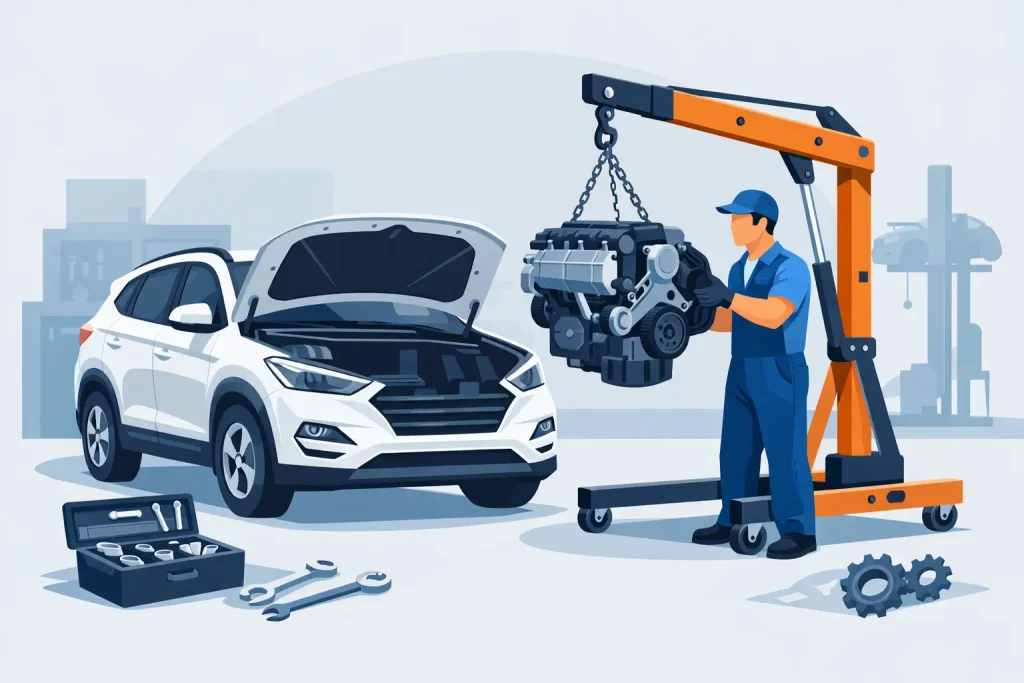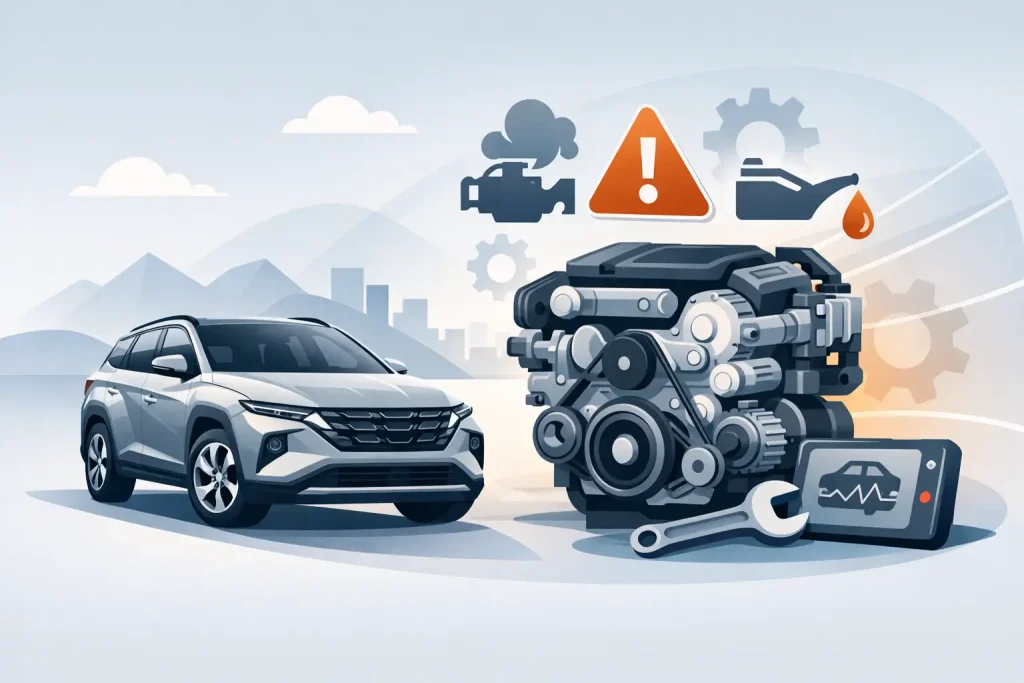
A Hyundai Tucson that starts rattling on cold start, burns oil between services, or suddenly drops power is not a car to keep guessing with. Hyundai Tucson engine problems can start with a minor noise or warning light, then turn into a major repair bill if they are left too long. The key is knowing which symptoms matter, which engines are more prone to trouble, and when a repair still makes sense compared with a rebuild or replacement.
For most owners, the stress is not just the fault itself. It is the uncertainty. You hear a knock, see smoke, or get told the engine needs serious work, and suddenly you are trying to work out whether the vehicle is worth saving. That is where clear advice matters.
Common Hyundai Tucson engine problems
Not every Tucson suffers the same issues. It depends on the year model, whether it is petrol or diesel, how it has been maintained, and how quickly early warning signs were acted on. Still, there are a few faults that come up often enough to be taken seriously.
Excessive oil consumption is one of the big ones in some petrol engines. Owners may notice the oil level dropping between services, blue smoke from the exhaust, or a burnt oil smell after driving. In the early stage, this can look manageable. If the cause is worn piston rings, cylinder wear, or internal engine damage, topping up oil is only delaying a bigger problem.
Timing chain noise is another issue that should never be brushed off. A rattle on startup, especially from the front of the engine, can point to a stretched timing chain, worn guides, or tensioner problems. Left long enough, timing issues can affect performance and, in the worst case, lead to major internal damage.
Engine knocking is more serious again. A bottom-end knock often points to bearing wear or oil starvation. If a Tucson presents with heavy knocking, metallic noise under load, or low oil pressure warnings, the engine may already be well past a simple repair.
Diesel models can bring a different set of concerns. Turbocharger faults, injector problems, carbon build-up, and overheating can all affect drivability and engine life. Sometimes the complaint starts as poor acceleration or excessive smoke, but the root cause sits deeper in the engine system.
Which Tucson engines tend to have trouble?
When people search for Hyundai Tucson engine problems, they are usually trying to work out whether their issue is common or just bad luck. The honest answer is that some engines have a stronger reputation than others.
Certain petrol engines, particularly direct injection variants, can be more vulnerable to oil consumption, carbon build-up, and internal wear if servicing has been missed or stretched too far. Short-trip driving does not help either. An engine that rarely reaches proper operating temperature can build deposits faster and hide developing wear until symptoms become obvious.
Some diesel Tucson engines are generally solid when maintained well, but they are less forgiving when cooling system issues, poor injector performance, or turbo faults are ignored. A diesel that has been worked hard, serviced inconsistently, or driven with existing faults can move from repairable to replacement territory fairly quickly.
That does not mean every Tucson of a certain year is destined for engine failure. It means the engine should be diagnosed on its actual condition, not on forum rumours or guesswork.
Warning signs you should not ignore
The earlier an engine issue is identified, the more options you usually have. A customer who brings a Tucson in at the first sign of timing chain rattle may be dealing with a targeted repair. Someone who keeps driving until the chain jumps timing may be looking at a full engine rebuild or replacement.
Watch for persistent ticking, rattling, or knocking noises, especially on startup or under acceleration. Keep an eye on oil usage as well. If the level drops noticeably between services, there is a reason. Oil warning lights, overheating, rough idling, loss of power, misfiring, and smoke from the exhaust all deserve proper inspection.
It also matters how the vehicle behaves over time. Some faults are dramatic. Others creep in slowly. A Tucson that feels a little more sluggish each month, starts harder in the morning, or needs regular coolant top-ups is often telling you something before a complete failure happens.
Why these engine problems happen
Most major engine faults come back to heat, lubrication, timing, or wear. That sounds simple, but the cause is often a chain of smaller issues.
Poor oil condition is a common contributor. Engines rely on clean oil at the correct level and viscosity to protect bearings, chains, camshafts, and other moving parts. If oil changes have been delayed, the wrong oil has been used, or the engine has been run low on oil, internal wear can accelerate fast.
Cooling system problems are another major factor. An overheating event can warp components, damage head gaskets, and shorten the life of the entire engine. Some owners do not connect a minor coolant leak with later engine trouble, but the two are often linked.
Then there is the way the vehicle has been used. Stop-start traffic, neglected servicing, towing beyond what the vehicle comfortably handles, and repeated short trips all add strain. None of those guarantee failure, but they do affect long-term engine condition.
Hyundai Tucson engine problems – repair or replace?
This is the question that matters most once the diagnosis is clear. There is no single answer because the right option depends on the type of damage, the value of the vehicle, turnaround time, and budget.
If the issue is isolated – for example a timing chain repair completed before internal damage occurs – repairing the existing engine can be the sensible path. The same goes for some top-end faults, cooling system related repairs, or component failures caught early.
If the engine has heavy bottom-end knock, low compression across multiple cylinders, severe oil consumption, or damage from overheating, replacement or a full rebuild is often the better long-term option. Spending money on partial repairs when the core engine is already worn usually leads to more cost later.
A rebuilt engine can be a strong solution when quality matters and you want known internals properly checked and machined where needed. A tested replacement engine can also make sense where speed and value are the priority. The trade-off is simple. The cheapest immediate quote is not always the cheapest fix over the next 12 months.
Getting the diagnosis right matters
One of the biggest mistakes with Hyundai Tucson engine problems is replacing parts before the fault is properly confirmed. A noise gets blamed on the top end when it is actually bottom-end bearing damage. Oil burning gets put down to a leak when the engine is consuming it internally. A misfire gets treated as ignition-related when the engine has compression issues.
Good diagnosis is not just about plugging in a scan tool. It means checking oil condition, listening to the engine, verifying compression where needed, inspecting timing components, looking for signs of overheating, and understanding known Hyundai engine patterns. That brand-specific experience can save a lot of wasted time and money.
For owners in Melbourne and wider Victoria, this is where a specialist workshop has an advantage. Hyun Engines deals with Hyundai and Kia engine faults every day, so the conversation is usually more direct – what has failed, how bad it is, and whether the smarter move is repair, rebuild, or replacement.
Can you keep driving with engine trouble?
Sometimes owners ask this because they still need the car for work or school runs. Fair enough. But it depends entirely on the symptom.
A minor noise that has already been booked for inspection is one thing. A Tucson with active knocking, overheating, oil pressure warnings, or heavy smoke is another. Keep driving a damaged engine and you often turn a manageable job into a much bigger one. What might have been a timing repair or top-end fix can become a complete engine replacement.
If the vehicle is misfiring badly, losing power, or making metallic noise, the safest approach is to stop driving it and get it assessed. The towing bill is often cheaper than the extra engine damage.
How to reduce the risk of future problems
No engine lasts forever, but a lot of serious Tucson failures show warning signs before they become catastrophic. Regular servicing with the correct oil, fast attention to timing noise, proper cooling system maintenance, and checking oil level between services all make a difference.
It is also worth taking changes in engine behaviour seriously. If the car suddenly sounds different, smells hot, uses more oil, or feels rougher than usual, do not wait for the next scheduled service to mention it. Early intervention gives you more options and usually a better outcome.
A Tucson can still be a very worthwhile vehicle to keep on the road if the engine issue is handled properly. The trick is not hoping the problem goes away. Get a proper diagnosis, weigh up the repair against replacement on real facts, and make the call before a bad engine gets worse.
Frequently Asked Questions
What are common Hyundai Tucson engine problems?
Depending on the engine, issues include oil consumption and bore wear on 2.0L/2.4L GDI petrols, carbon build-up on direct-injection engines, and turbo or timing concerns on the 1.6L turbo. Regular servicing reduces most of these.
Which Tucson engines are most affected?
The 2.0L and 2.4L Theta II GDI petrols can develop oil consumption and bearing wear, while the 1.6L turbo GDI (G4FJ) needs strict oil-change discipline.
Should I replace a worn Tucson engine?
If internal wear is extensive, a tested reconditioned replacement is usually more reliable and cost-effective than repair, and it includes a 12-month warranty.
Do you supply reconditioned Tucson engines?
Yes, supplied Australia-wide with free shipping, with fitting available at our Dandenong workshop.