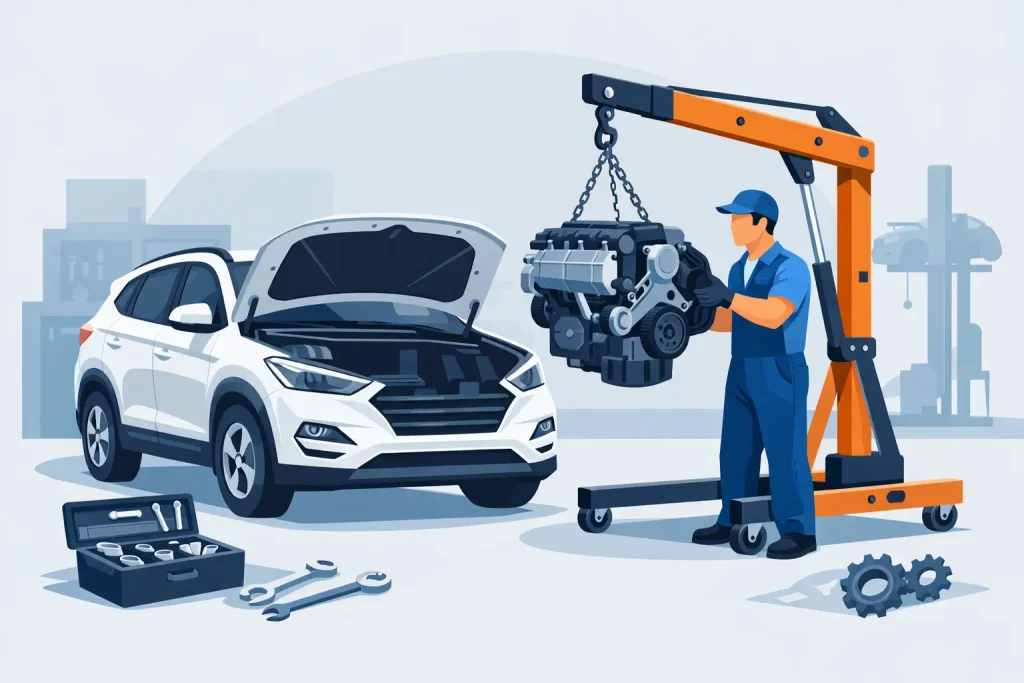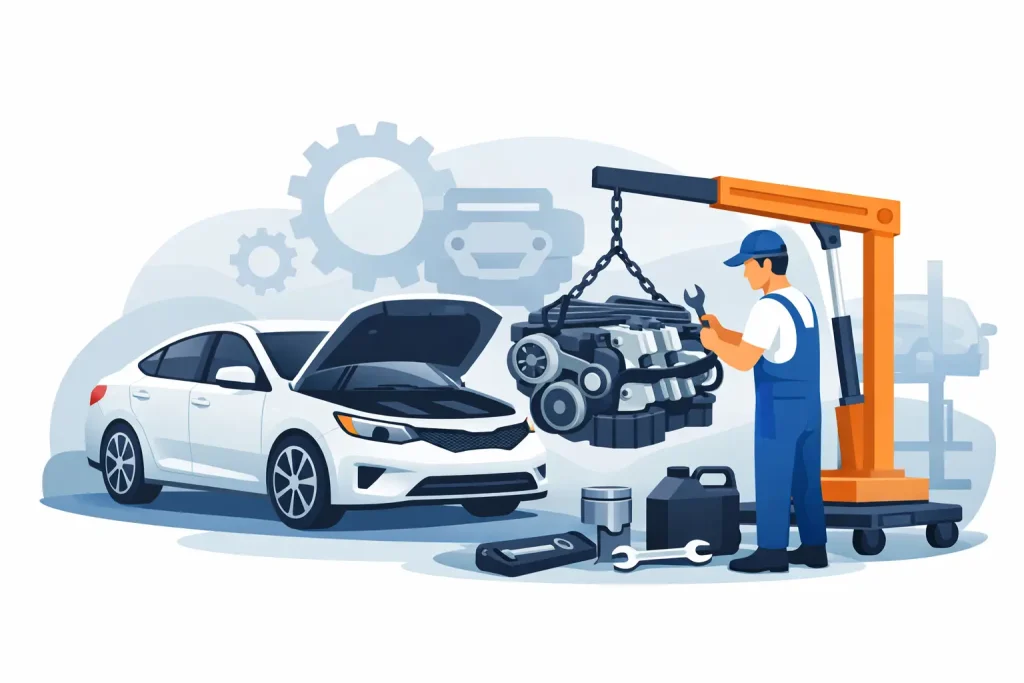
When a Kia Optima starts knocking, burning oil, or loses compression, the first question most owners ask is simple – what is the Kia Optima engine replacement cost, and is the car still worth saving? Fair question. An engine replacement is one of the biggest mechanical bills you can face, so you need clear numbers, not guesswork.
What affects Kia Optima engine replacement cost?
There is no single price that fits every Optima. The final cost depends on the engine fitted to the car, the severity of the failure, whether you choose a used, reconditioned or rebuilt engine, and how much labour is involved in removing and refitting everything properly.
For most owners in Australia, the total spend can range from around $4,500 at the lower end for a used engine supply and fit, through to $9,000 or more for a quality reconditioned or rebuilt engine with associated parts and labour. Some jobs can land below or above that range, but that is a realistic starting point for budgeting.
A simple example helps. If your Optima has suffered bottom-end damage and the block is unusable, a straight replacement may make more sense than a rebuild. If the engine is rebuildable and the fault is contained, rebuilding the original motor can sometimes be the better long-term option. The right answer depends on condition, parts availability and how long you plan to keep the car.
Typical price ranges in Australia
In workshop terms, there are usually three main paths.
A used engine is generally the cheapest upfront option. You might be looking at roughly $4,500 to $6,500 supplied and fitted, depending on model, engine code, kilometres and warranty terms. The lower price can be appealing, but the trade-off is that you are relying on the history and condition of a second-hand engine.
A reconditioned engine usually sits in the middle to upper end, often around $6,500 to $8,500 or more supplied and fitted. This option tends to suit owners who want more confidence than a basic used engine offers. A properly tested reconditioned unit can give you a better balance between cost and reliability.
A full engine rebuild can be similar in price to a reconditioned replacement, and sometimes more. Expect roughly $6,500 to $9,500 depending on the damage, machining required, and how many new internal parts are needed. Rebuilds can make sense when keeping the original engine matters or when a quality replacement unit is hard to source.
These figures are indicative only. The exact cost changes with the Optima variant, the engine installed, and what else is found once the engine is out of the car.
Why the engine type matters
Not every Kia Optima engine replacement cost is based on the same parts bill. Some Optima models came with petrol four-cylinder engines, while others used turbocharged variants or diesel engines in certain markets. Different engines mean different supply costs, different common faults, and different labour time.
Turbocharged engines usually cost more to replace because there are more components to inspect and potentially replace during the job. If the turbo has failed and sent contamination through the system, that can add to the work required. Likewise, if there has been overheating, you may be dealing with cooling system repairs at the same time.
Engine code matters as well. Two cars that look identical from the outside can have different internal parts, sensors or ancillaries. A proper quote should be based on the VIN and engine details, not a rough guess over the phone.
Labour is a big part of the bill
Owners often focus on the cost of the engine itself, but labour is a major part of the total. Removing a failed engine and fitting a replacement is not just a matter of dropping one out and bolting another in.
The workshop has to transfer components, inspect cooling and intake systems, replace fluids, check mounts, test electronics, and make sure the replacement engine is actually healthy before handover. If the original engine has failed badly, there may be extra cleaning required to remove metal contamination from oil lines, intercooler pipework or related components.
That is why a very cheap quote is not always a bargain. If the job skips key checks or reuses worn parts that should have been replaced, the car can end up back in the workshop with more problems.
Extra parts that often add cost
The engine itself is only one part of the job. Once the motor is out, it is common to find other items that are best replaced at the same time.
This may include the timing chain kit, water pump, thermostat, engine mounts, spark plugs, seals, gaskets, belts, hoses, filters and fresh fluids. On some vehicles, a worn radiator or blocked oil cooler may also need attention. If the original engine failure involved overheating or oil starvation, the workshop may recommend replacing more than just the long motor.
This can push the final invoice higher, but it is usually money better spent while access is easy. Paying for the same labour twice later is rarely the cheaper option.
Rebuild or replacement – which is better?
This is where a lot of owners get stuck. They hear the word rebuild and assume it is automatically better, or hear used engine and assume it is automatically cheaper in the long run. Neither is always true.
A rebuild can be the smart option when your existing engine is a good candidate. If the block and head are salvageable and the workshop knows these engines well, rebuilding can give you a more controlled result. You know what parts have been replaced, what machining has been done, and what tolerances have been checked.
A replacement engine can be quicker, especially if a tested unit is ready to go. For people who need the car back on the road sooner, that matters. It can also be the better path when the original engine has suffered catastrophic damage and rebuilding would involve too many new parts to make financial sense.
The real answer comes down to condition, budget and expectations. If you plan to keep the car for years, a better-quality solution often makes more sense than simply chasing the cheapest invoice.
Is the car worth repairing?
That depends on the age, condition and value of your Kia Optima. If the body, transmission and interior are still in good order, replacing the engine can be worthwhile. A car with a sound gearbox, good service history and tidy overall condition is often worth saving, especially when replacing the vehicle would cost far more than the engine job.
On the other hand, if the car has major transmission issues, accident damage, poor maintenance history or very high kilometres across the whole vehicle, the economics can change. The right workshop should be honest about that. Not every car is a sensible candidate for an engine replacement.
How to avoid paying twice
The biggest mistake owners make is choosing purely on price without asking what is included. A proper quote should explain whether the engine is used, reconditioned or rebuilt, what warranty applies, what labour is included, and which extra parts are recommended.
It should also cover diagnosis. Sometimes the engine is not completely dead, and another repair path may still be viable. Other times the engine has failed in a way that damages surrounding systems, which needs to be dealt with before the replacement goes in.
Specialist workshops that work on Hyundai and Kia engines every day are usually better placed to spot common Optima issues early. That experience matters because these jobs are too expensive to approach with trial and error. For Melbourne owners, Hyun Engines is one example of the kind of specialist setup that can assess the engine properly and offer a supply-and-fit solution without the runaround.
Getting a realistic quote for Kia Optima engine replacement cost
If you want a realistic number, be ready with the vehicle year, VIN, engine size, fuel type, transmission type and a clear description of the fault. Mention whether the car still runs, whether it overheated, whether there is knocking, smoke, metal in the oil, or a timing-related issue.
That information helps narrow down the likely repair path. It also helps the workshop tell you whether you are looking at a straightforward replacement, a rebuild candidate, or a car that needs a more detailed inspection before pricing can be confirmed.
A good quote will not always be the cheapest. It should be the clearest. When you understand what you are paying for, what parts are going in, and what backing comes with the job, you are in a much better position to decide whether the car is worth repairing.
If your Optima has reached the point where the engine is beyond a minor repair, slow down and get proper advice before making the call. The right engine solution is the one that suits the car, your budget and how long you need it to keep doing its job.
Frequently Asked Questions
How much does a Kia Optima engine replacement cost?
A reconditioned Kia Optima engine starts from around $4,200 for the 2.4L GDI, plus fitting if required. Every engine includes a 12-month warranty and free Australia-wide shipping.
Which engine does the Kia Optima use?
Most Optimas use the 2.4L Theta II GDI (G4KJ) petrol engine; some used a 2.0L turbo. We can match the correct unit to your build.
Is replacing the Optima engine better than rebuilding?
For extensive wear, a tested reconditioned replacement is usually faster and better value than a rebuild, and it is warranted.
Can you fit the Optima engine for me?
Yes, at our Dandenong workshop, usually within 2-3 days, and your old engine is taken as a core once the job is finished.