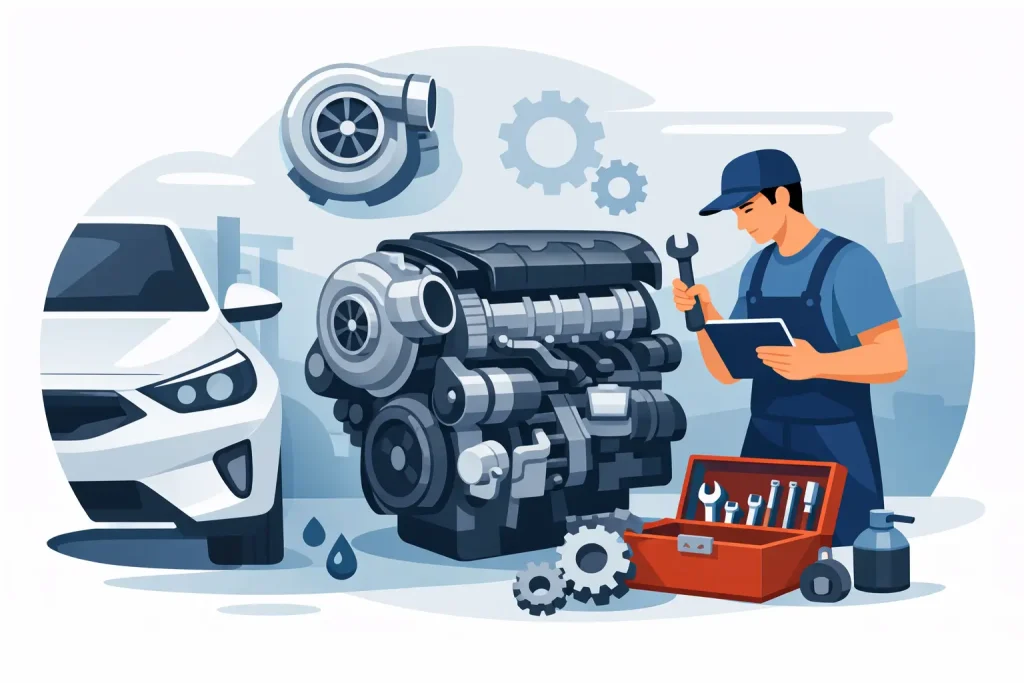
A Kia diesel that starts blowing smoke, drops power on the freeway, or rattles on cold start usually gives you a bit of warning before it gives up completely. The trouble is, those warning signs can point to several faults at once. That is why proper Kia turbo diesel engine repair starts with diagnosis, not guesswork.
For Kia owners, especially those relying on a Carnival, Sorento or work vehicle every day, the real question is rarely just what failed. It is whether the engine can be repaired properly, whether a rebuild makes financial sense, or whether replacement is the smarter option. Clear advice matters when the job is this expensive.
What usually goes wrong in a Kia turbo diesel
Turbo diesel engines are built to handle load and long-distance driving, but they do not cope well with neglected servicing, contaminated oil, overheating, or timing-related issues. In Kia diesel engines, the most common failures often start with one system and spread into another.
A failing turbo can push oil where it should not be, create excessive smoke, and reduce boost pressure. That can feel like a simple turbo problem at first, but if the engine has been running with poor lubrication or has ingested oil, the repair can grow quickly.
Injector issues are another common cause of rough running, hard starts and excess smoke. Sometimes the fault sits in the injector itself. Sometimes it is a fuel delivery or combustion issue making the injector look like the villain. That is where specialist testing matters.
Then there are bottom-end and timing-related problems. If the engine has developed knocking, chain noise, low oil pressure or metal contamination in the oil, you are no longer talking about a bolt-on repair. You are looking at internal engine damage, and the path forward depends on how far that damage has gone.
Signs your Kia diesel needs attention now
Some owners wait because the vehicle is still driving. That can be the most expensive decision in the whole process. A turbo diesel may keep moving while doing serious damage internally.
Blue or black smoke, loss of power, poor fuel economy, rattling on start-up, engine warning lights, overheating, and oil consumption all deserve proper inspection. So does any diesel that suddenly feels flat under load or goes into limp mode.
If there is a harsh knock, rising coolant temperature, or oil in places it should not be, stop driving it until it is checked. Continuing to run a damaged diesel engine can turn a repairable fault into a full replacement job.
Kia turbo diesel engine repair starts with the right diagnosis
A general workshop may read fault codes, replace the obvious part, and hope the symptoms clear. Sometimes that works. Often with diesel engines, it does not.
A proper diagnostic process needs to look at the whole engine system. That includes turbo condition, intake and intercooler contamination, injector performance, compression, timing condition, oil pressure, cooling system health, and any signs of internal wear. Fault codes are useful, but they are only one piece of the job.
For example, heavy smoke might be caused by a failed turbo seal. It could also be injector over-fuelling, poor compression, EGR-related problems, or a cracked component under load. The same symptom can come from very different faults. Replacing parts without confirming the cause wastes time and money.
That is why brand-specific experience matters. A workshop that sees Hyundai and Kia diesel engines regularly will usually recognise common failure patterns faster, and that can save the owner from paying for the wrong repair first.
Repair, rebuild or replace – what makes sense?
This is where a lot of owners feel stuck. They hear one quote for a repair, another for an engine rebuild, and a third for a replacement engine, and none of them are easy numbers to swallow.
A repair makes sense when the fault is isolated and the rest of the engine is sound. A turbo replacement, injector repair, timing component repair, or head gasket job can be the right move if the bottom end is healthy and there is no widespread internal damage.
A rebuild is usually the better path when the engine has internal wear but the core engine is still worth saving. That might include damage to bearings, pistons, rings, cylinder head components or timing assemblies. A rebuild gives you the chance to correct the root issue, inspect everything properly, and put the engine back together to a known standard.
Replacement often becomes the practical choice when the original engine is badly damaged, the block or crank is beyond repair, or turnaround time matters more than rebuilding the existing unit. For some owners, especially tradies and fleet operators, downtime is the deciding factor. If a quality tested replacement engine is available, that can be the fastest way back on the road.
There is no one-size-fits-all answer. The right choice depends on engine condition, parts availability, labour involved, and how long you plan to keep the vehicle.
Common diesel faults that can lead to major engine work
Not every Kia diesel issue starts as a catastrophic failure. Quite a few begin as smaller problems that were either missed or left too long.
Oil starvation is a big one. If oil changes have been stretched out, the wrong oil has been used, or sludge has built up, turbo bearings and internal engine components suffer first. By the time the driver notices smoke or noise, the damage may already be well advanced.
Overheating is another. A cooling system fault can warp the head, damage the gasket, and create combustion or coolant pressure issues that affect the whole engine. Diesel engines do not tolerate repeated overheating well.
Timing wear also deserves respect. Chain noise is not just an annoyance. If timing components are worn or tensioners are failing, the engine can jump timing and suffer major internal damage. Catching it early is a repair. Catching it late can mean a rebuild or replacement.
What a proper repair process should look like
Good engine work is not just about fitting parts. It is about confirming the failure, checking for related damage, and making sure the vehicle leaves with the root cause addressed.
That usually means inspecting oil and coolant condition, pressure testing where needed, checking compression, assessing the turbo and intake tract, and looking for contamination through the system. If the engine is stripped, components should be measured, not just cleaned up and reused on hope.
For rebuilt or replacement engines, installation quality matters just as much as the engine itself. Ancillary parts, cooling system condition, fuel system cleanliness, and correct setup all affect how long that engine will last. A good engine fitted into a neglected surrounding system can still fail early.
This is one reason many owners prefer a workshop that can handle the full job in-house, from diagnosis through to supply and fitment. It keeps accountability clear and reduces the finger-pointing that happens when parts come from one place and labour from another.
Choosing a workshop for Kia turbo diesel engine repair
When the repair bill is significant, the cheapest quote is not always the cheapest outcome. You want a workshop that knows Korean engines well, explains the fault in plain language, and gives you realistic options.
Ask whether the diagnosis confirms the cause of failure or only the symptom. Ask what related components have been checked. Ask whether the repair carries warranty support, and whether the workshop handles repair, rebuild and replacement options rather than pushing only one solution.
For Melbourne owners, that specialist approach matters. Hyun Engines works on Hyundai and Kia engines every day, which means the advice is based on real workshop patterns, not generic assumptions. That helps when you are trying to decide whether to spend money on a repair or move straight to a rebuilt or replacement engine.
How to avoid the same diesel problem twice
Once the engine is repaired, a few habits make a real difference. Regular servicing with the correct oil grade matters more on a turbo diesel than many owners realise. So does dealing with smoke, warning lights, unusual noises and coolant loss early.
If the vehicle tows, carries loads, or spends time in stop-start driving, it is worth being even more disciplined with maintenance. Hard-working diesels do not need pampering, but they do need proper servicing and quick attention when something changes.
A good workshop should also tell you what caused the original failure. If a turbo failed because of oil contamination, or if a replacement engine is being fitted after overheating, the supporting systems need attention too. Otherwise the new repair is carrying the same risk as the old engine.
When your Kia diesel starts showing signs of trouble, the best next step is not guessing from the driver’s seat. It is getting a clear diagnosis from people who know these engines well, so you can make a repair decision with confidence instead of crossing your fingers.
Frequently Asked Questions
What are common Kia turbo-diesel engine problems?
Typical issues include turbo failure, injector wear, EGR and DPF blockages, timing-chain wear and oil-related bearing damage, often linked to extended service intervals.
Which Kia diesel engines do you work with?
We stock the 2.5L D4CB CRDi turbo-diesel used in vans and people-movers, and can source other Hyundai and Kia diesels such as the 2.2L D4HB on request — contact us with your VIN to check availability.
Should I repair or replace a Kia turbo-diesel engine?
Minor faults can be repaired, but major internal wear usually suits a tested reconditioned replacement, which is faster and comes with a 12-month warranty.
Do you supply reconditioned Kia diesel engines?
Yes, supplied Australia-wide with free shipping and a 12-month warranty, with fitting available at our Dandenong workshop.