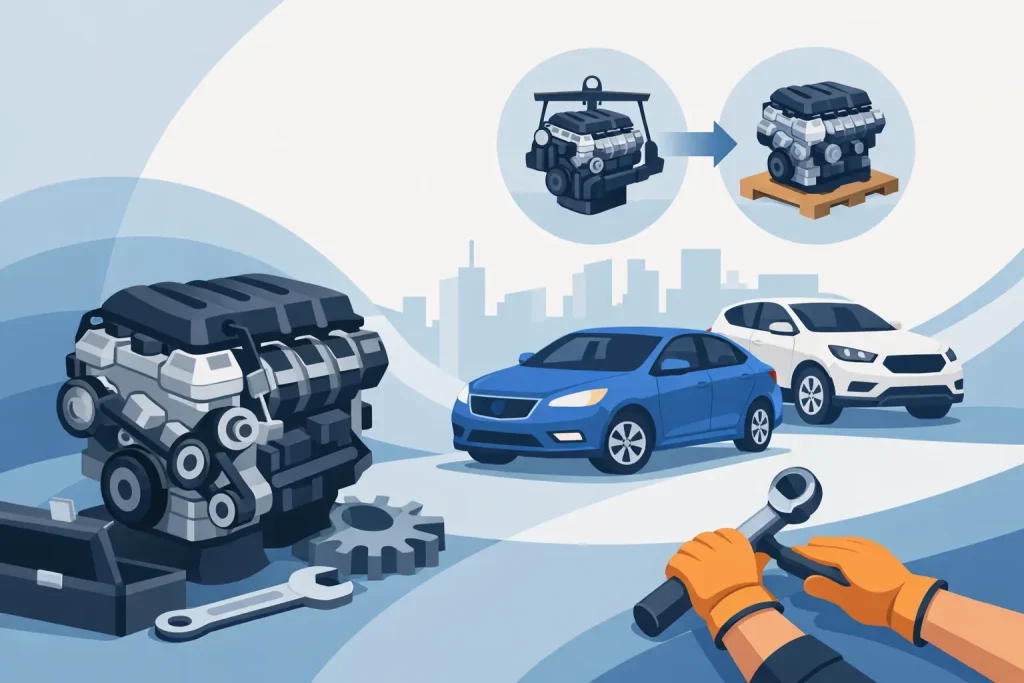
When your engine starts knocking, loses compression, or lets go without much warning, the real question is not just how much it will cost. It is whether the fix will actually last. For drivers searching for tested replacement engines Melbourne workshops can supply and fit properly, that difference matters. A cheap engine that has not been checked properly can leave you paying twice.
Why a tested engine matters
A replacement engine is a major repair, not a quick bolt-on part. If the engine has unknown history, poor compression, sludge build-up, timing issues or internal wear, you are taking on someone else’s problem. That is why testing matters before the engine goes into your vehicle, not after.
A tested engine gives you a better starting point. It does not mean every used or reconditioned engine is identical, because they are not. Condition depends on the donor vehicle, the fault history, service record where known, and how the engine has been inspected. But proper testing reduces guesswork. It helps identify obvious issues before installation and gives the workshop a clearer basis for recommending whether that engine is suitable.
For Hyundai and Kia owners, this is especially important on engines with known timing, oiling, overheating or bottom-end failure patterns. A general parts seller may offer an engine code match and little else. A specialist workshop will usually look deeper at the common faults that affect that specific platform.
What counts as a tested replacement engine?
Not every seller means the same thing when they say tested. Sometimes it means the engine turned over. Sometimes it means it was run and checked. Sometimes it means key inspection steps were completed before sale. That is why you need to ask what testing was actually done.
With tested replacement engines Melbourne vehicle owners should look for a clear explanation, not vague sales language. Depending on the engine and how it was sourced, testing may include compression checks, inspection for leaks, visual checks for sludge or coolant contamination, verification of timing condition where accessible, and assessment of ancillaries and sensors. In some cases, the engine may also be inspected while out of the vehicle so common wear points can be checked more closely.
The important part is transparency. Clear advice. Straight answers. No confusion. If a workshop cannot explain what has been tested and what has not, that is worth paying attention to.
Used, reconditioned or rebuilt – what is right for your car?
This is where it depends on the vehicle, the fault, and how long you plan to keep it.
A used replacement engine can make sense when you need a practical and cost-conscious solution, especially if the rest of the vehicle is in good condition and the sourced engine has been properly checked. For many owners, this is the quickest way to get back on the road.
A reconditioned engine usually involves more work before installation. Wear items, seals, gaskets and selected internal components may be replaced depending on the build scope. This option can suit owners who want more confidence than a straight used engine can offer, without stepping all the way up to a full new engine assembly.
A rebuilt engine is often the better choice when the original engine has value to preserve and the fault can be corrected properly. It can also be the right move when availability of a quality replacement engine is limited. The trade-off is time. Rebuilds usually take longer and costs vary based on what is damaged inside.
There is no one-size-fits-all answer. A family Kia Carnival used every day has different needs from a work iLoad that cannot sit idle for long. The best decision comes from proper diagnosis first, then an honest look at budget, downtime and long-term plans.
Common reasons Melbourne drivers replace an engine
Most people do not start looking for a replacement engine because of one small noise. By the time they are weighing up the job, the symptoms are usually serious.
Low oil pressure, heavy knocking, bearing failure, timing chain damage, cracked blocks, overheating damage and loss of compression are some of the usual triggers. Diesel engines can also run into injector-related issues, turbo-related contamination, or internal wear after prolonged oiling problems. In Hyundai and Kia vehicles, some engines are more prone than others to known faults, which is another reason specialist knowledge matters.
Sometimes the engine can be repaired economically. Sometimes it cannot. If the block is damaged, the crank is affected, or metal has moved through the system, a replacement often becomes the more sensible path. Spending money on partial repairs can look cheaper at first, but not if you still end up replacing the engine a few months later.
Why specialist fitment matters as much as the engine itself
An engine can be sound and still give trouble if the installation is rushed or incomplete. Replacement work is not just about swapping one long motor for another. Fluids, cooling system health, timing components, intake and exhaust connections, sensors, turbo lines where fitted, mounts, and control systems all need attention.
That is where a workshop that works on Hyundai and Kia engines every day has an advantage. These vehicles have their own common failure points, software considerations and component differences across engine codes and model years. The right fitment process helps avoid preventable problems such as overheating, oil leaks, sensor faults or drivability issues after the engine is installed.
At Hyun Engines, that specialist approach is part of the value. Customers are not left sourcing an engine from one place, a fitter from another, and answers from nowhere. Diagnosis, supply, installation and after-sales support all sit under the one roof.
Questions worth asking before you commit
If you are comparing workshops or engine suppliers, ask direct questions and listen for direct answers.
Ask whether the engine has been tested and what that involved. Ask whether the quoted price includes installation, fluids, filters, and any required ancillary transfers. Ask whether timing components, seals or gaskets will be inspected or replaced during the job where appropriate. Ask about warranty terms and what support looks like if there is an issue after fitment.
Also ask whether the workshop has regular experience with your exact Hyundai or Kia model. That matters more than many owners realise. An i30 petrol engine, a Tucson diesel, and a Carnival petrol all come with different failure patterns and different installation considerations.
A cheap quote is not always a cheap outcome. If important items are excluded, you may not find that out until the engine is already on the floor and the bill starts growing.
How to judge value, not just price
Engine replacement is one of those jobs where the cheapest option can become the most expensive. The real value is in getting the right engine, fitted correctly, with clear support if something is not right.
That does not mean every customer needs the most expensive option available. Sometimes a well-tested used engine is the sensible answer. Sometimes a reconditioned or rebuilt engine is worth the extra outlay. The key is whether the recommendation matches the condition of your car and the way you use it.
For tradies, fleet vehicles and family cars, downtime has a cost too. A faster, well-managed repair may save money overall, even if the upfront quote is a bit higher. For older vehicles, the workshop should also be honest if replacement does not stack up against the vehicle’s value. Good advice is not about pushing the biggest sale. It is about helping you make a decision you will not regret.
Choosing tested replacement engines in Melbourne
Melbourne drivers have plenty of options on paper, but not all of them offer the same level of confidence. If you own a Hyundai or Kia, choosing a specialist workshop can remove a lot of uncertainty. You want people who know the common engine issues, understand model-specific differences, and can tell you plainly whether repair, rebuild or replacement is the smarter move.
When you are weighing up tested replacement engines Melbourne providers offer, look for practical experience, warranty-backed work, licensed workshop support, and clear communication from the first phone call. That combination usually tells you more than flashy promises ever will.
If your engine has reached the point where trust matters more than guesswork, the right workshop should make the next step feel clearer, not harder.
Frequently Asked Questions
What does a tested replacement engine mean?
It means the engine has been reconditioned and run-tested before dispatch to confirm compression, oil pressure and running condition, so you are not fitting an unknown unit.
Are your replacement engines tested before sale?
Yes, every engine is reconditioned and tested at our Dandenong workshop before it ships, and is backed by a 12-month warranty.
Do you supply tested engines outside Melbourne?
Yes, we dispatch Australia-wide within 1-2 business days, with free shipping and 3-4 days transit.
Can you fit the engine in Melbourne?
Yes, fitting is available at our Dandenong workshop, usually within 2-3 days.