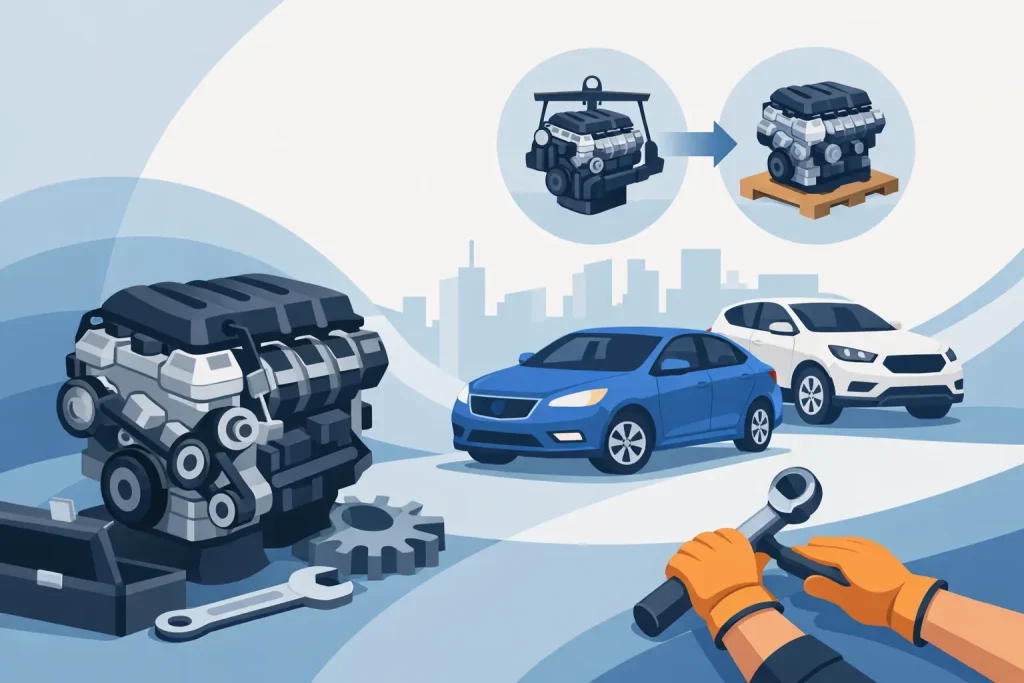
When a Kia starts knocking, burning oil or losing compression, the question usually comes fast – repair it, rebuild it, or replace the engine altogether? This guide to Kia engine replacement is built for owners who need clear advice before spending serious money. If your car is off the road, using coolant, rattling on start-up or showing timing-related faults, the right decision depends on the engine, the damage and how you use the vehicle.
Based in Victoria? Our Kia engine replacement Melbourne page covers local fitting, turnaround and pricing at our Dandenong workshop.
Engine replacement is not always the worst-case scenario. In many situations, it is the more sensible fix. A badly worn or failed engine can drain money through repeated repairs, downtime and uncertainty. Replacing it with the right unit can get the car back to reliable condition faster, especially when the fault has already spread beyond a single component.
When Kia engine replacement makes sense
There are cases where a repair is still worthwhile. A leaking rocker cover, failed sensor, turbo issue or timing component problem does not automatically mean the engine is finished. But if the motor has suffered bearing damage, severe overheating, cracked internals, piston slap, heavy oil consumption or low compression across multiple cylinders, replacement often becomes the practical path.
This is especially true when metal contamination has moved through the engine, or when the labour to strip, machine and rebuild the original unit starts pushing beyond the value of the car. For many Kia owners, the real issue is not just the cost of the part. It is the total cost of getting back on the road with confidence.
A workshop should look at the full picture before recommending replacement. That includes fault codes, compression testing, oil condition, service history, timing condition and whether the engine failure has affected the turbo, cooling system or catalytic converter. Straight answers matter here. Guesswork gets expensive.
Guide to Kia engine replacement options
Not every replacement engine is the same. The right option depends on budget, vehicle age, model demand and how long you plan to keep the car.
Used engine
A used engine is usually the cheapest upfront option. It can suit an older Kia where keeping costs controlled is the main priority. The trade-off is that history can be limited, and not every used engine has been properly tested. Mileage alone does not tell the full story. An engine with lower kilometres but poor maintenance can be a worse buy than one with higher kilometres and better care.
Reconditioned engine
A reconditioned engine is often the better middle ground. It has typically been stripped, inspected and rebuilt to address wear or known faults, with failed or worn components replaced. For owners planning to keep the car, this option often delivers better reliability than a straight used unit. It also tends to come with clearer warranty support when supplied through a specialist.
Rebuilt original engine
Sometimes the best engine to use is the one already in the vehicle, provided the block and major components are still serviceable. Rebuilding the original engine can make sense if matching numbers matter to you, or if a suitable replacement unit is hard to source. The downside is time. A rebuild can take longer than swapping in a ready-to-fit engine, and costs vary depending on machining and parts required.
New engine
A new engine is the premium option and usually the most expensive. It may suit newer vehicles or fleet operators where long-term reliability matters more than the lowest initial cost. For many owners, though, the gap between new and reconditioned pricing is large enough to make a tested reconditioned engine the more realistic choice.
What affects Kia engine replacement cost?
There is no honest single-price answer that fits every Kia. Model, engine code, fuel type and extent of the failure all change the numbers.
A small petrol engine in an older hatch is a different job from a diesel engine in a people mover or SUV. Some engines are common and easier to source. Others are in short supply, especially if there is high demand for known problem units. Labour also varies depending on how much needs to be transferred across from the old engine, whether ancillaries are damaged, and whether related items should be replaced while access is available.
Timing components, water pumps, seals, gaskets, injectors, turbos and cooling parts often come into the conversation during an engine swap. That can push the invoice up, but it can also save you from doing the same labour twice later on. A cheap replacement becomes expensive if it goes in with old problem parts attached.
Common Kia engine failure signs
A failed engine usually gives warnings before it stops altogether, although not always. Owners often notice a knocking noise from the bottom end, chain noise on start-up, smoke from the exhaust, oil light flicker, overheating, rough running or a sudden drop in power. Some engines start using oil for months before the problem is taken seriously.
Coolant loss with no obvious leak is another red flag. So is glitter in the oil, repeated misfire on one cylinder, or a vehicle that has already had multiple repairs without solving the root cause. If the engine has seized, thrown a rod or lost compression badly, replacement is usually more realistic than trying to patch it up.
The key point is this: symptoms can overlap. A timing issue may sound like general engine damage. A failed injector can mimic a mechanical knock. That is why proper diagnosis comes first.
What to expect during the replacement process
A proper engine replacement is more than pulling one motor out and dropping another in. The first step is confirming the fault and checking the exact engine code and compatibility. Even within the same Kia model, there can be differences in sensors, manifolds, fuel systems and control components.
Once the correct replacement engine is selected, the old unit is removed and supporting parts are inspected. This stage matters. If the cooling system is contaminated, the oil cooler has failed, or the turbo has sent debris through the intake, those issues need attention before the new engine goes in.
The replacement engine should be prepared properly before fitment. That often includes new seals, fresh fluids and inspection of key service items. After installation, the vehicle needs testing, fault code checks and final verification that temperatures, oil pressure and drivability are all where they should be.
For Kia owners in Melbourne, working with a specialist makes a difference because brand familiarity shortens the diagnosis stage and reduces the chance of ordering the wrong unit or missing a known issue.
How do you choose between repair, rebuild and replacement?
This is where most owners get stuck. If the repair is minor and isolated, repairing the existing engine is often the cheapest sensible move. If the core engine is worn but still rebuildable, a rebuild may offer the best long-term result. If the damage is severe, widespread or uncertain, replacement usually gives the clearest path back to reliable driving.
It also depends on the car itself. A well-kept Kia with good body condition, sound transmission and years of useful life left can justify a quality engine replacement. A neglected vehicle with multiple major faults may not. The right workshop will tell you when the numbers do not stack up.
That honesty matters more than any sales pitch. There is no point fitting an engine if the rest of the vehicle is about to become the next expensive problem.
Choosing the right workshop for Kia engine replacement
You want a workshop that knows Kia engines specifically, not one learning on your car. Ask how the engine is sourced, whether it is tested, what warranty applies, and what is included in the quoted job. Clarify whether labour, fluids, seals, timing components and installation parts are part of the price or extra.
It also helps to ask who handles the full process. Supply-only can work for some trade buyers, but many owners are better served by a workshop that can diagnose, source, fit and road test the vehicle in one place. That reduces finger-pointing if something is not right after installation.
At Hyun Engines, this specialist approach is exactly what many Kia owners are looking for – clear advice, tested engine options and workshop-backed fitment from technicians who work on Korean engines every day.
A few practical questions to ask before approving the job
Before you say yes, ask what caused the original engine to fail and whether that cause has been addressed. Ask for the exact engine type being installed. Ask what parts are being renewed during fitment, what warranty applies, and what the expected turnaround is.
Those answers tell you a lot about the quality of the job you are paying for. They also help you compare quotes properly. A lower price can look appealing until you realise it excludes key labour or leaves old failure points untouched.
If your Kia needs an engine, the aim is not just to get it started again. The aim is to get it back on the road in a way that makes financial and mechanical sense. Good workshops do not make that decision harder. They make it clearer.
Frequently Asked Questions
When should I replace a Kia engine instead of repairing it?
When internal damage is extensive, such as spun bearings, bore damage or a seized engine, replacement with a reconditioned unit is usually more reliable and cost-effective than repair.
How much does a reconditioned Kia engine cost?
Most start from around $4,200, with larger and turbo-diesel units priced higher, including a 12-month warranty and free Australia-wide shipping.
How long does a Kia engine replacement take?
We dispatch within 1-2 business days, and fitting at our Dandenong workshop typically takes 2-3 days.
Do your Kia engines come with a warranty?
Yes, a 12-month warranty is included on every reconditioned Kia engine, along with free Australia-wide shipping.