A Hyundai engine usually does not fail all at once. More often, it gives you a trail of warnings first – knocking, oil use, overheating, loss of power, metal in the oil, or a timing issue that has done real internal damage. So when does a Hyundai engine need replacing? Usually when the cost, risk and downtime of repeated repairs start outweighing the value of fitting a sound replacement or rebuilding the engine properly.
That answer is not the same for every i30, Tucson, iLoad or Santa Fe. Some engines are worth rebuilding. Some are better replaced with a tested used or reconditioned unit. And sometimes a problem that sounds catastrophic is still repairable if it is caught early. The key is knowing the signs and getting the vehicle assessed by someone who works on Hyundai engines every day.
When does a Hyundai engine need replacing instead of repairing?
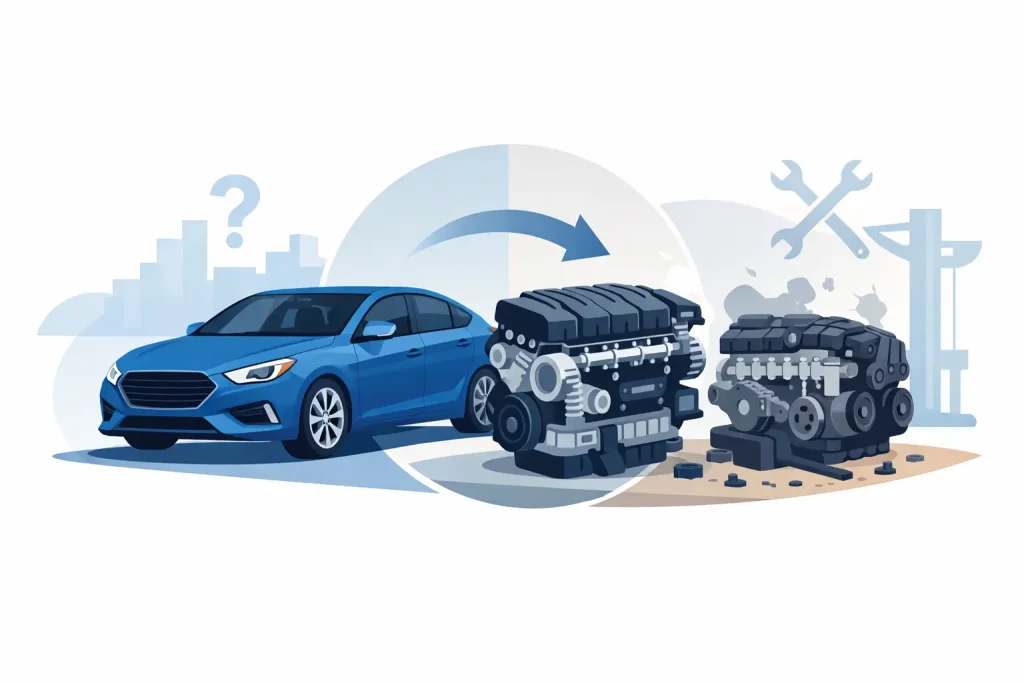
The turning point is usually serious internal damage. If the crankshaft bearings are gone, the pistons have scored the bores, the head has been badly overheated, or the timing chain or belt failure has led to valve and piston contact, you are no longer dealing with a simple repair. At that stage, replacing the engine can be the cleaner and more economical path.
A lot depends on what failed and how long the engine was driven after the problem started. A Hyundai that has developed a light knock and been shut down quickly may still be rebuildable. One that has been driven until it lost oil pressure, seized, or filled the sump with metallic debris is usually a different story.
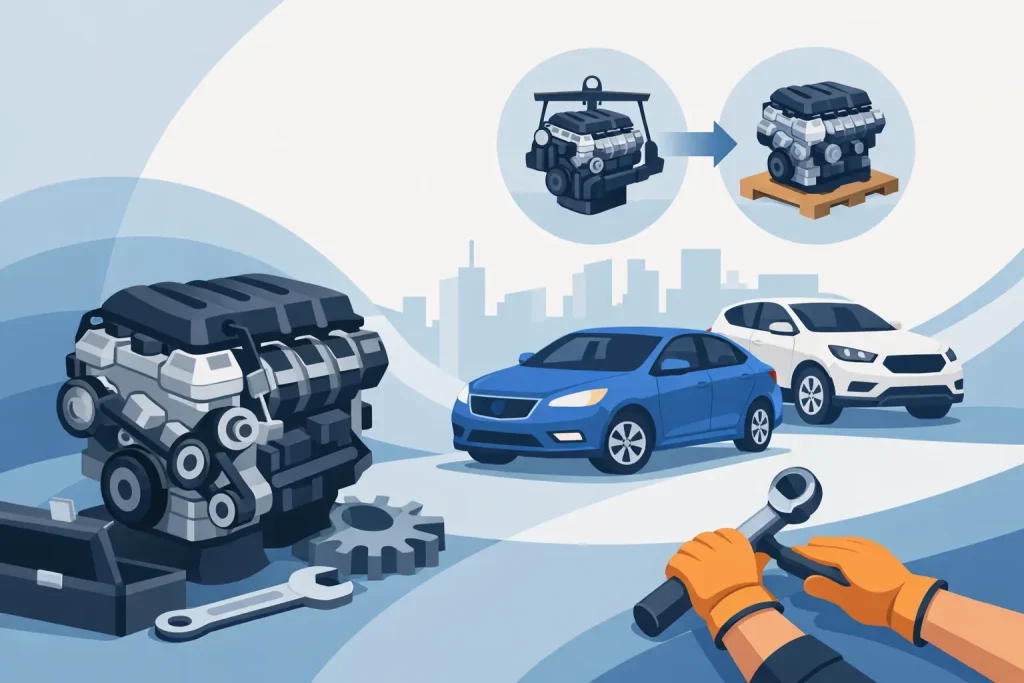
There is also the practical side. If your vehicle is a work van, family car or fleet unit that needs to get back on the road fast, an engine replacement can reduce downtime compared with stripping, machining and rebuilding the original engine. On the other hand, if the engine is otherwise in good condition and parts availability is solid, a rebuild may still be the better long-term result.
Common signs your Hyundai engine may be beyond a minor fix
Engine replacement is usually considered after a pattern of symptoms, not just one. Persistent bottom-end knocking is one of the biggest red flags. That deep metallic knock often points to worn or spun bearings, and by the time it is obvious, the damage can be extensive.
Heavy oil consumption is another warning, especially when it comes with blue smoke, fouled plugs, poor compression or misfires. Some engines can live with moderate oil use for a while, but if the consumption is severe and internal wear is confirmed, replacing or rebuilding becomes the sensible conversation.
Overheating is often underestimated. One bad overheat can warp a cylinder head, damage the head gasket and stress the bottom end. Repeated overheating can do far more. If coolant loss, white smoke, rough running and contamination between oil and coolant are all present, the repair bill can climb quickly.
Then there are timing-related failures. On interference engines, if a timing chain jumps or a belt lets go, valves can hit pistons. Sometimes the top end can be repaired. Sometimes the damage extends further and an engine replacement makes more sense than chasing parts and labour across multiple stages.
Here are the signs that usually justify a closer replacement assessment:
- Loud knocking from the bottom end
- Severe oil consumption or low compression across multiple cylinders
- Metal shavings in the oil or sump
- Repeated overheating with head or block damage
- Seizure or partial seizure
- Timing failure causing internal contact
- A cracked block or major internal scoring
Problems that do not always mean replacement
Not every rough-running Hyundai needs a full engine. This is where honest diagnosis matters.
A noisy timing chain, for example, might be a timing system repair rather than an engine replacement if the issue is caught before internal damage occurs. Turbocharger faults on diesel models can also mimic major engine trouble. Loss of power, smoke and oil contamination can point to a turbo problem, not a dead engine.
Likewise, injector faults, ignition issues, failed sensors and cooling system problems can all make an engine feel worse than it is. Even a head gasket failure does not automatically mean the whole engine is finished. It depends on whether the engine was overheated badly and whether the block, head or bearings have suffered secondary damage.
This is why a proper inspection matters more than guesswork. Compression testing, leak-down testing, oil inspection, fault-code scanning and physical checks all help separate a repairable fault from an engine that is genuinely at the end of its life.
Repair, rebuild or replace – what makes sense?
There is no universal answer, because the best option depends on condition, budget, vehicle age and how long you plan to keep it.
A repair makes sense when the fault is isolated. If the issue is limited to a timing component, gasket, turbo, injector set or top-end problem without bottom-end damage, repairing the original engine can be the most cost-effective option.
A rebuild suits owners who want to retain the original engine and restore it properly. This can be a strong choice when the rest of the vehicle is worth keeping and the engine core is still rebuildable. It often gives more control over what gets replaced and refreshed, but it can take longer and the final cost depends on what is found once the engine is stripped.
A replacement engine is often the practical option when internal damage is widespread or downtime matters. A tested reconditioned or good used engine can get the vehicle moving again without the uncertainty of rebuilding a badly damaged unit. For many Hyundai and Kia owners, especially those using the vehicle for work, that balance of speed and value matters.
Model and engine history matter
Some Hyundai engines are known for recurring fault patterns, and that affects the replacement decision. Certain petrol engines develop bearing noise, oil consumption or sludge-related wear. Some diesel engines see turbo and timing-related problems that can snowball if ignored.
Vehicle history matters just as much as model history. An engine with a solid service record, correct oil changes and early diagnosis is often a better rebuild candidate than one with unknown maintenance, chronic overheating or long-term neglect. Two identical vehicles can arrive with the same complaint and need completely different solutions.
That is why specialist experience counts. A workshop familiar with Hyundai and Kia engines will usually know the common failure points, what to inspect first and whether a repair is likely to last or simply delay the inevitable.
Cost is important, but so is risk
Most owners start with one question – is it worth fixing? Fair question. But the better question is whether the money you spend now will actually solve the problem.
A cheaper repair is not always cheaper if the engine has underlying wear that has not been addressed. You can replace one failed part, only to have another major issue appear soon after. That is frustrating in a private car and expensive in a work vehicle.
By contrast, replacing the engine can feel like a bigger upfront hit, but it may reduce the risk of repeated breakdowns. The right choice depends on the full picture: current vehicle value, expected service life, labour involved, parts quality, warranty support and how critical the car is to your day-to-day life.
When to stop driving and get it checked
If your Hyundai has developed a hard knock, oil pressure warning, sudden overheating, thick exhaust smoke or a major loss of power, do not keep pushing it. Driving on can turn a repairable engine into a replacement job.
The same goes for coolant loss with no clear cause, contaminated oil, or a timing rattle that has worsened quickly. Early action can save thousands. Leave it too long, and the damage often spreads from one component to the whole engine assembly.
For Melbourne drivers, tradies and fleet owners, downtime is usually part of the decision. Getting a proper diagnosis early gives you more options – repair, rebuild or replacement – instead of forcing the most expensive one.
At Hyun Engines, this is where straightforward advice matters. If the engine can be repaired properly, that should be said. If replacement is the safer and more economical path, that should be clear too.
The real answer
When does a Hyundai engine need replacing? When internal damage is serious, when repeated repairs no longer make financial sense, or when reliability matters more than trying to stretch a failing engine a bit further. The trick is not waiting until the answer becomes obvious on the side of the road. If your Hyundai is showing the signs, get it checked before a manageable fault turns into a complete engine failure.
Frequently Asked Questions
When does a Hyundai engine need replacing?
When repair is uneconomical or unsafe, such as spun bearings, severe bore wear, a cracked block, overheating damage or a seized engine.
What are the warning signs an engine is failing?
Knocking noises, heavy exhaust smoke, rapid oil loss, overheating, low oil pressure, or metal particles in the oil.
Is replacement better than repair for a worn Hyundai engine?
For extensive internal wear, a tested reconditioned replacement is usually more reliable and cost-effective, and it includes a 12-month warranty.
Do you supply and fit replacement Hyundai engines?
Yes, supplied Australia-wide with free shipping, with fitting available at our Dandenong workshop within 2-3 days.