If you own a Hyundai — or you’re weighing up whether to buy one — engine life is probably the question at the top of your list. It’s also the question we hear most often at our Dandenong workshop, usually from owners whose car has just ticked past 150,000 km and started making a noise it didn’t make last month. The honest answer is that Hyundai engine life depends heavily on which engine family sits under your bonnet and how the car has been serviced, so let’s break it down properly.
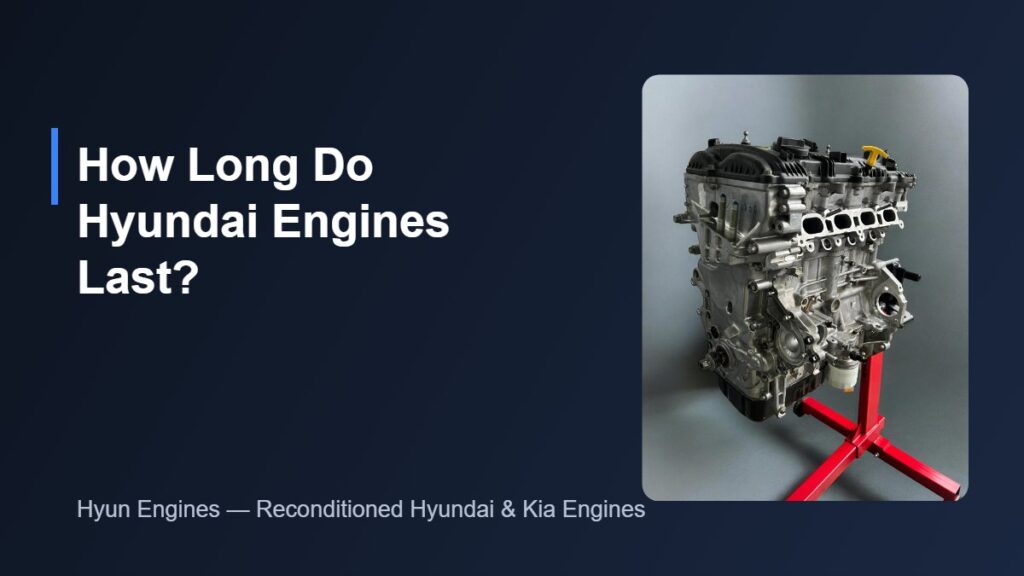
The short answer: A well-serviced Hyundai engine typically lasts 200,000 to 300,000 km, and plenty go well beyond that. Lifespan varies by engine family — the Gamma units are notably durable, while some Nu and Theta II engines have documented weak points that can shorten their life if oil level and condition are neglected.
What’s a realistic lifespan for a Hyundai engine?
Most Hyundai petrol engines built from the mid-2000s onward will reach 200,000 km without major internal work, provided the oil has been changed on schedule with the correct grade. With careful ownership — regular servicing, gentle warm-ups and prompt attention to leaks or noises — 300,000 km and beyond is achievable, and we regularly see i30s and Accents at those figures still running their original engines.
The two variables that matter most are oil maintenance and the specific engine family. Stretched oil change intervals are the single biggest killer of modern Hyundai engines, because several of these designs are sensitive to oil level and cleanliness in ways older, simpler engines were not.
How do the main Hyundai engine families compare?
Not all Hyundai engines age the same way. Here’s how the common families found in Australian-delivered cars stack up:
| Engine family | Common models (AU) | Typical life with servicing | What to watch |
|---|---|---|---|
| Gamma 1.4/1.6 (G4FA, G4FC, G4FG) | i20, i30, Accent, Elantra | 250,000–350,000+ km | Few chronic issues; keep oil fresh |
| Nu 1.8/2.0 (G4NB, G4NA) | Elantra, i30, Tucson | 200,000–300,000 km | Oil consumption from worn oil control rings at higher kilometres |
| Theta II 2.0/2.4 (G4KD, G4KE, G4KJ) | ix35, Tucson, Sonata, Santa Fe | Varies widely | Documented history of connecting rod bearing wear; listen for knocking |
| CRDi diesels (D4FB, D4HA, D4CB) | i30, Tucson, Santa Fe, iLoad | 300,000–400,000+ km | DPF health, injector condition, strict oil quality |
Why do some Nu and Theta II engines wear out early?
The Nu family’s known weak point is oil consumption at higher kilometres. The oil control rings can lose their ability to scrape oil off the cylinder walls, so the engine gradually burns more oil between services. Left unchecked, the level drops low enough to starve the bottom end — and a Nu engine that has been run low on oil rarely recovers. If your Elantra or i30 needs a litre topped up between services, treat that as a warning, not a quirk.
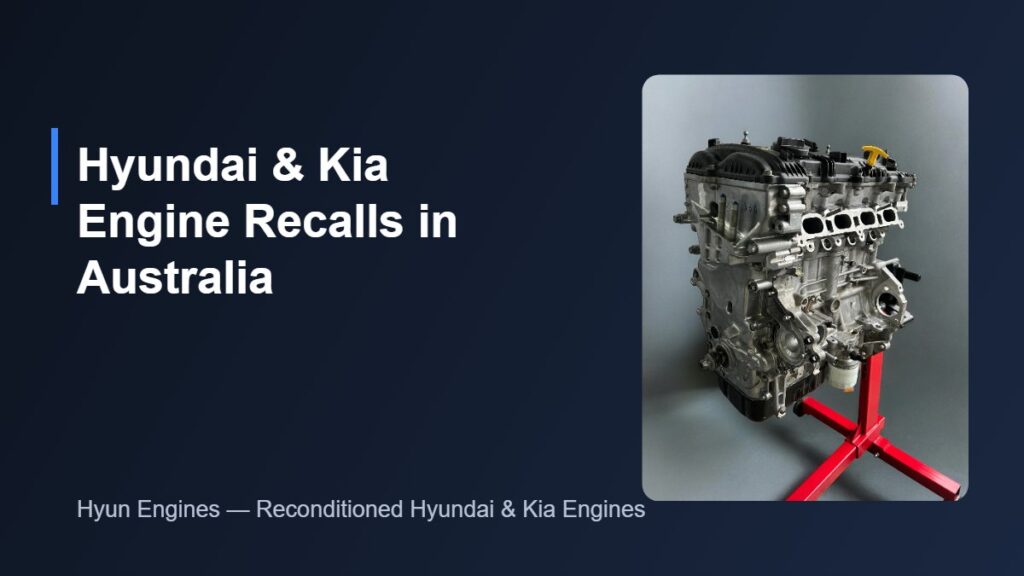
The Theta II story is better known. This family — particularly the direct-injection versions — has a documented history of premature connecting rod bearing wear, which produces a deep knocking noise under load and can end in sudden engine failure. It’s the same underlying issue behind engine recalls and class action proceedings both overseas and in Australia. For model-specific detail, our guide to Hyundai Tucson engine problems covers the Theta II symptoms in depth.
By contrast, Hyundai’s CRDi diesels are genuinely long-lived. The D4CB in the iLoad and the D4HA in Tucson and Santa Fe routinely pass 300,000 km — but only when the diesel particulate filter is allowed to regenerate properly and the oil is changed on time with the correct low-ash specification. Short-trip-only driving and stretched services are what kill them.
What actually makes a Hyundai engine last longer?
The recipe isn’t complicated, but it is strict. Change the oil every 10,000 km or 12 months — sooner for hard use — and use the grade specified for your engine. Check the oil level monthly once the car passes 100,000 km, especially on Nu-engined cars. Fix small coolant and oil leaks promptly, because low coolant cooks head gaskets and low oil destroys bearings. Drive gently until the engine reaches operating temperature. And take new noises seriously: a rattle on start-up or a knock under load costs little to have assessed and a fortune to ignore.
When does replacing the engine make more sense than repairing it?
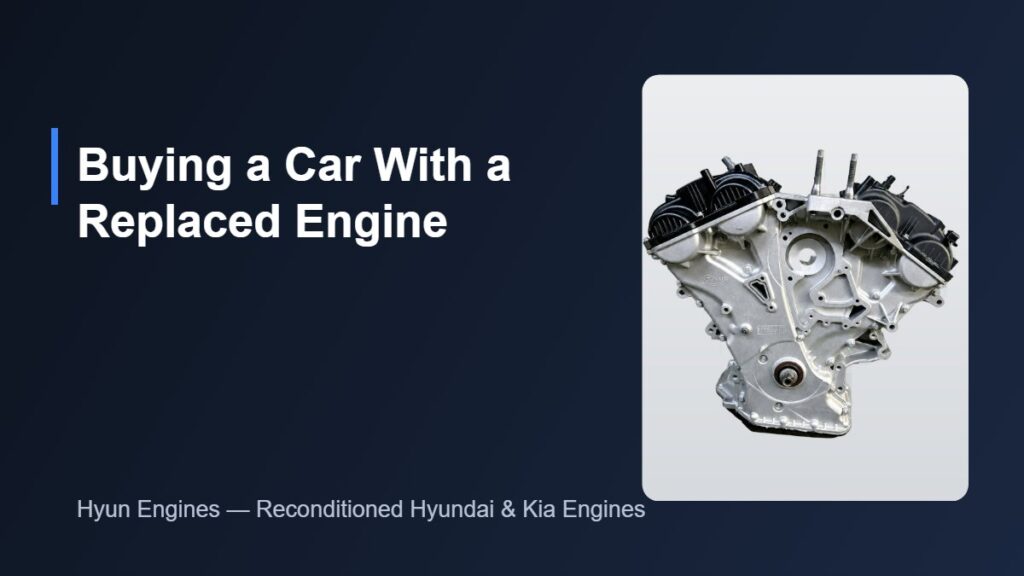
Once a Hyundai engine has spun a bearing, scored its cylinder walls or overheated badly, piecemeal repair is usually false economy. Machining, parts and labour on a worn block often exceed the cost of a complete reconditioned engine — and you’d still have 200,000 km-old components surrounding the one repair you paid for. Our guide on when a Hyundai engine needs replacing walks through the decision in detail, but the rule of thumb is simple: light top-end issues are worth repairing; bottom-end damage on a high-kilometre engine usually means a replacement is the smarter spend.
If your Hyundai or Kia engine is on the way out, Hyun Engines can help. We’ve supplied reconditioned, tested Hyundai and Kia engines since 2014, every engine is covered by a 12-month warranty, and our Dandenong workshop offers complete engine supply and fit — you drive in with a tired engine and drive out with a fresh one. Browse the current range in our engine shop or call (03) 9630 0960, Monday to Friday 9am–5pm, at 8 Hammond Rd, Dandenong VIC 3175.
Frequently Asked Questions
Is 200,000 km too many for a used Hyundai?
Not necessarily. A Gamma-engined i30 or a CRDi diesel with full service history can have plenty of life left at 200,000 km. Judge the car on service records, oil condition and how the engine sounds — not the odometer alone.
Do Hyundai diesel engines last longer than the petrol engines?
Generally, yes. The CRDi diesels are built for heavier loads and routinely exceed 300,000 km, provided the DPF regenerates properly and oil changes aren’t stretched. Neglected servicing closes that gap quickly.
My Hyundai is using oil between services. Is that normal?
Some consumption is normal on a high-kilometre engine, but needing a litre or more between services on a Nu engine is an early warning. Have it assessed before the level runs low, because low oil is what turns a consumption issue into a bearing failure.
Is a reconditioned engine a good option for a high-kilometre Hyundai?
Usually, yes. If the body, transmission and interior are in good order, fitting a reconditioned engine costs far less than changing cars and resets the engine’s clock. Every engine we supply is tested and covered by a 12-month warranty.