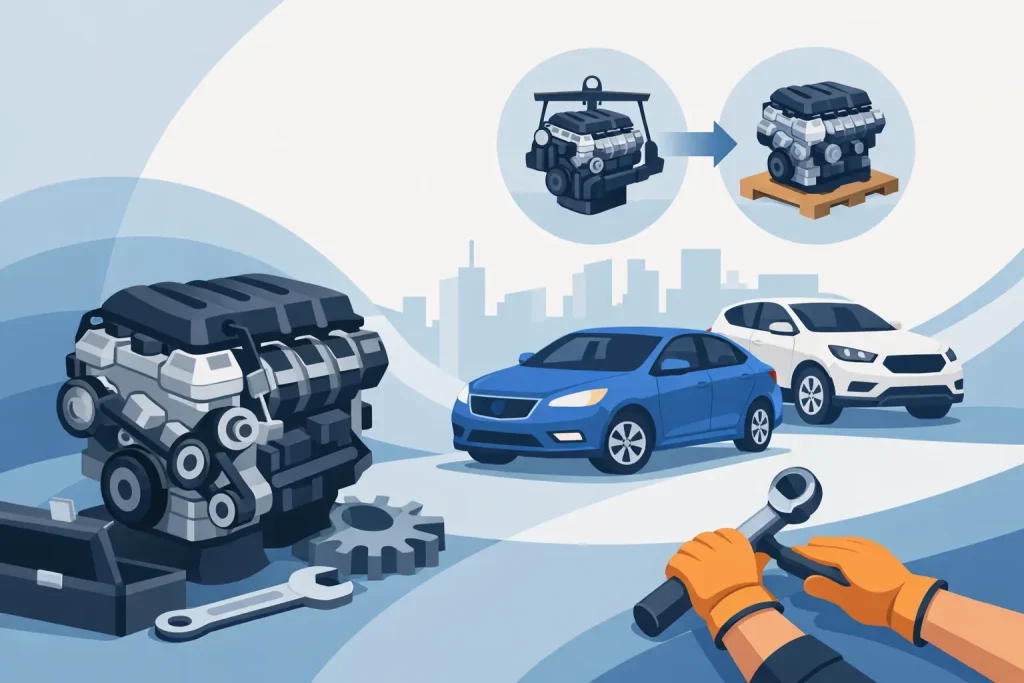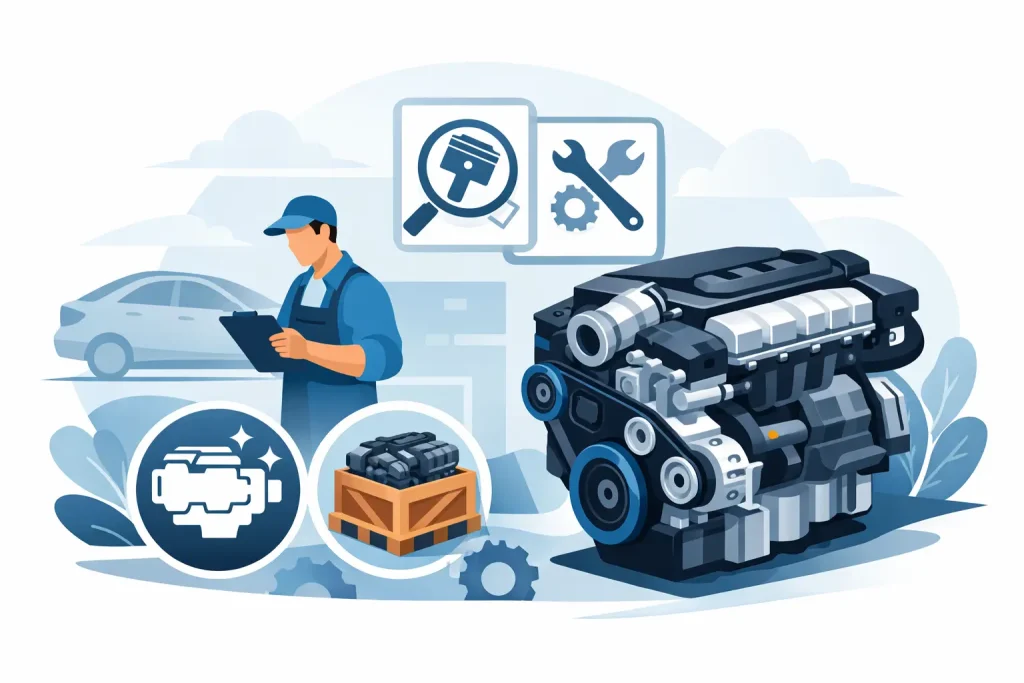
A replacement engine can look like a simple parts purchase until the wrong one turns into weeks off the road, extra labour, and a second round of repairs. If you are working out how to choose reconditioned Kia engine options, the real job is not just finding one that fits. It is making sure the engine suits your exact vehicle, has been properly checked, and comes from a supplier who can stand behind it.
That matters even more with Kia vehicles because engine families can look similar on paper while having important differences in sensors, timing components, fuel systems, and ECU compatibility. A cheap engine that is only “close enough” can end up costing more than the right unit from the start.
Start with the exact engine code, not just the model
One of the most common mistakes is shopping by model name alone. Saying you need an engine for a Kia Carnival, Cerato, Sportage or Optima is not enough. Within the same model range, Kia may have used different engine sizes, updates, and variants across different build dates.
The safer approach is to match the engine code, year, fuel type, transmission pairing where relevant, and VIN details. That is the difference between an engine that bolts in properly and one that creates wiring, sensor or drivability problems later.
If a seller cannot clearly confirm compatibility from your VIN or engine code, that is a warning sign. Straight answers matter here. You want to know exactly what engine you are being offered, what it came out of, and whether any components need to be swapped over from your original motor.
What reconditioned should actually mean
Not every engine advertised as reconditioned has had the same level of work. This is where buyers can get caught. Some sellers use the term loosely when the engine is really just cleaned up and resold. A proper reconditioned Kia engine should have a clear process behind it, not just a fresh coat of paint and a verbal promise.
In practical terms, reconditioning usually means the engine has been stripped, inspected, measured, and rebuilt where needed using replacement components and machining work to bring it back within acceptable tolerances. The exact scope depends on the condition of the core engine. Some need extensive work. Others need less. That is normal.
What matters is transparency. Ask what has actually been replaced, machined or tested. If the answer is vague, you are not really being told what you are buying.
How to choose reconditioned Kia engine suppliers
The supplier matters almost as much as the engine itself. A specialist workshop or engine supplier that deals with Hyundai and Kia motors every day is usually in a stronger position than a general dismantler moving all brands.
Why? Because Korean engines have common fault patterns, known timing issues, and specific fitment details that a brand specialist will recognise quickly. They are more likely to know which engines interchange cleanly, which ones need caution, and which supporting parts should be replaced at the same time.
A good supplier should be able to explain the engine’s history, the work completed, the test process, and the warranty terms without talking around the question. They should also be honest about what is not included, such as ancillaries, injectors, turbochargers, manifolds or sensors if those are transferred from your old engine.
If installation is available through the same workshop, that can make the process much smoother. Supply and fit from one specialist reduces finger-pointing if a problem shows up later.
Check the known weak points for your Kia engine
Different Kia engines have different reputations. Some are known for timing chain noise, some for oil consumption, some for bearing issues, and some for diesel-related faults. That means the right questions will change depending on the engine family.
For example, if you are replacing a diesel engine, you should ask about injector condition, turbo-related contamination, and whether the fuel system has been checked. If it is a petrol engine with a history of timing issues, ask whether timing components have been replaced or inspected during the reconditioning process.
This is where a specialist earns their keep. They should already know the common problems and tell you what has been done to address them. You should not have to drag basic information out of them.
Testing is not optional
A reconditioned engine should come with evidence that it has been checked properly. The level of testing can vary, but there should be more than a claim that it “ran fine” before removal or rebuild.
Depending on the engine and the supplier’s process, useful checks may include compression testing, oil pressure checks, leak checks, inspection of internal wear, and confirmation that critical tolerances are within spec. For some rebuilds, machining and parts replacement records are just as important as a running test.
Ask what testing was carried out and whether that can be documented. The answer tells you a lot about the quality of the job. Serious suppliers tend to have a process. Casual sellers tend to rely on reassurance instead.
Warranty tells you how much risk stays with you
Warranty is not just a box to tick. It tells you how confident the supplier is in the engine and how much support you will get if something goes wrong.
Look at the length of the warranty, but also read the conditions. Some warranties sound decent until you find out they only cover the part itself and not labour. Others may require proof of installation by a licensed workshop, new fluids, filter replacement, cooling system checks, or other supporting work. Those conditions are not necessarily bad. In many cases they are sensible, because engines fail early when old cooling or lubrication problems are left in place.
The key is clarity. You want warranty terms that are easy to understand and realistic to meet. If the wording is confusing or full of exclusions, ask questions before you commit.
Do not ignore the parts around the engine
A replacement engine can fail for reasons that have nothing to do with the engine itself. Overheating, blocked radiators, contaminated oil lines, injector problems, faulty sensors, and neglected servicing can all ruin a good engine.
That is why choosing the right engine also means choosing the right installation plan. Before fitting a reconditioned Kia engine, the workshop should assess the cooling system, lubrication system, intake, exhaust, and any known related faults. If your original engine failed because of a root cause that is still there, the next engine is at risk.
This is one reason many owners prefer a workshop that can diagnose, supply, and fit. It gives you a clearer chain of responsibility and usually a better outcome.
Price matters, but the cheapest option is rarely the cheapest job
Everyone has a budget. That is fair. But with engines, the lowest advertised price often leaves out important details. It may not include testing, warranty strength, installation support, or replacement of wear items that should be done while the engine is out.
A more expensive engine may still be better value if it has been properly reconditioned, backed by a real warranty, and supplied by people who know Kia vehicles well. On the other hand, paying top dollar does not automatically guarantee quality either. What you are looking for is proof, not just price.
When comparing quotes, look at the full job. Ask what is included, what supporting parts are recommended, whether fluids and filters are included, and what happens if a fault appears after installation.
Questions worth asking before you say yes
If you are unsure how to choose reconditioned Kia engine options confidently, keep the conversation focused on facts. Ask for the exact engine code match, what reconditioning work was completed, what testing was done, what warranty applies, and what installation requirements need to be met.
Also ask whether your existing accessories will be reused, whether any programming or adaptation is needed after installation, and whether common failure points for that engine have been addressed. These are normal questions, not difficult ones. A good supplier should answer them clearly.
At Hyun Engines, this is usually where the difference between a general engine seller and a brand-focused workshop becomes obvious. Specialist support saves time, reduces guesswork, and helps avoid expensive mismatches.
Choose confidence, not just a part number
The best reconditioned Kia engine is not simply the one that fits the engine bay. It is the one that matches your vehicle properly, has been rebuilt or checked to a clear standard, and comes with local support if anything needs attention after fitting.
When you are facing a major engine bill, clear advice matters. Take the extra time to verify compatibility, testing, warranty and installation support. A good engine should get your Kia back on the road without leaving you wondering what you actually paid for.
Frequently Asked Questions
How do I choose the right reconditioned Kia engine?
Match the engine code, capacity and fuel type to your vehicle (from the build plate or VIN), and check it is reconditioned, tested and warranted. We can confirm the correct engine for your Kia.
How do I find my Kia’s engine code?
It is usually on the engine block, the build plate, or can be identified from your VIN. Send us your details and we will confirm the right unit.
What should a good reconditioned Kia engine include?
It should be inspected, machined where needed, tested before dispatch, and backed by a warranty. Ours include a 12-month warranty and free Australia-wide shipping.
Do you help confirm compatibility before I buy?
Yes, we confirm fitment from your VIN or engine code so you receive the correct engine the first time.