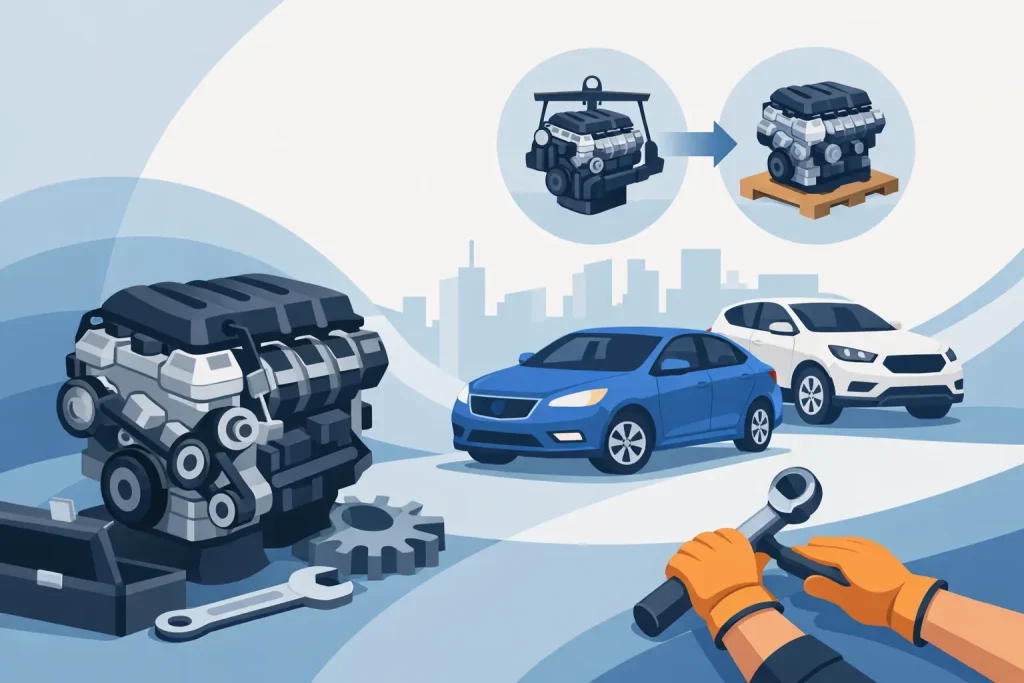
A Kia with a failing engine usually gives you two headaches at once – the mechanical problem itself, and the question of what makes financial sense. If you are searching for reconditioned Kia engines Victoria vehicle owners can rely on, you are probably already weighing up repair costs, downtime, warranty, and whether the replacement will actually last.
That decision is rarely as simple as choosing the cheapest engine you can find. A low advertised price can look good until you factor in unknown history, poor compression, missing ancillaries, or installation issues that turn a bargain into a second repair bill. When the engine is the heart of the vehicle, the smarter move is to look at the full job, not just the sticker price.
Why reconditioned Kia engines make sense
For many Kia owners, a reconditioned engine sits in the middle ground between a used engine and a brand new replacement. That middle ground matters. A used engine may be cheaper upfront, but it often comes with more uncertainty. A brand new engine can be ideal in some cases, but the cost may not stack up against the value of the vehicle.
A properly reconditioned engine aims to solve the known wear issues rather than simply swapping one unknown motor for another. Depending on the engine and the condition it arrived in, reconditioning may involve machining, replacement of worn internal parts, inspection of the cylinder head, seals, gaskets, timing components, and other critical items that commonly fail over time. The result should be an engine that has been assessed and rebuilt with reliability in mind, not just cleaned up and sent out the door.
That said, not every vehicle is the right candidate. If the rest of the car has major transmission, electrical, or body problems, spending money on an engine may not be the best call. Good advice starts with looking at the whole vehicle and how long you want to keep it.
What to check when comparing reconditioned Kia engines Victoria suppliers
When people compare reconditioned Kia engines Victoria workshops and sellers offer, they often focus on kilometres first. Kilometres matter, but they are not the whole story. The quality of the rebuild process, the testing carried out, and the workshop support behind the engine are just as important.
The first thing to ask is what reconditioned actually means in that specific case. In the engine trade, the term can be used loosely. One supplier may mean a full strip, inspection, machining, and rebuild using replacement components where needed. Another may mean a basic refresh with limited internal work. If the explanation is vague, that is usually a warning sign.
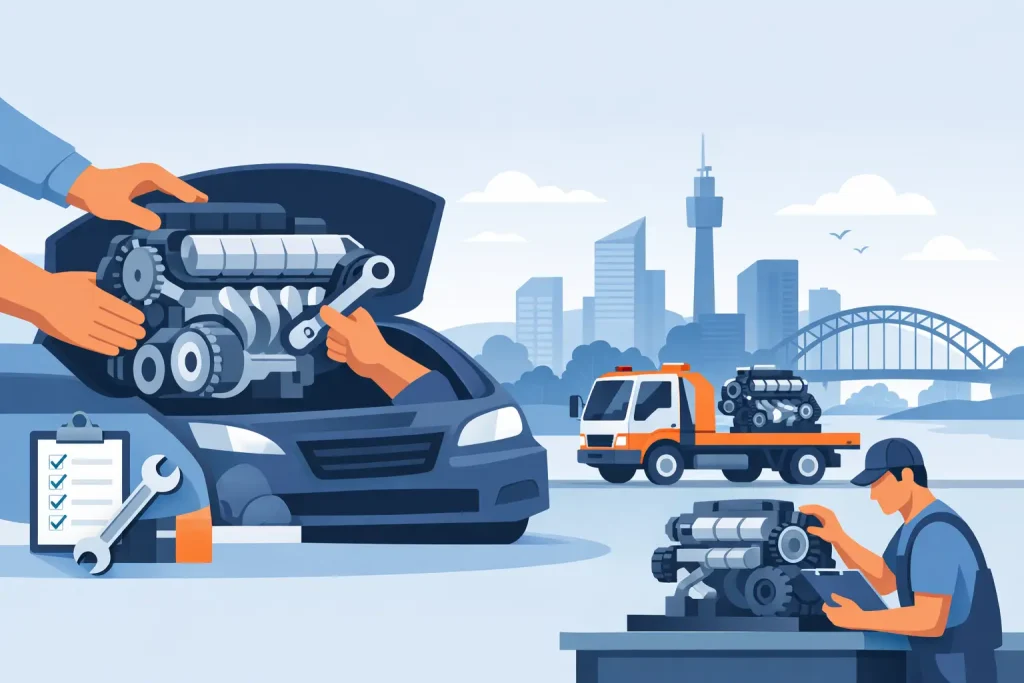
It also helps to ask whether the engine has been tested, what components are included, and whether fitting can be handled by the same workshop. Supply and fit tends to remove a lot of grey areas. If one business supplies the engine and another installs it, blame can bounce back and forth if something goes wrong.
A proper warranty matters too, but so does the detail behind it. Customers should know what is covered, what servicing requirements apply, and whether the workshop can support any issue locally. An engine warranty sounds good on paper, but it has more value when it is backed by a workshop that actually works on Kia engines every day.
Common reasons Kia owners choose replacement over repair
Some engine faults can be repaired economically. Others point to deeper internal damage that makes replacement or a full rebuild the more sensible option. Excessive oil consumption, bottom end knock, overheating damage, timing failure, cracked heads, spun bearings, and low compression across multiple cylinders can all push the job beyond a simple repair.
This is especially relevant for owners who need their vehicle back on the road quickly. A family car off the road for weeks is frustrating enough. For tradies, delivery drivers, and fleet operators, downtime costs real money. In those cases, a tested replacement engine can often be the quickest path back to reliable use, provided the diagnosis is accurate from the start.
The key point is that the symptom is not always the root cause. A noisy engine might be timing related, lubrication related, or internal wear. A vehicle that has overheated may need more than just a head gasket. That is why proper diagnosis comes before any quote worth trusting.
Reconditioned versus used Kia engines
This is where a lot of buyers get stuck. Used engines can be perfectly suitable in the right situation, especially where budget is the main concern and the source is known. But a used engine is still a used engine. Its internal wear, service history, and prior treatment are not always clear, even if it sounds fine on startup.
A reconditioned engine should offer a more controlled outcome. Worn parts can be identified and addressed before installation, rather than after the engine is back in the vehicle. For owners planning to keep the car longer term, that added confidence often justifies the extra cost.
Still, there are trade-offs. Reconditioned engines usually cost more upfront and may take longer to prepare depending on parts supply and machine work. Used engines are generally faster to source if stock is available. The right option depends on the age of the car, your budget, how long you plan to keep it, and whether reliability or lowest initial spend is the main priority.
Why Kia engine specialist experience matters
Kia engines are not all the same, and a general mechanical workshop may not see the same recurring issues often enough to spot patterns quickly. A specialist workshop that works on Hyundai and Kia vehicles regularly is more likely to recognise common failure points, know which related parts should be replaced at the same time, and understand the practical differences between engine codes, model years, and installation requirements.
That can save time and money. For example, replacing an engine without dealing with the original cause of failure can lead to repeat problems. Cooling system faults, injector issues, turbo contamination, timing component wear, and oil supply problems all need to be considered during the job. A workshop with narrow brand focus is better placed to look beyond the engine itself.
For Victorian drivers, local support also matters. If there is a question after installation, you want a workshop you can call and return to, not a seller who disappears once the engine leaves the pallet.
Questions worth asking before you say yes
Before agreeing to any engine replacement, ask how the fault was diagnosed and why replacement is recommended over repair. Ask what work has been carried out on the engine, whether ancillary components are transferred or replaced, and what the fitting process includes. It is also worth asking about turnaround time, running-in requirements, and post-installation checks.
You do not need a lecture in engine theory. You do need clear answers. If a workshop cannot explain the job in plain English, that usually makes a stressful situation worse.
A good engine supplier and installer should be able to tell you what suits your vehicle, what the risks are, and where the value sits. Sometimes that means recommending a reconditioned unit. Sometimes it means a used engine is enough. Sometimes it means the vehicle is not worth the spend. Honest advice is more useful than a sales pitch.
Getting the best result from reconditioned Kia engines Victoria workshops supply
The best outcomes usually come from treating the engine replacement as a complete repair, not a parts transaction. That means proper diagnosis, careful engine selection, quality installation, and attention to related systems such as cooling, fuel, lubrication, and timing. Miss one of those areas and even a good engine can have a short life.
That is why many Kia owners prefer a workshop that can manage the job from start to finish. At Hyun Engines, that specialist approach is built around tested engines, practical workshop knowledge, and straightforward advice for Hyundai and Kia owners across Victoria.
If your Kia is showing signs of serious engine trouble, the right move is not to rush into the first cheap option you see. Slow down, ask the right questions, and choose the solution that gives you confidence every time you turn the key.
Frequently Asked Questions
Where can I buy reconditioned Kia engines in Victoria?
We supply reconditioned Kia engines from our Dandenong workshop in Melbourne’s south-east, with fitting available on site and free shipping across Victoria and Australia-wide.
Are your reconditioned Kia engines tested?
Yes, every engine is reconditioned and run-tested before dispatch, and is covered by a 12-month warranty.
How much do reconditioned Kia engines cost?
Most start from around $4,200, with larger and turbo-diesel units priced higher, including free Australia-wide shipping.
Can you fit the engine in Melbourne?
Yes, fitting at our Dandenong workshop usually takes 2-3 days, and your old engine is taken as a core once the job is finished.